

Rio de Janeiro is unique in many ways, its diverse population, shaped by centuries of cultural mixing that resulted in its food, music, and unmistakable way of living. But nothing quite defines Rio like its geography.
A city that grew squeezed between the ocean, the bay and the mountains. Rainforest, sea, and massive granite peaks share the same skyline in a combination that very few cities in the world can claim. And nowhere is that geography more present than on the beaches.
With white sand and warm weather for most of the year, the beach in Rio isn't just a summer program. It's daily life, a year-round thing. But more than that, it's where the city's landscape reveals itself most completely.
Everywhere you look, an iconic landmark is framing the scene. Rio de Janeiro beaches don't just face the sea. They face the postcard.
So choosing which beach to visit isn't only about the waves or the neighborhood. It's also about asking yourself: what view do I want today?
Beaches with a Sugarloaf Mountain view
There are cities where the landmarks are something you visit. In Rio, they are something you live with.
Sugarloaf Mountain is always there, rising above the bay, appearing at the end of streets, framing the horizon from unexpected angles. But it's from the beaches that you realize how many versions of the same mountain exist, depending on where you stand.
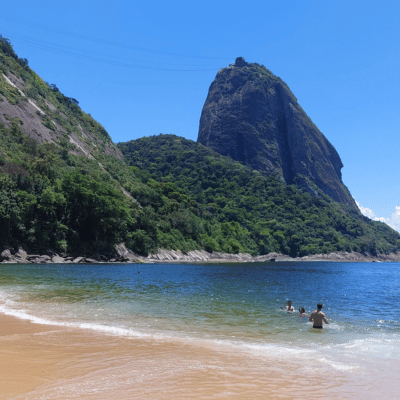
Red Beach, Urca: the closest view of Pão de Açucar
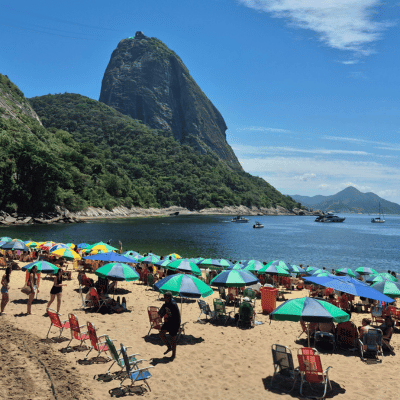
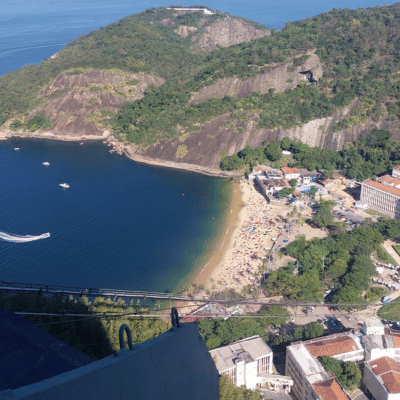
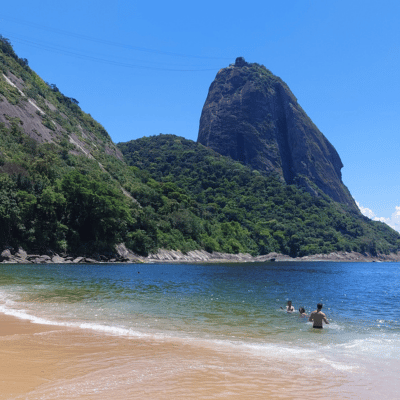
This is the closest you can get to Sugarloaf Mountain with sand under your feet. Urca is a quiet neighborhood that most tourists pass through on the way to the cable car, but the small beach at its edge is worth stopping for. That’s where the mountain reveals its full scale.
From here, Sugarloaf is not a postcard. It's a wall of rock rising straight out of the water, close enough that you can watch the cable cars moving between the peaks.
If you want to understand why cariocas are so matter-of-fact about living next to one of the most dramatic landscapes on earth, sit here for a while.
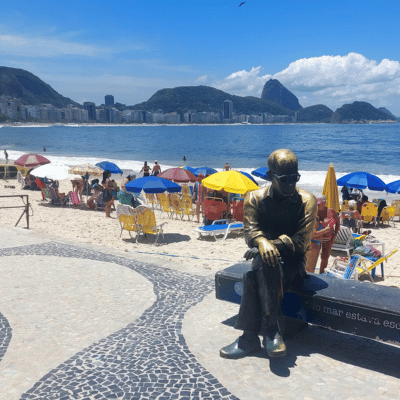
Copacabana: Rio’s iconic skyline
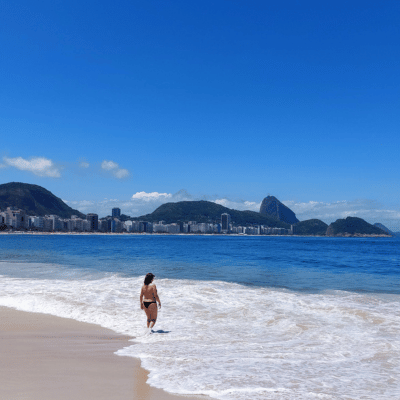
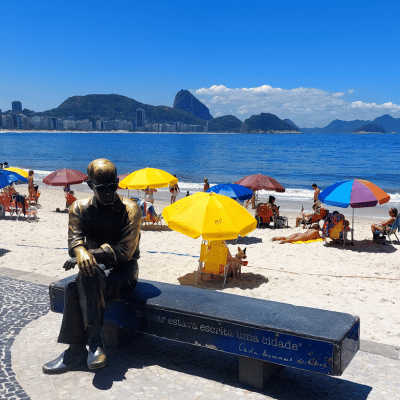
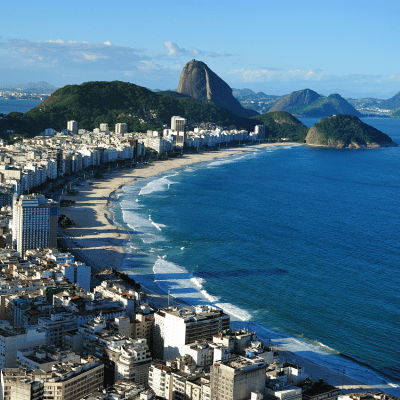
Walk to the far end of Copacabana, around Posto 5 or 6, where the beach begins to curve toward Ipanema, and turn around.
What you see is one of Rio's great unscripted compositions: the long crescent of sand stretching ahead, the Atlantic on one side, and Sugarloaf closing the frame at the far end.
It's the kind of view that makes you stop mid-walk. The mountain doesn't dominate here, it completes the scene, sitting at just the right distance to feel both monumental and perfectly placed.
Early morning is worth the effort. The light is softer, the beach is quieter, and the mountain catches the first sun before the heat sets in.
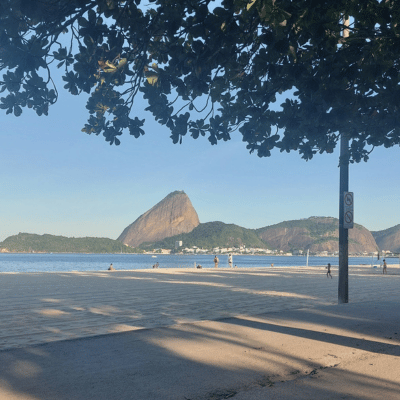
Flamengo & Gloria: calm bay scenery
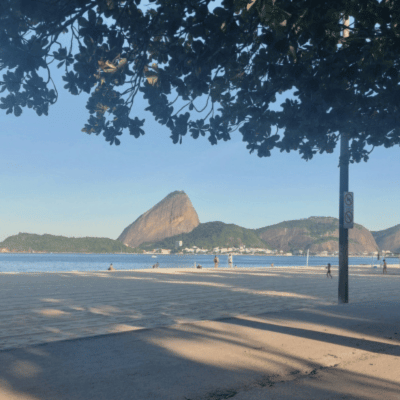
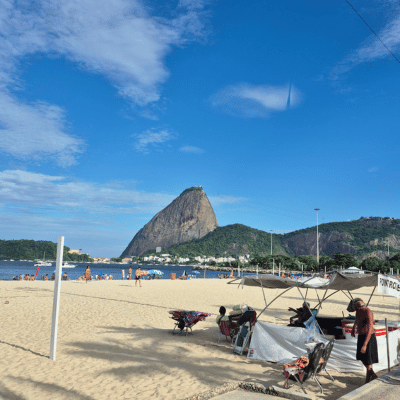
Flamengo and Gloria beaches don't appear on most tourist itineraries, and that's partly what makes it interesting.
Both are bay beaches with calm water, no waves, the kind of place where families with young children spread out on weekend mornings. If you're traveling with kids, it's one of the more relaxed options in the city. Just check water quality before you go, as bay beaches can vary.
But go there for the view and you'll understand why it earns a place in this guide. From Flamengo, Sugarloaf appears at a distance, both peaks visible and perfectly proportioned against the Guanabara Bay.
It's the contemplative version of the same mountain but less overwhelming than Red Beach, less composed than Copacabana, but somehow more complete. You see the whole thing reflected in calm water.
Beaches with a Dois Irmãos view
If Sugarloaf Mountain is Rio’s most famous peak, Dois Irmãos is its most recognizable silhouette: the twin summits that frame every iconic Ipanema sunset photo you've ever seen.
Rising side by side above the city's southern edge, they can feel like a distant reference point or an overwhelming presence, depending on where you stand.
Leme: quieter views at the edge of Copacabana
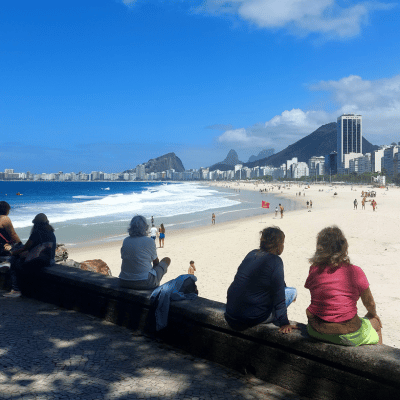
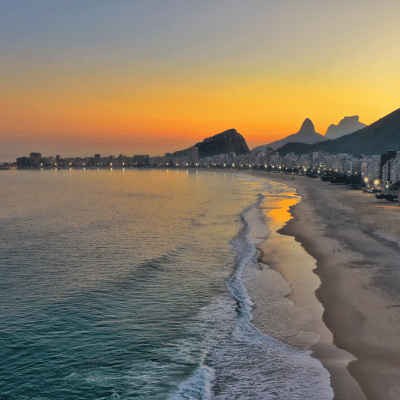
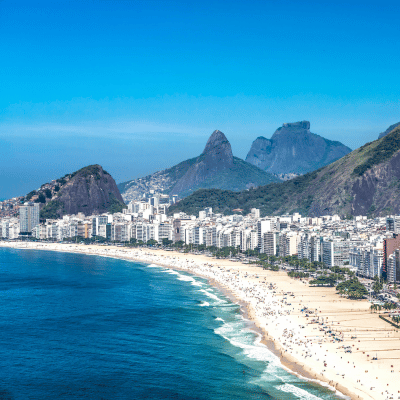
Leme is where Copacabana begins or ends, depending on which direction you're walking. It's quieter than the rest of the boardwalk, and the sea here tends to be calmer, making it a better spot for swimming than the busier stretches of the beach.
But Leme has more layers than most people notice. On the left side, the hill is home to Forte do Leme, a military fort with one of the most complete views of Copacabana from above.
At its base, the mureta (a low sea wall) is where locals sit to enjoy drinks and watch the waves, with the Dois Irmãos peaks appearing faintly behind the buildings at the far end of the bay. Not the full picture yet, but enough to make you curious.
Arpoador, Ipanema and Leblon: Rio’s most famous sunset
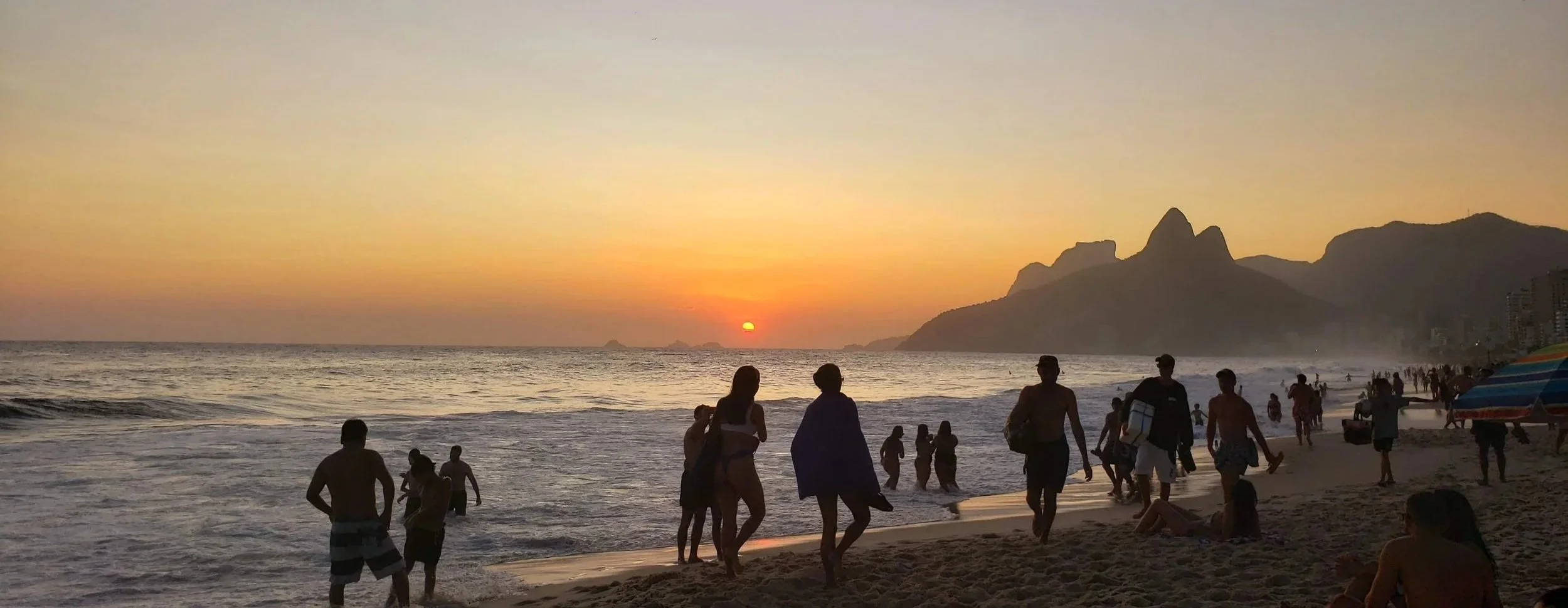
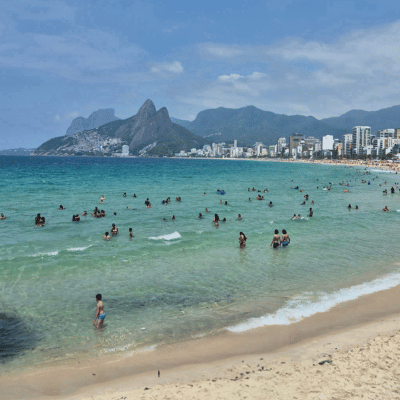
Sunset view from Ipanema Beach
Arpoador is where the Dois Irmãos reveals itself.
Sitting at the rocky point where Copacabana ends and Ipanema begins, it offers the entire Ipanema shoreline stretching ahead, with Dois Irmãos framing the far end.
Come in the late afternoon when the light turns golden, the silhouette of the peaks sharpens against the sky, and the crowd that gathers to watch the sunset will make a lot more sense. The applause at the end is not a tourist thing. It's just Rio.
From Ipanema to Leblon the view is the same, just closer. The peaks are always there at the end of the beach, and by the time you reach Leblon, they fill the horizon with the jungle coming down the slopes almost to the waterline. Less postcard, more presence.
Beaches with a Pedra da Gávea view
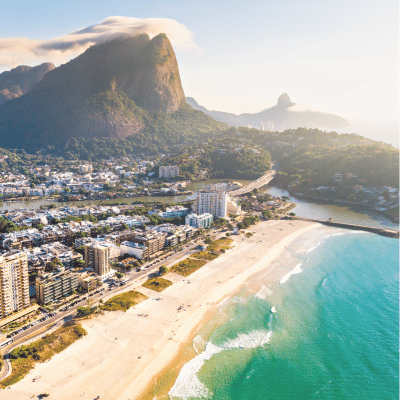
Pedra da Gávea is Rio's most imposing massif and believed to be the world's largest coastal monolith. The granite giant rises sharply above the city's southwestern edge, sitting there, enormous, demanding attention. And some of Rio's beaches put you right in front of it.
São Conrado: where nature meets the city
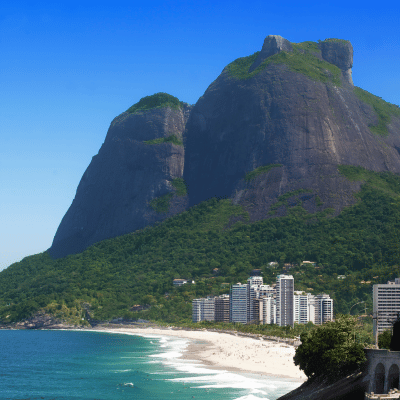
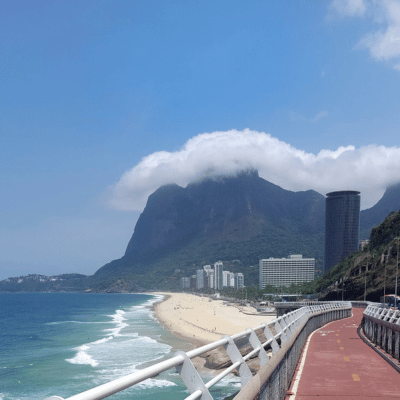
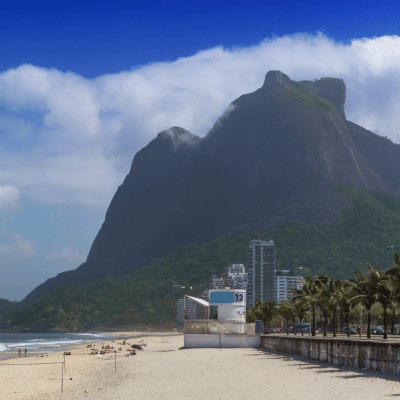
Pedra da Gávea dominates the right end of the beach, it's one of the few places in Rio where the massif feels this close.
Unlike Copacabana or Ipanema, São Conrado didn’t develop into a dense urban neighborhood, and the result is a beach where nature still sets the tone.
For visitors who want that feeling without heading all the way to Grumari or Prainha, it's the closest you can get while still being easy to reach.
The beach is reachable by metro, but if you want the most scenic way to arrive, the bike path from Leblon hugs the coastline all the way there. And if you're lucky, hang gliders will be landing on the sand while you're there.
Easy to miss if you're not looking up, but hard to forget if you do.
Praia do Pepê: a different side of Rio
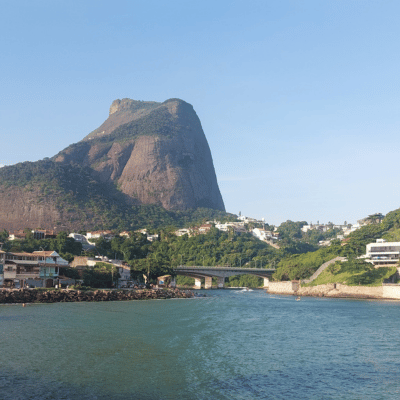
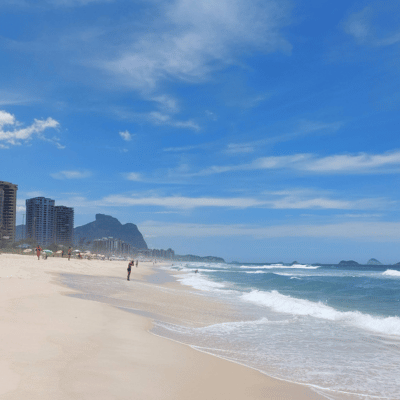
Across the massif, in Barra da Tijuca, Praia do Pepê offers a different relationship with Pedra da Gávea.
The mountain appears at the far end, quieter and more distant, but still marking the horizon in a way that gives the beach a sense of place.
Pepê is a local beach. The strip of sand is narrower, the crowd more neighborhood than tourist. Come in the late afternoon — the sunset here is genuinely worth staying for.
Beaches where nature is the view
Not every great view in Rio is an iconic peak. Some beaches earn their place by what surrounds them, in this case the Atlantic Forest coming down to the water's edge, the sense of being somewhere the city hasn't quite reached.
Both Prainha and Grumari are accessible by a single road, and access is controlled by parking availability, meaning when the lot is full, the road closes.
On weekends and holidays this can happen early in the morning. The practical advice: go on a weekday, or arrive early if you're going on a weekend.
Prainha: Rio’s surfer escape
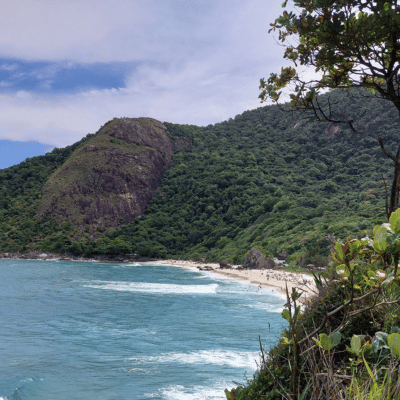
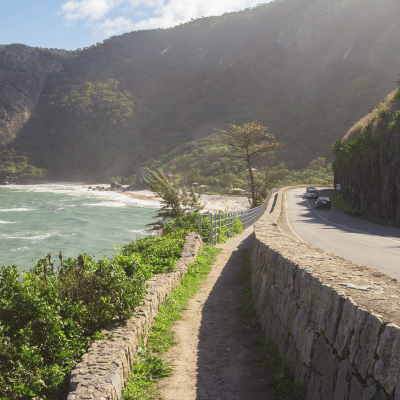
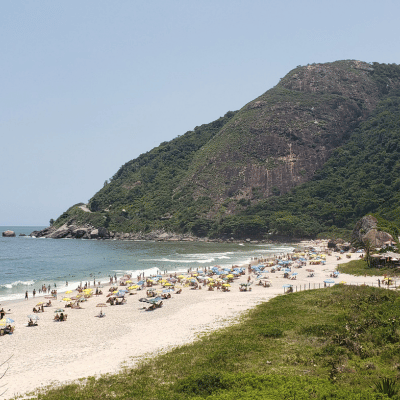
Part of the experience starts before you arrive. The access road runs along the top of the hill, and there's a viewpoint worth stopping at before you descend. Take your time there. The beach will wait.
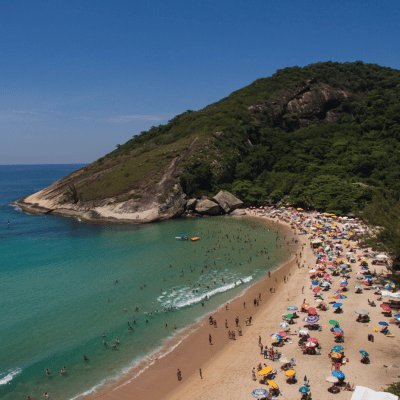
Prainha is small, protected, and consistently rated one of the best beaches in Rio. The hills of the Mata Atlântica frame the entire bay, and the waves are real. It's a surf beach, with the energy that comes with it. The crowds on weekends reflect that.
Grumari: the wild side of Rio
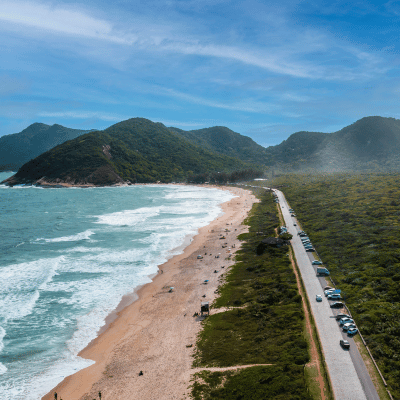
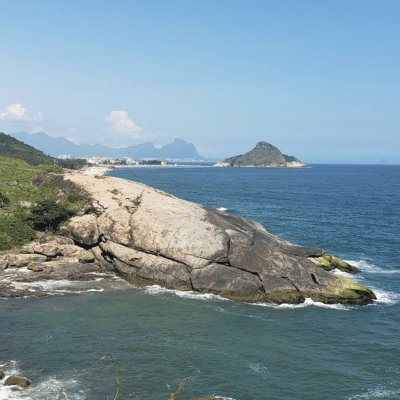
Grumari is the closest thing to a deserted beach you'll find within Rio's city limits. The mountains close in on both sides, the Atlantic Forest comes down to the waterline, and the controlled access means the beach never gets overcrowded. There are kiosks and even a beach club, so the isolation comes with some comfort.
At the entrance to Grumari, Praia do Abricó is worth knowing about — it's Rio's only nudist beach, tucked quietly before the main stretch.
Beyond the beach
What about Christ the Redeemer?
Christ the Redeemer is visible from almost everywhere in Rio, however, the beaches are one of the few exceptions. From most of the beaches of the Zona Sul shoreline, the statue is hidden behind the hills of Santa Teresa and the Tijuca massif.
Flamengo and Botafogo beaches are the exceptions: on a clear day you can spot it from the sand.
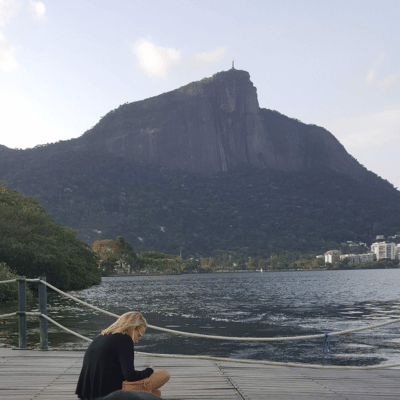
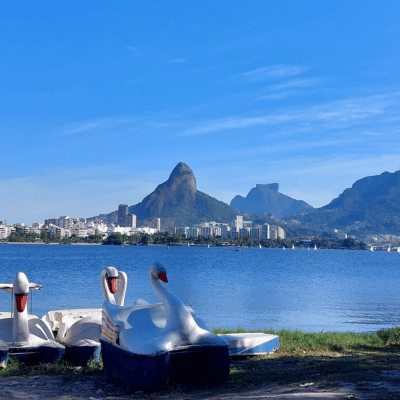
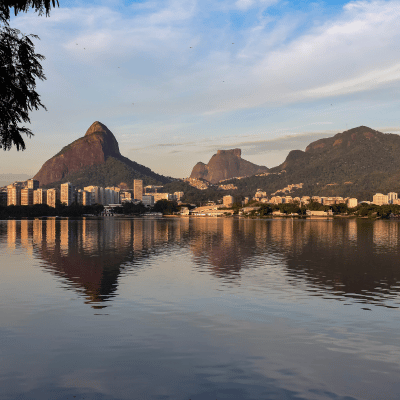
If you want to see Christ the Redeemer the way it deserves to be seen, the place to be is Lagoa Rodrigo de Freitas. The lagoon is one of Rio's great leisure areas with a cycling and running path all the way around it, plus skate rinks, paddle boats, restaurants, and event spaces along the way.
Find a spot by the water with the statue in view and you'll understand why locals spend entire afternoons there.
The views are one part of what makes Rio's beaches unique. If you want to understand the culture, the rituals, the people, and what the beach actually means to cariocas, this guide to Rio beach culture covers the rest.
