

Hidden beaches in Rio de Janeiro: Secret beaches worth the effort
Copacabana and Ipanema are iconic for a reason: they're beautiful, well-structured, and easy to reach. And, if that's all you do, you'll still leave Rio with great beach memories.
But Rio de Janeiro has over 30 kilometers of coastline, and most of it sits quietly beyond the postcard version of the city.
Hidden beaches in Rio de Janeiro can be behind residential streets, tucked below cliffs, accessible only by trail or boat. There's a whole other side to Rio's beaches that most visitors never see.
The good news is that going beyond doesn't always mean going far. Some of the beaches on this list are an Uber ride away from Ipanema. Others require a car, careful timing, or a full day commitment. And a few demand real effort, but reward it accordingly.
If you have time and curiosity, this guide is for you.
Easy hidden beaches in Rio de Janeiro: little effort, big reward
Not every hidden beach in Rio requires a car, hiking shoes, or a full-day commitment. Some are surprisingly easy to reach but remain overlooked because most visitors rarely move beyond Copacabana Beach and Ipanema Beach.
These are the beaches you can add to your itinerary without dramatically changing your plans:
Praia do Diabo, Arpoador
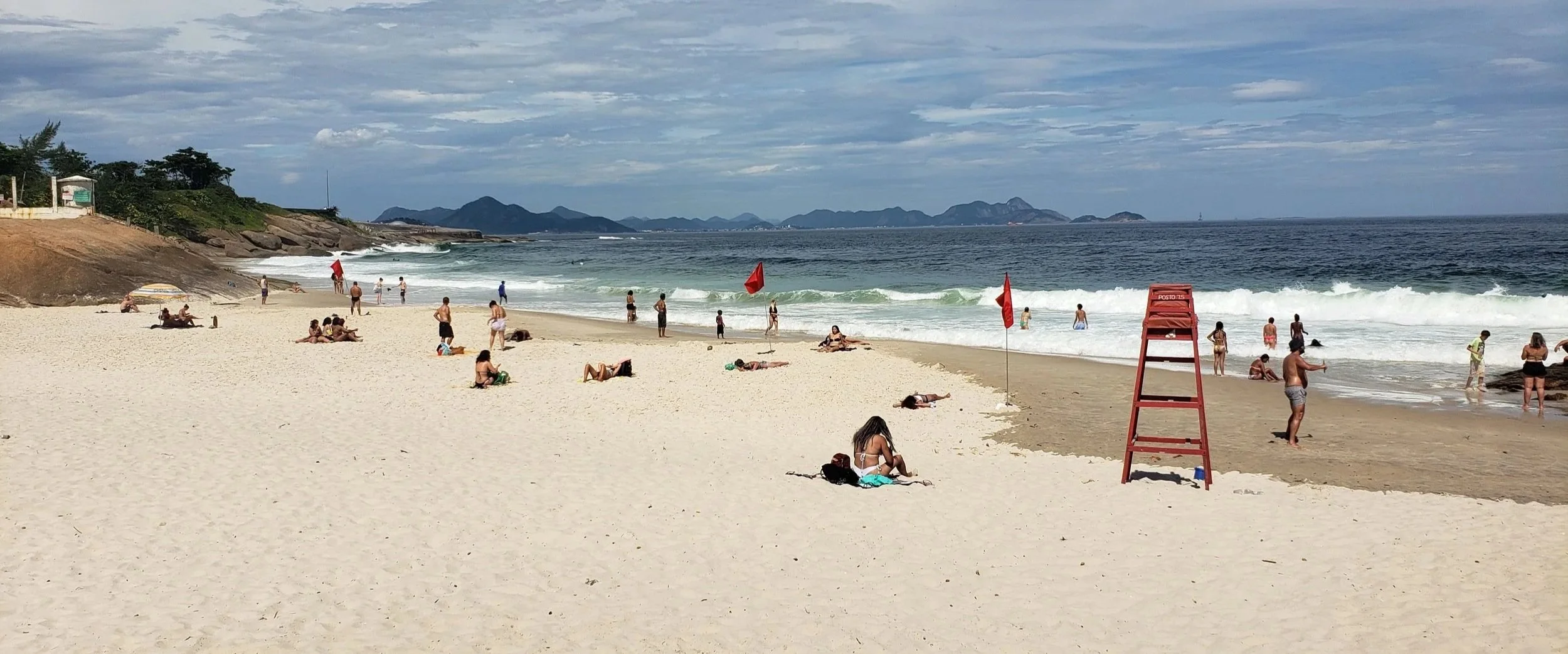
Diabo beach - Arpoador
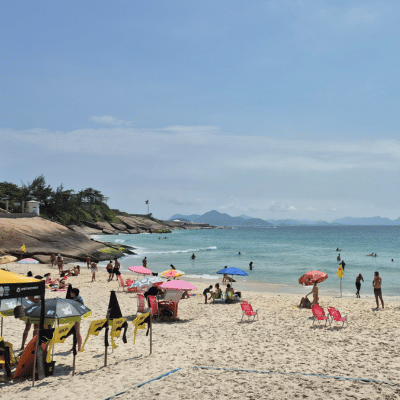
Most people who visit Arpoador never notice this small beach tucked into the rocks just beside it. Praia do Diabo tends to stay quieter than its famous neighbor, but the waves here are stronger, so it's better suited for experienced swimmers than for a relaxed beach day.
Praia do Vidigal: hidden between two icons
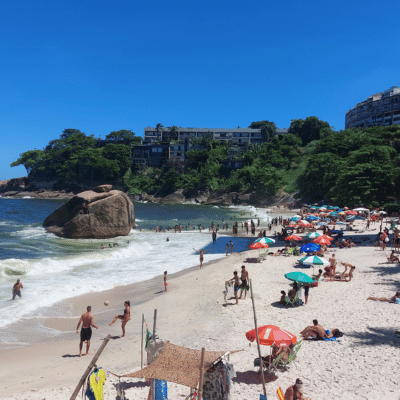
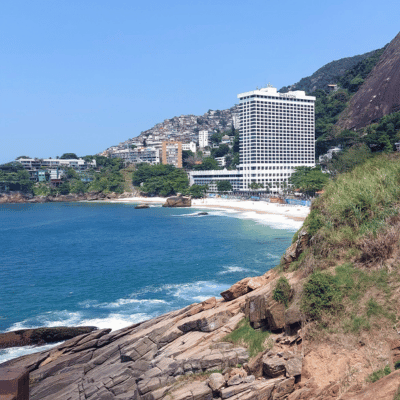
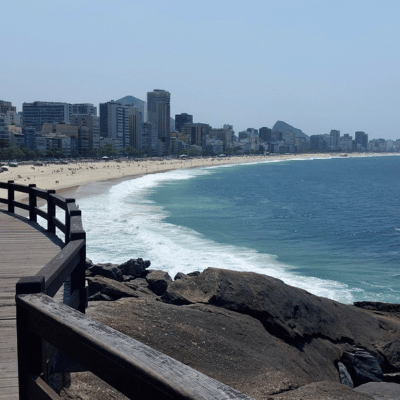
This beach is easy to miss if you’re not actively looking for it.
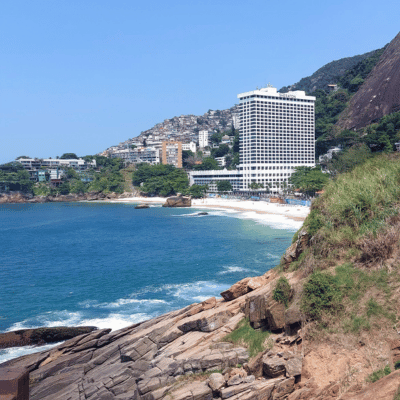
Tucked between the Dois Irmãos peaks and the dramatic coastline of Avenida Niemeyer, this small stretch of sand feels surprisingly hidden considering how close it is to some of Rio’s most famous neighborhoods.
It’s also the easiest beach on this list to reach. Access is via a staircase from Avenida Niemeyer, near number 174, and it’s an easy Uber ride or even a 10-minute walk from Leblon Beach.
If you walk, stop at the Leblon viewpoint along the way for one of the best views in the city. And if you’re staying at Sheraton Grand Rio Hotel & Resort, this will likely be your easiest beach option. The hotel sits right above it, with direct access just a few steps from your room.
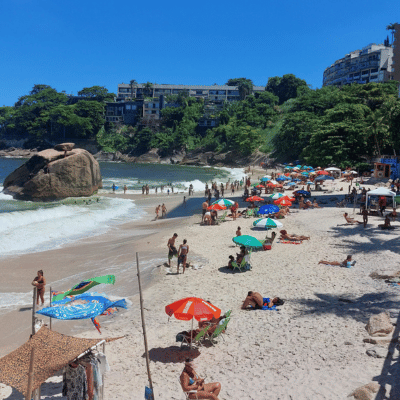
The beach is mostly frequented by locals and tends to be far less crowded than nearby Ipanema Beach or Leblon Beach. Just keep in mind that it has less infrastructure, especially on weekdays, with fewer food vendors and limited chair or umbrella rentals.
Praia da Joatinga: easy… if you time it right
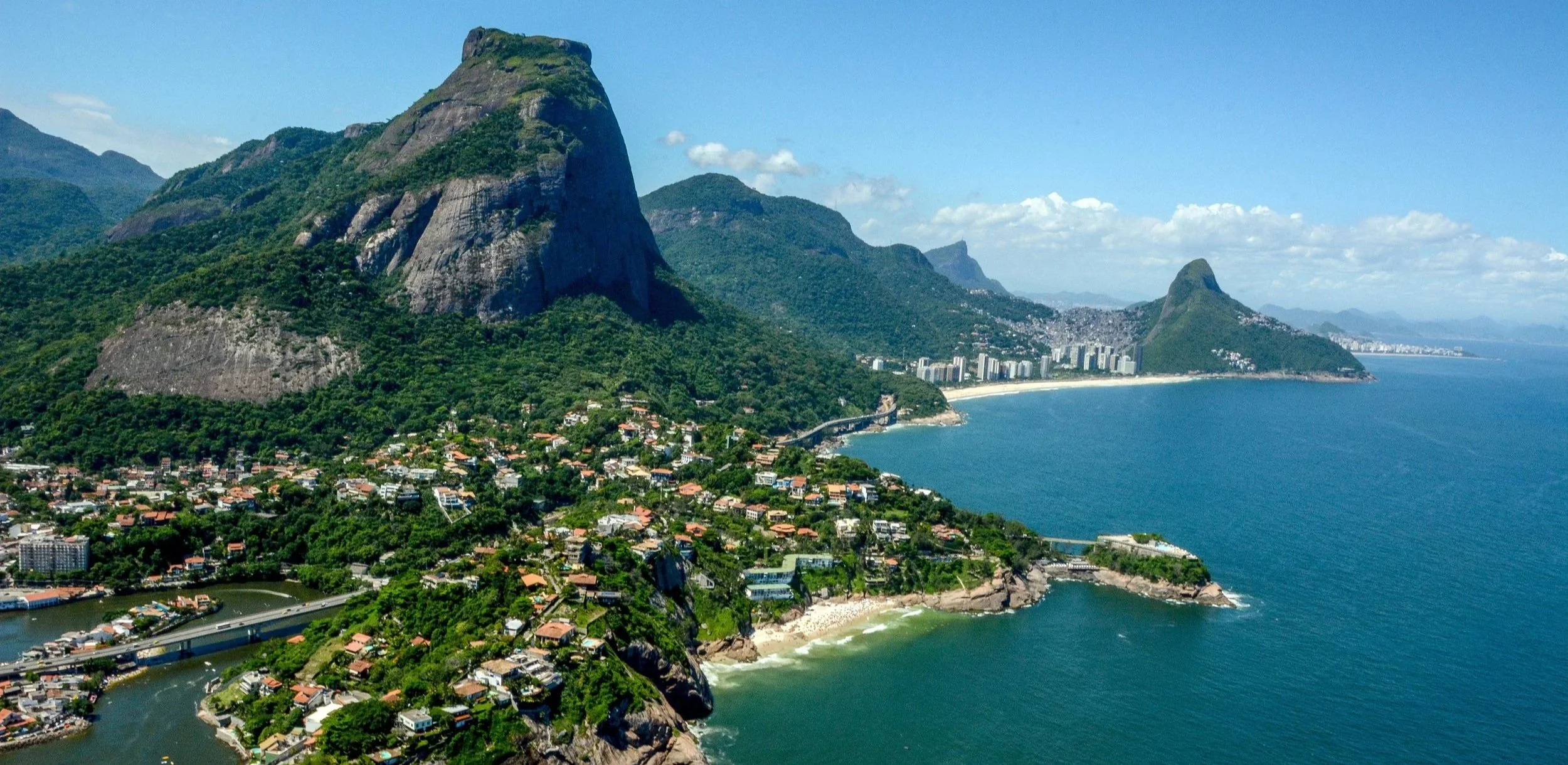
Praia da Joatinga, tucked below Pedra da Gávea, with São Conrado beach visible in the distance. Image source: Jose Guertzenstein
Enjoying Praia da Joatinga requires a little planning. This narrow stretch of sand is heavily affected by the tides, which means timing your visit matters.
During high tide, large parts of the beach can disappear completely, so always check tide conditions before heading there. Search for “tábua de marés Joatinga” or use apps like Windy or local surf forecast websites to see the best time to go.
The entrance is located inside a gated residential neighborhood, which may sound intimidating at first, but the beach is public and visitors are allowed in.
Getting there by Uber is usually easy. Getting back can be slightly more complicated, especially later in the day when ride options become limited.
On sunny days, taxis often wait near the entrance, which makes leaving easier. If not, security guards at the gate are usually helpful and can assist you in calling one.
If the idea of waking up steps from this beach appeals to you, staying in Joá is entirely possible. Check out my guide to the best alternative areas to stay in Rio de Janeiro for hotel and vacation rental recommendations in the neighborhood.
Praia Vermelha: hidden in plain sight
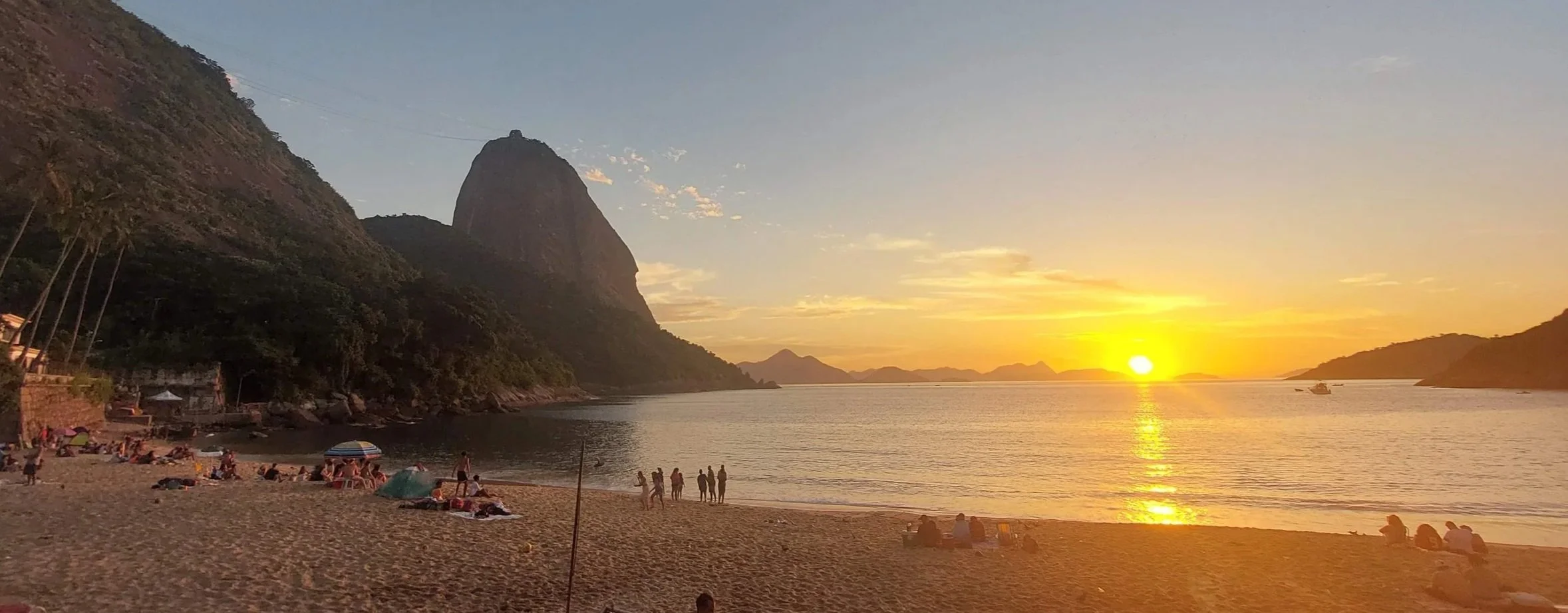
Praia Vermelha, Urca, during sunrise
It’s common for major landmarks to overshadow what’s sitting right next to them, and that’s exactly what happens with Praia Vermelha.
Located at the base of Sugarloaf Mountain, this beach is often overlooked by tourists rushing to catch the cable car, while locals know it as one of the calmest beaches in Rio thanks to its location between Guanabara Bay and the open Atlantic. And skipping it is a mistake.
This is easily one of Rio’s most charming and easy to access beaches, with an unforgettable backdrop of cable cars gliding above the mountain. It feels scenic without trying too hard.
Mornings are my favorite time to be here. It’s a beautiful spot for sunrise, the water is usually calmer, and you’ll often find people doing stand-up paddle in the bay.
Late afternoon has its own charm too, with the sun setting behind the mountains and lighting up the peaks.
Nearby Praia da Urca also attracts plenty of locals, but Praia Vermelha tends to offer a more scenic setting and a better overall beach experience.
Praia dos Amores, Barra da Tijuca
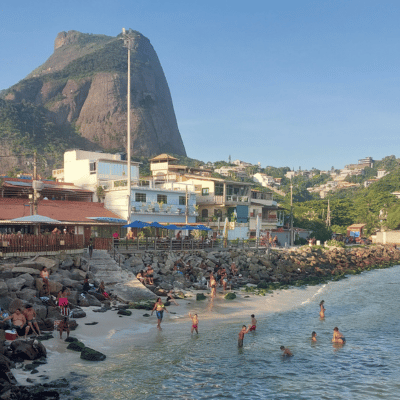
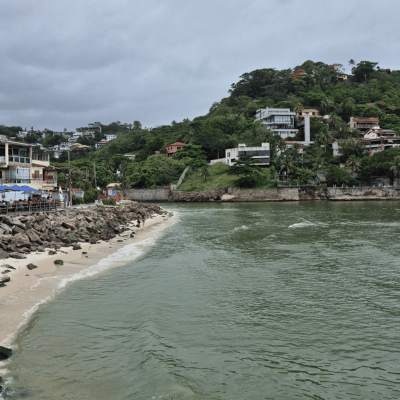
At first glance, this doesn’t feel like the entrance to a beautiful beach.
Access to Praia dos Amores happens beneath an overpass near Barra da Tijuca, which can make first-time visitors seriously question whether they’re heading in the right direction. Keep going.
What waits on the other side is Rio’s smallest beach framed by rock formations, sitting right where the ocean meets the canal. Because of that, the water here is usually calmer than nearby beaches, making it a popular spot for swimming.
Timing matters, though. Water conditions change significantly depending on the tides. The best time to visit is during full moon or new moon periods, when tidal movements are stronger.
Try to go during high tide, when cleaner ocean water flows in with more force. During low tide, the water tends to become much murkier as the canal drains out, which makes the experience far less appealing.
And even if you don’t feel like going down to the beach itself, the nearby Quebra-Mar da Barra da Tijuca is worth a stop. From there, and from the restaurants nearby, you’ll get beautiful views of the beach with Pedra da Gávea in the background, offering a completely different perspective of Rio’s ocean beaches.
Praia do Pontal, Recreio dos Bandeirantes: where Rio starts to slow down
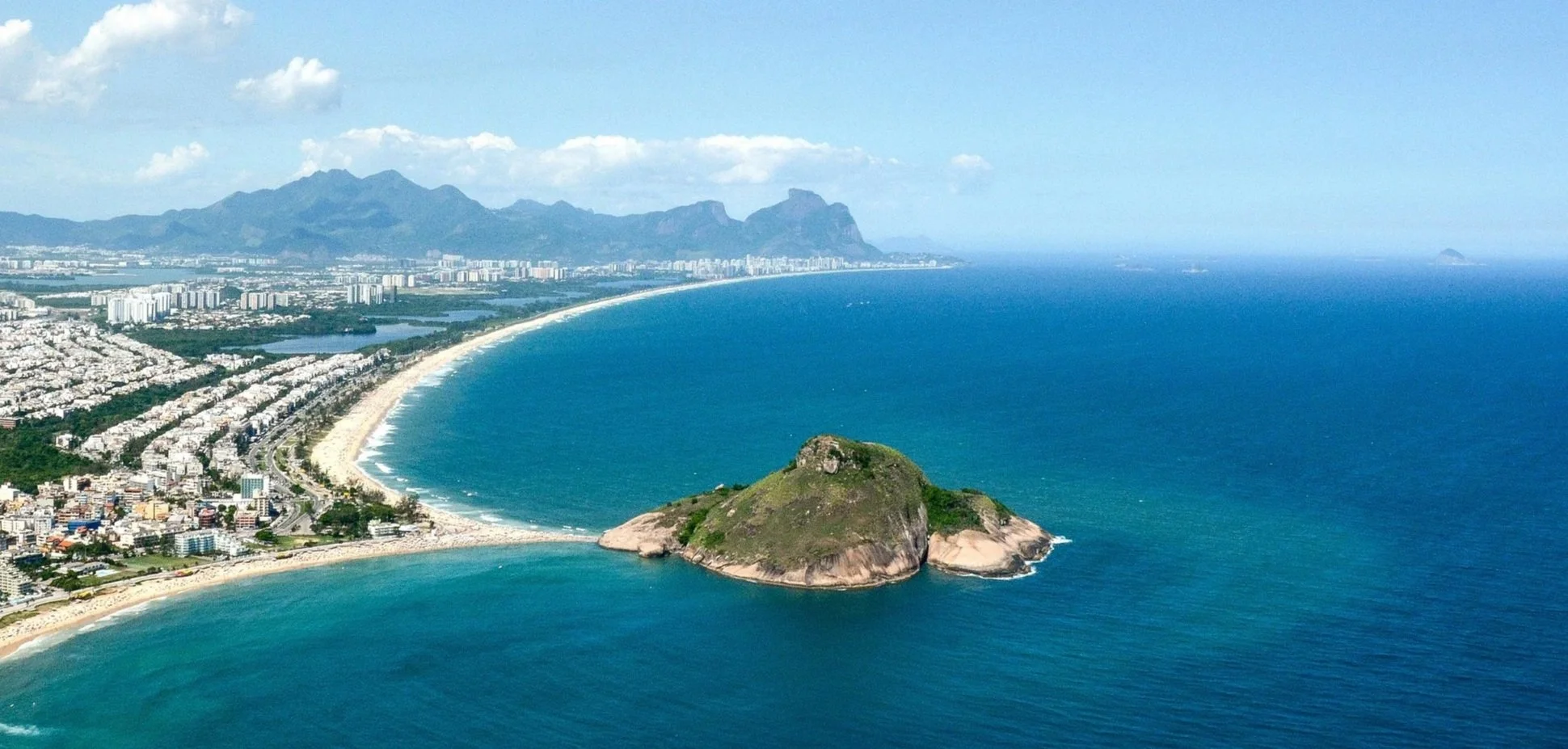
Pontal beach, Recreiro. Image source: Jose Guertzenstein
Picture a narrow stretch of sand leading to a massive rock formation known as Pedra do Pontal, separating Praia do Recreio dos Bandeirantes from Praia da Macumba. This is where Rio begins to feel bigger, quieter, and far less rushed.
From this narrow strip of sand, the view back toward Rio’s South Zone is framed by mountains, with Pedra da Gávea dominating the horizon. It’s one of those angles of Rio that feels surprisingly dramatic and far less photographed than it should be.
The waves here are also popular with surfers, especially compared to some of the calmer beaches on this list.
If you're heading to Prainha or Grumari, Praia do Pontal is a natural stop along the way, and worth adding to the itinerary rather than driving past.
Hidden beaches in Rio that require planning
This is where Rio starts feeling much wilder and much farther away from its famous beaches.
Prainha, Grumari Beach, and Praia do Abricó are all accessible by road, but getting there requires more planning than simply calling an Uber.
Ride-share drivers are often reluctant to accept trips to this part of the city, and getting one on the way back can be even harder. Phone signal is limited in some areas, which makes relying on apps a risky strategy.
The best option is going by car, joining a guided tour, or arranging private transportation that can drop you off and pick you up later.
Your reward? Some of Rio’s most dramatic coastline, where the Atlantic Forest reaches the ocean and the city feels very far away.
Prainha: for surfers and first-timers
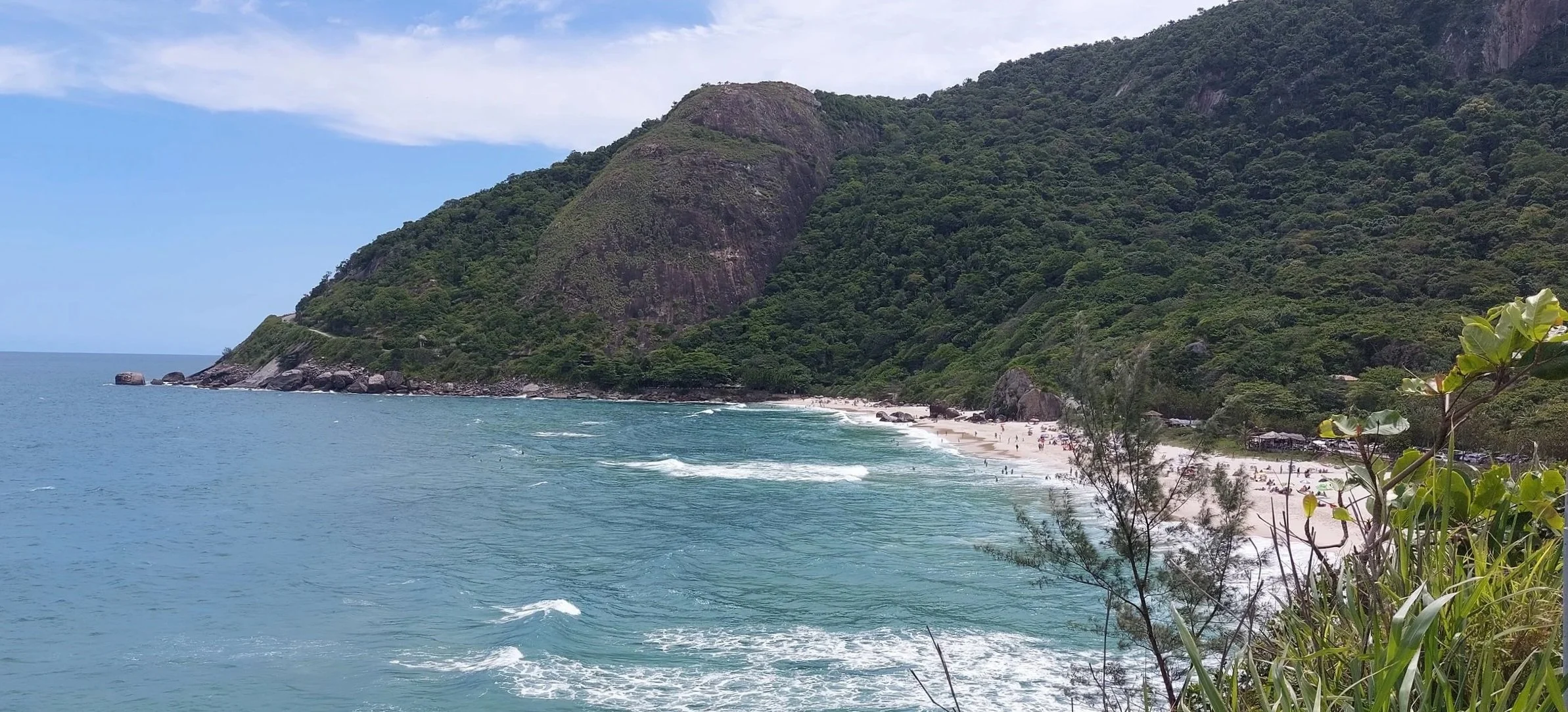
Prainha, Rio de Janeiro
If this is your first time exploring Rio’s wilder beaches, Prainha is usually the easiest place to start.
It’s smaller, more structured than people expect, and still feels dramatically removed from the city. There are kiosks, parking, and enough infrastructure (including caipirinhas!) to make the trip feel manageable, even if you’re not used to spending full days at remote beaches.
The waves here attract surfers, and weekends tend to be much busier because of it.
If you want the full scenic breakdown of why this beach is so visually unique, I covered that in my guide to Rio beaches by view.
Grumari Beach: for people who want space
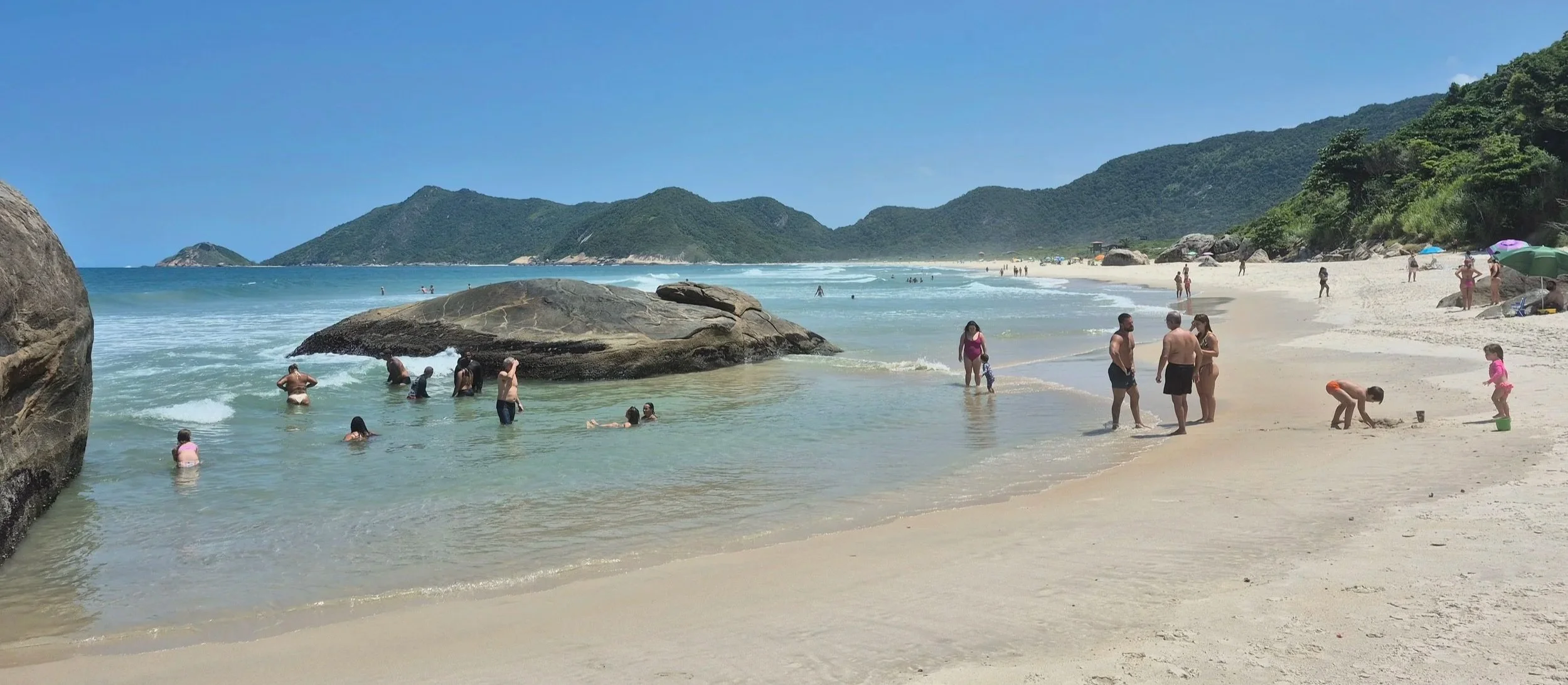
Grumari Beach feels bigger, quieter, and more remote.
This is where you go when you want long walks, fewer people, and a beach day that feels disconnected from the city. Even on busier weekends, the beach rarely feels crowded because of its size.
Unlike Prainha, this is less about surf culture and more about space and scenery.
Bring sunscreen, water, and plan to stay for a while. Once you’re here, you probably won’t want to rush back.
Praia do Abricó: Rio’s clothing-optional beach
Before reaching Grumari Beach, you’ll pass Praia do Abricó — Rio’s only official naturist beach.
It’s worth knowing that nudist rules are more strictly enforced on weekends and holidays, when visitors are generally expected to respect the beach’s naturist guidelines.
Weekdays tend to feel more relaxed, but this is still a place where knowing what to expect beforehand helps avoid awkward surprises.
Even if naturism isn’t your thing, the beach remains one of the most beautiful stretches of coastline in the area.
Hiking required: Rio’s wildest beaches on the Transcarioca Trail
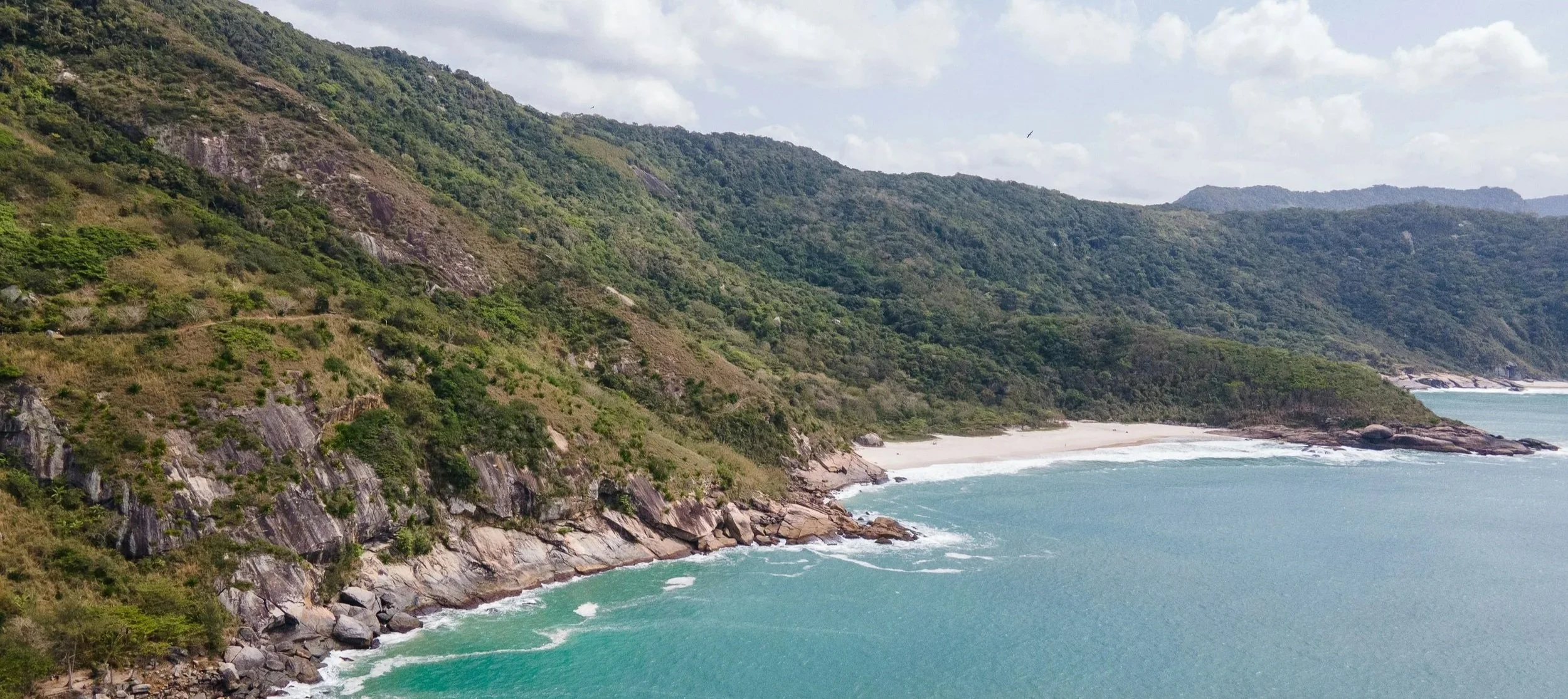
Image source: Wallace Fonseca
The Transcarioca Trail is Brazil's first long-distance hiking trail, crossing Rio from one side to the other through Atlantic Forest, mountain ridges, and some of the city's most remote coastline.
One section, starting from Barra de Guaratiba, leads to a series of beaches that are otherwise completely inaccessible. It's a 9-kilometer round trip, with steep sections, rocky climbs, and limited phone signal throughout. The reward is a stretch of coastline where the forest meets the ocean and the city feels genuinely far away.
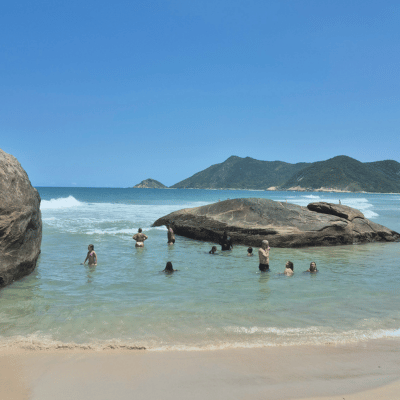
The beaches along the trail — Praia do Inferno, Praia da Funda, Praia do Meio, Praia do Perigoso — are similar in character: wild, untouched, and with strong waves that make them better for experienced swimmers.
Don't go expecting infrastructure. Bring water, wear proper shoes, start early, and seriously consider hiring a local guide. The trail can be confusing and the heat is intense.
This isn't a beach day. It's a hiking day that ends at the ocean.
Praia do Secreto: not exactly secret anymore
Despite the name, this small natural pool near Praia da Macumba became popular on social media and the secret is long out. Access requires a short trail followed by a steep rocky descent, and there's no sand — what you'll find is a shallow natural pool formed by ocean water trapped between rock formations.
Weekends get crowded, there's no infrastructure, and getting there isn't straightforward. If you're already exploring Prainha or Grumari by car, it can be an interesting quick stop. But it's not worth building a beach day around.
Island escapes: Rio de Janeiro by boat
If hiking feels like too much effort but you’re still craving something beyond Rio’s mainland beaches, there’s one final option: the islands.
Both Cagarras Islands and Ilhas Tijucas can be accessed by boat tours, usually departing from Barra da Tijuca or Rio’s South Zone depending on the operator.
The reward is some of the clearest water you’ll find in Rio, snorkeling opportunities, and a perspective of the city that most visitors never see: the skyline framed by mountains from the open ocean.
And if you visit between winter and early spring, boat tours may come with an unexpected bonus: whale sightings.
This part of Rio’s coastline sits along the migration route of humpback whales, and sightings become more common during the season — something I’ll cover in a separate guide soon.
From hidden staircases in Vidigal to islands in the open ocean, Rio’s beaches get progressively wilder, if you’re willing to go beyond the obvious.
Before you go, two guides worth reading: Rio de Janeiro Beaches: How to Choose by View, Not Just by Name covers the iconic beaches from a different angle, and the Rio Beach Culture guide explains the unwritten rules that make the beach experience here unlike anywhere else.
