

Rock in Rio 2026 Rio de Janeiro: Lineup, Tickets & Complete Guide
Rock in Rio 2026 returns to Rio de Janeiro in September for seven nights across two weekends, September 4, 5, 6, 7, 11, 12, and 13, at Cidade do Rock in Barra da Tijuca.
Rock in Rio lineup includes Foo Fighters, Elton John, Maroon 5, Jamiroquai, Stray Kids, and Avenged Sevenfold, among others. The full lineup is available on the official Rock in Rio website, updated as new artists are confirmed.
The night to circle is September 7: Elton John's only Brazilian show in 2026, sharing the Palco Mundo stage with Gilberto Gil. Two careers, two continents, one stage. It won't happen again.
The festival has been part of Rio's identity since 1985, when the first edition drew over a million people in ten days. Today it also runs a sister edition in Lisbon, one of the few festivals with a permanent presence on two continents.
Is There a Rock in Rio 2027? When Is the Next Edition?
If you're already planning ahead, here's the thing: Rock in Rio isn't an annual festival. Since it returned to a regular cycle, the festival has stuck to even years.
So no, there's no Rock in Rio 2027 planned, and going by that pattern, the next edition should land in 2028, most likely again in September. Rock in Rio hasn't officially confirmed 2028 dates yet, and honestly, they usually don't until one year before.
If 2028 is on your radar, keep an eye on the festival's official channels closer to the date, and check back here. I'll update this post the moment dates and lineup start dropping.
Already planning ahead for 2028? Scroll down to see where to stay in Barra da Tijuca, the closest area to Cidade do Rock.
In this guide
- 1Rock in Rio 2026 Tickets
- 2Rock in Rio 2026 Hours
- 3Age Restriction
- 4How to Get to Rock in Rio
- 5Where to Stay during Rock in Rio
- 6What Rock in Rio is Actually Like
- 7What to Bring (and What to Leave at Home)
- 8Your Ticket Gets You More Than Just the Festival
- 9Accessibility at Rock in Rio 2026
- 10Safety and Organization
- 11Is it Worth Traveling to Rio for Rock in Rio?
Rock in Rio 2026 Tickets
Tckets are available exclusively through Ticketmaster Brasil. As of August 2026, tickets for September 6 (Calvin Harris and Black Eyed Peas) and September 12 (Maroon 5 and Demi Lovato) are sold out.
Remaining dates still have tickets available, with highlights including Foo Fighters, Elton John, Twenty One Pilots, Avenged Sevenfold, Bring Me the Horizon, Halsey, and Gilberto Gil.
Rock in Rio 2026 Hours
Gates open: 2:00 PM
Last entry: Midnight
Festival ends: 2:00 AM
Gates open at 2pm, which means there are several hours of programming before the main headliners take the stage at night.
Arriving early is worth it, not just to secure a good spot near the stages, but to explore the food court, the Feirinha marketplace, and the amusement park area before the crowd density peaks in the evening.
Last entry is at midnight. If you're planning to arrive late to catch only the headliner, factor this in, and keep in mind that transport to Cidade do Rock can take significantly longer than expected on festival nights.
Rock in Rio 2026: Age Restriction
Rock in Rio 2026 has a minimum age of 16. Entry is not permitted for anyone under 16, regardless of whether they are accompanied by an adult.
Where to Stay during Rock in Rio
Closest area: Barra da Tijuca
Staying in Barra da Tijuca offers the shortest commute to Cidade do Rock with reduced travel time, no long transfers, and an easier return after headline performances. For a multi-day festival, that convenience adds up.
Hotels in Barra typically increase prices during festival dates and sell out quickly once headline days are confirmed. Book early.
For a full breakdown of the area, see our Barra da Tijuca neighborhood guide.
Recommended hotels at Barra da Tijuca
Walking distance to Rock in Rio
DOM Barra Hotel⭐⭐⭐⭐⭐⭐⭐
Residence Inn by Marriott⭐⭐⭐⭐
Courtyard by Marriot Barra da Tijuca⭐⭐⭐⭐
Hotels at Barra da Tijuca with transportation required
Luxury Hotels
Grand Hyatt Rio de Janeiro⭐⭐⭐⭐⭐
Windsor Marapendi ⭐⭐⭐⭐⭐
Upper-Mid / Mid-Range
Windsor Tower Hotel ⭐⭐⭐⭐
Regency Barra Hotel ⭐⭐⭐⭐
Laghetto Stilo Barra⭐⭐⭐⭐
Budget
Ibis Rio de Janeiro Barra da Tijuca⭐⭐⭐
Ibis Parque Olimpico ⭐⭐⭐
Staying in Copacabana or other South Zone neighborhoods
It is entirely possible to stay in Copacabana, Ipanema, Botafogo, Flamengo, or Downtown and attend Rock in Rio, many visitors do.
If you plan to visit the city's tourist attractions, this is actually the best option, since it puts you close to everything else you'll want to see during your trip.
The main difference is travel time and logistics to the festival, especially on headline nights when transport demand peaks across the city.
Fortunately, the festival runs its own official transport service connecting South Zone and other key points to Cidade do Rock, which we cover in detail below.
🏖️ Planning a trip beyond Rock in Rio?
Most international visitors make time to explore the city beyond the festival. If it's your first visit, these guides will help you plan with confidence:
First time in Rio?
Everything you need to know from visas and flights to money and what to pack.
Is Rio de Janeiro safe for tourists?
Practical safety tips for exploring Rio during the day and at night.
Where to Stay in Rio de Janeiro
Compare the best neighborhoods for every travel style.
Best things to do in Rio de Janeiro
Find out the best places and experiences to make the most of your time in the city.
How to Get to Rock in Rio
Official Festival Buses — Primeira Classe (Recommended Option)
Rock in Rio's official bus service is called Primeira Classe, and it's the most comfortable and straightforward way to get to and from Cidade do Rock.
These are executive coaches, air-conditioned, that pick you up at fixed departure points across the city and drop you off directly inside the venue. At the end of the night, your bus waits at the same point and takes you back to your departure point.
Departure points cover a wide range of the city and beyond: multiple stops across the main tourist choices (Copacabana, Ipanema, and surrounding neighborhoods), as well as options from Petrópolis, and even long-distance departures from Belo Horizonte and São Paulo, making it a realistic option for visitors traveling from other cities.
Seats are limited and sell out well in advance, especially for headline nights.
Book your transportation to Rock in Rio here.
Metro + BRT
A more affordable alternative is the Metro + BRT Expresso Rock in Rio. The direct service departs from Jardim Oceânico metro station, the final stop of Line 2, in Barra da Tijuca.
The round-trip BRT ticket costs R$29 (around $6) and is sold exclusively through the public transportation app Jaé. The Metro will operate 24 hours a day during Rock in Rio.
For more information about Rio’s transportation app, our complete guide to Getting Around Rio de Janeiro explains how to use it.
Ride-Share apps and private cars
Ride-share apps are not a reliable option for Rock in Rio. On festival days, streets around Cidade do Rock are closed to regular traffic and access to the immediate area is restricted.
What Rock in Rio is Actually Like
I've been to Rock in Rio in previous editions, and the difference between people who prepare and people who improvise is significant, mostly because the scale of it genuinely surprises first-timers.
Cidade do Rock is much larger than it looks in photos. The venue has six stages and Palco Mundo and Palco Sunset are the main ones, where the headliners play, but the other four run simultaneously with their own strong lineups throughout the day.
From the entrance gate to Palco Mundo, depending on your access point, you can easily walk 20 minutes just to get there.
Beyond the music, the venue is essentially a self-contained city for the night. There's a full food court with a wide range of options, an amusement park area, and a marketplace, called the Feira Hype, featuring Brazilian brands across art, fashion, and design. It's genuinely worth walking through early before the crowd density peaks.
Some of the best moments at Rock in Rio happen away from the stages, and first-timers who spend the entire night planted in front of Palco Mundo often say they wish they'd explored more.
September is mild but rain is a real possibility. It's the tail end of winter and the start of spring in Rio, so temperatures are comfortable, not the intense summer heat you'd get in January. What catches people off guard is the rain.
September sits right in that transitional window where showers can come through quickly and without much warning. I've been to the festival in the rain and a waterproof rain jacket was all I needed to stay comfortable. Umbrellas are typically prohibited inside the venue anyway.
Want to know what the rest of your trip will be like? Our guide to Rio de Janeiro in September covers the weather, sea temperatures, major events, and what to expect across the city during the month.
The exit is the moment that catches most people off guard. Right after the final headliner ends, everyone tries to leave at the same time. If you have any flexibility, waiting 20 to 40 minutes inside Cidade do Rock after the main stage wraps significantly reduces your wait at the transport queues. It's not wasted time, it's time you would have spent standing still in a crowd anyway.
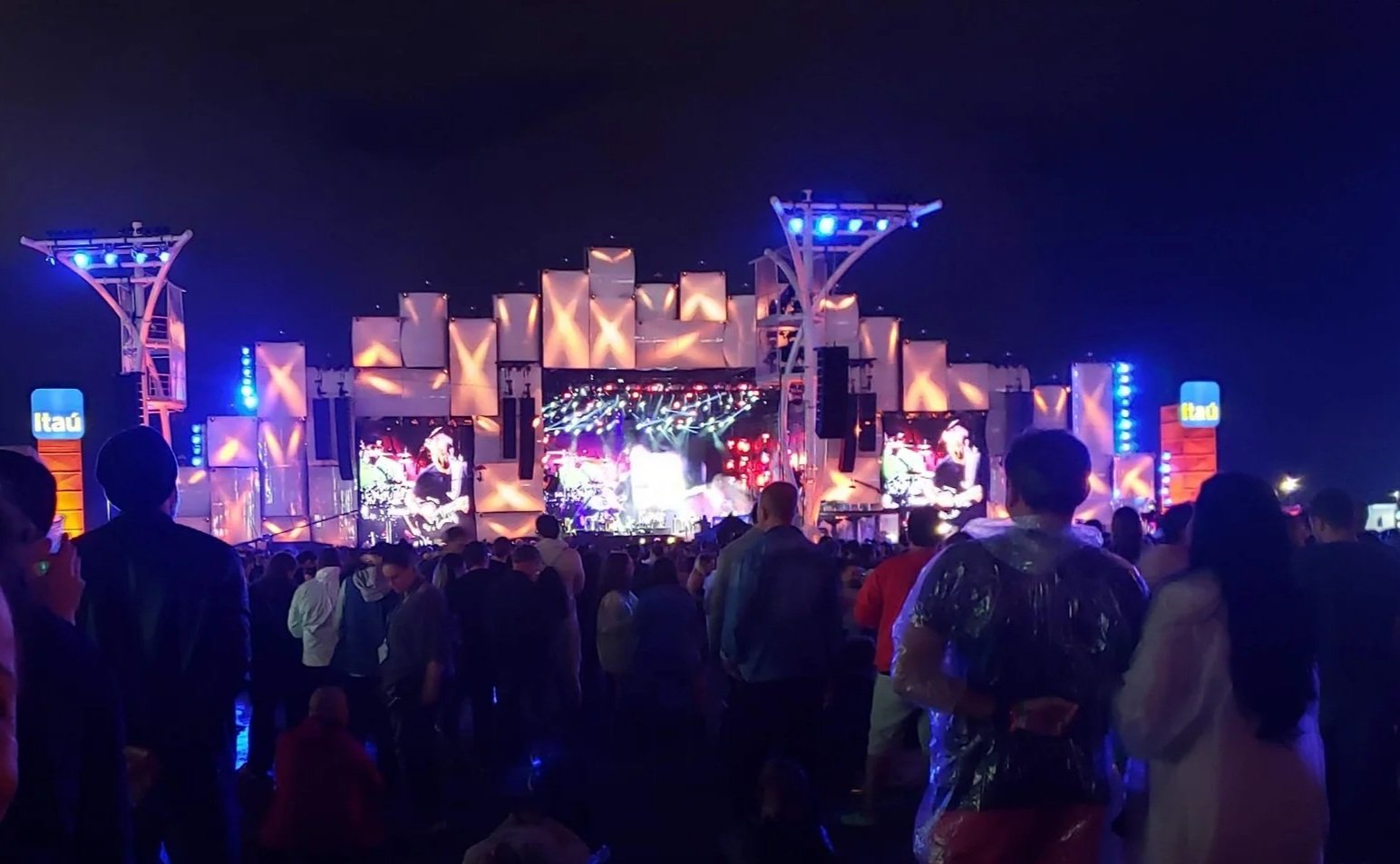
Rock in Rio 2019 edition
What to Bring (and What to Leave at Home)
Rock in Rio has security screening at the entrance and some items won't get through. Based on previous editions:
Bring:
Empty reusable water bottle (refill inside at free water points)
Sunscreen and insect repellent
Portable phone charger — your battery will not survive a full day of photos and videos
Light rain poncho — September still has a real chance of sudden showers
Leave at home:
Large backpacks — access with oversized bags may be restricted; small bags and belt pouches pass without issues
Folding chairs and umbrellas — not permitted inside
Outside food and drinks — the festival does not allow food brought from outside
Official rules on prohibited items are published by Rock in Rio closer to the event and can be updated. Always check the official website before heading out.
Your Ticket Gets You More Than Just the Festival
This is one of the details many visitors miss: your Rock in Rio 2026 ticket also unlocks a 10% discount on tours and experiences booked through Visit Rio, the official Rio de Janeiro tourism platform, valid through October 2026.
Visit Rio works with a wide range of experiences across the city: guided tours of Christ the Redeemer and Sugarloaf Mountain, boat trips around Guanabara Bay, favela tours, hang gliding over São Conrado, and more. If you're spending a few days in Rio around the festival, which, as covered above, is the best way to do this trip, it's worth browsing what's available and booking in advance.
The discount applies when you access the platform through the Rock in Rio partnership page. See all experiences available with your Rock in Rio discount on Visit Rio.
🌴 Explore Rio de Janeiro beyond the festival
Rock in Rio may be the reason you're visiting, but the city itself deserves a few extra days. Start with these guides:
Best Things to Do in Rio de Janeiro: The city's must-see sides and experiences
Rio de Janeiro nightlife: From botecos to samba nights, the best options in town
What to eat in Rio de Janeiro: Local dishes, where to try them, and what not to miss.
Best Beaches in Rio de Janeiro: Find the perfect beach for your travel style
Accessibility at Rock in Rio 2026
Rock in Rio has one of the most comprehensive accessibility setups of any festival in Brazil. A few highlights worth knowing in advance:
Mobility: Manual and motorized wheelchair loans are available on-site (subject to availability), along with a support workshop for wheelchair repairs. Tactile maps in Braille and tactile alert flooring are provided for visitors who are blind or have low vision. Guide dogs are welcome, with a dedicated support point offering hydration, food, and a relief area.
At the shows: A Brazilian Sign Language (Libras) interpreter is present for general assistance and music translation on the main screens. The Espaço Sinta o Som ("Feel the Sound" space) is a reserved area near the main stage speakers, exclusively for visitors with hearing impairments, designed so that music can be felt physically.
Audio description of shows is available via FM radio transmitters for blind visitors and those with low vision. Elevated platforms in front of the main stages are available subject to availability and venue regulations.
For the full accessibility guide including all services, locations, and how to request support in advance, check the official Rock in Rio accessibility page.
Safety and Organization
Rock in Rio operates with ticket control, security screening, and visible police presence throughout the venue. Compared to open beach events like the Copacabana concerts, crowd flow is significantly more structured where entry and exit points are defined, and the venue is designed for this scale.
That said, basic preparation makes a real difference. Keep valuables secure, plan your transport before arriving, and factor in congestion at exit times.
Leaving immediately after the final act usually means the longest queues, waiting 20 to 40 minutes inside the venue can significantly reduce stress on the way out.
Is it Worth Traveling to Rio for Rock in Rio?
For most international visitors, yes, especially if you plan to spend a few extra days in Rio.
Rock in Rio is much more than a concert. The festival takes place in a purpose-built venue with multiple stages, themed areas, food, attractions, and entertainment throughout the day, creating an experience that goes well beyond the headline acts.
It offers the best value if you're interested in several artists or want to combine the festival with a Rio vacation.
The city's beaches, landmarks, food, and nightlife make it easy to turn the event into a memorable trip.
If you're traveling only for a single performance, a one-day ticket can still be worthwhile, but remember that attending Rock in Rio requires more planning than Rio's free beach concerts.
If you're making the trip, I'd recommend staying at least four or five days to enjoy both the festival and the city.
Ready to go? Tickets for remaining dates are still available at Ticketmaster Brasil.
Planning another event in Rio?
Rio hosts some of the world's biggest celebrations and live events throughout the year. If you're planning another trip, these guides will help:
🎭 Rio Carnival 2027 Guide
Everything you need to know about tickets, dates, blocos, and how to plan your trip.
🎆 New Year's Eve in Rio
Where to celebrate Réveillon, what to expect, and the best places to watch the fireworks.
🎤 Copacabana Beach Concerts
A guide to Rio's biggest free concerts on Copacabana Beach.
🏈 NFL Rio 2026
Tickets, stadium information, and practical tips for game day.
Rock in Rio 2026: Frequently asked questions
What is the minimum age for Rock in Rio 2026?
The minimum age is 16. Entry is not permitted for anyone under 16, regardless of whether they are accompanied by an adult.
Can I exit and re-enter the festival?
The re-entry policy varies by edition. In previous years, exit and re-entry was allowed using the identification wristband on the same day. Check the official 2026 policy on the Rock in Rio website before planning any mid-day breaks.
Is it worth going on a rainy day?
Yes — Rock in Rio does not cancel for rain, and Cidade do Rock has the infrastructure for it. A light rain poncho handles most situations.
How expensive is food inside the festival?
Prices are above average, as they are at any large-scale festival. Budget separately for food and drinks inside the event, somewhere between R$ 80 and R$ 150 per person per day is a reasonable estimate for snacks and drinks, depending on how much you consume.
How does payment work inside the venue?
Rock in Rio has operated with its own internal payment system in recent editions. Load your balance in advance through the official app to avoid queues at top-up points inside the venue, those lines get long on busy nights.
What do I do if I get separated from my group?
Cidade do Rock has a designated meeting point marked on the festival map. Agree on that point with your group before the day starts. It gives you a clear reference if phones run out of battery or lose signal — which happens regularly on the highest-attendance nights.
Which day should I prioritize if I can only go once?
That depends entirely on the music. With Foo Fighters, Elton John, Maroon 5, and Jamiroquai confirmed on different nights, the lineup is strong across multiple days. If you have a clear favorite, go on that day. If you're undecided, Elton John's night is likely to be one of the most significant of the entire festival given the context of his touring history.

Written by Karina
Born and raised in Rio de Janeiro, Karina spent over a decade working in the tourism industry, with experience in some of the world's leading travel destinations. She created Going to Rio to bring that same standard of practical, traveler-first guidance to visitors exploring Rio de Janeiro. Learn more about Karina



Known as one of the most expensive places to stay in the city, Ipanema also has affordable options. Here's my list of the best hotels in Ipanema, by category.