

Updated: October 2026.
Samba might be the first thing that comes to mind when you think of Rio de Janeiro. And you're right, with one difference: here, samba isn't just something we watch, it's part of how we live. It's in small neighborhood bars and Lapa's venues, in the samba school quadras packed months before Carnival, in the beach kiosks at sunset. Samba is everywhere.
I grew up with it and I'm still a terrible dancer, so don't worry. Samba welcomes everyone, even if it's your very first time and you have no idea what to do.
In this guide you'll find where samba in Rio de Janeiro comes from, where to take a samba class, how to visit a samba school rehearsal and the Cidade do Samba, and what to know before joining a roda for the first time.
Just looking for where to go tonight? My weekly guide to live samba in Rio lists the best rodas and venues day by day, updated every month.
The roots of samba in Rio de Janeiro: from Bahia to Pequena África.
Samba's roots go back to the African rhythms brought to Brazil by enslaved people, especially the samba de roda of Bahia. After slavery was abolished in 1888, many Black families from Bahia moved to Rio and settled around the port, in the area now known as Pequena África (Little Africa). That's where samba as we know it took shape, in backyard gatherings like the ones at Tia Ciata's house, where musicians met to play, dance and pray.
It wasn't always welcome. In the early 20th century, samba was seen as marginal and often repressed by the police. Things changed fast: the first registered samba, "Pelo Telefone," came out in 1916, the first samba school was founded in Estácio in 1928, and within a few decades samba had become a symbol of Brazilian identity.
You can still feel that history today. The roda format, musicians around a table and everyone singing along, comes straight from those early gatherings. To see where it all began, join a guided walking tour of Little Africa: it covers the Cais do Valongo, a UNESCO World Heritage Site, along with the streets and squares where samba was born. Then come back at night for the roda at Pedra do Sal, on the historic steps of Pequena África.
Samba classes in Rio: learn the basics, even with two left feet
If watching isn't enough, Rio is one of the best places in the world to try samba yourself. And take it from someone who grew up here and still can't dance: you don't need any experience. Most beginner classes teach you the basic step and the rhythm behind it in about an hour, and you'll leave with enough confidence to join in at the next roda.
If you’re staying in Copacabana or Ipanema, one of the easiest options is a beginner samba class in Ipanema, with several time slots a day and instructors used to teaching international visitors. It's also one of the easiest ways to meet people if you're traveling alone.
If you prefer to break a sweat, SambaFit combines traditional samba steps with a workout, a fun way to stay active while learning the rhythm of Rio.
Samba schools: rehearsals and the Cidade do Samba
Once you've got the basic step, the best place to put it to the test is a samba school rehearsal.
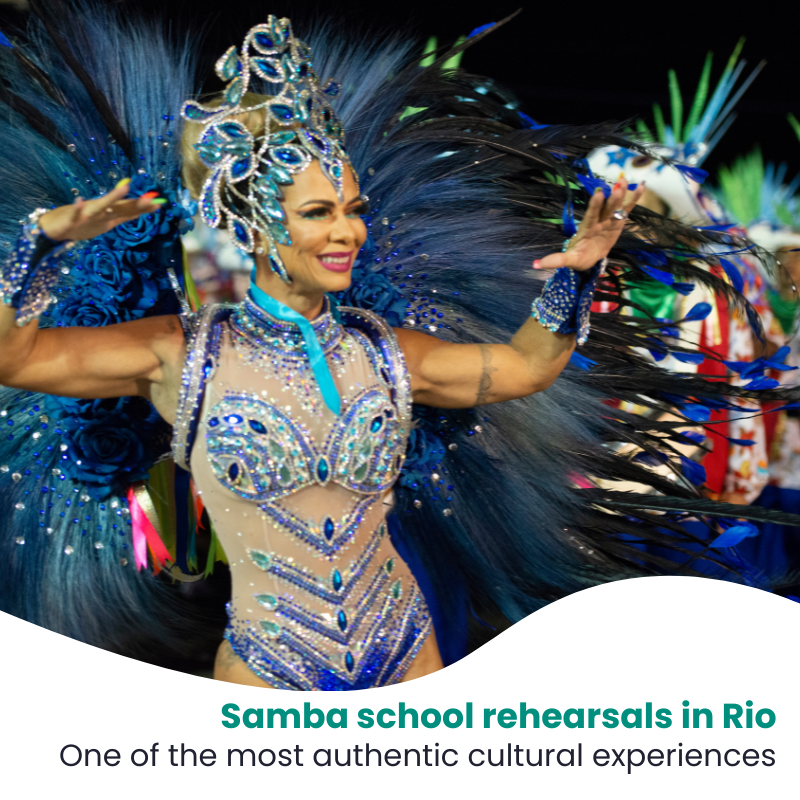
In the months leading up to Carnival, the samba schools open their quadras to the public for weekly rehearsals, and it's the closest you'll get to the real thing outside the parade: hundreds of locals singing the year's samba, the drum section playing a few meters away, and nobody caring whether you know the steps. Closer to Carnival, the technical rehearsals move to the Sambadrome, a free preview of the parade itself.
My guide to attending a samba school rehearsal in Rio covers which schools to visit, when to go and what to expect, and my pre-Carnival guide has the Sambadrome rehearsal schedule.
Cidade do Samba: where Carnival is built
To see what happens behind the parade, head to the Cidade do Samba, in Rio de Janeiro's port zone. This creative complex is home to the building areas of the top samba schools, where floats are built and costumes are sewn months in advance.
Guided tours explain how a samba school prepares for Carnival and the symbolism behind each float and costume, and some include a samba show and the chance to try on a costume.
It's just a few minutes from Pequena África, so it pairs well with a Little Africa walking tour on the same day.
Where to experience samba in Rio
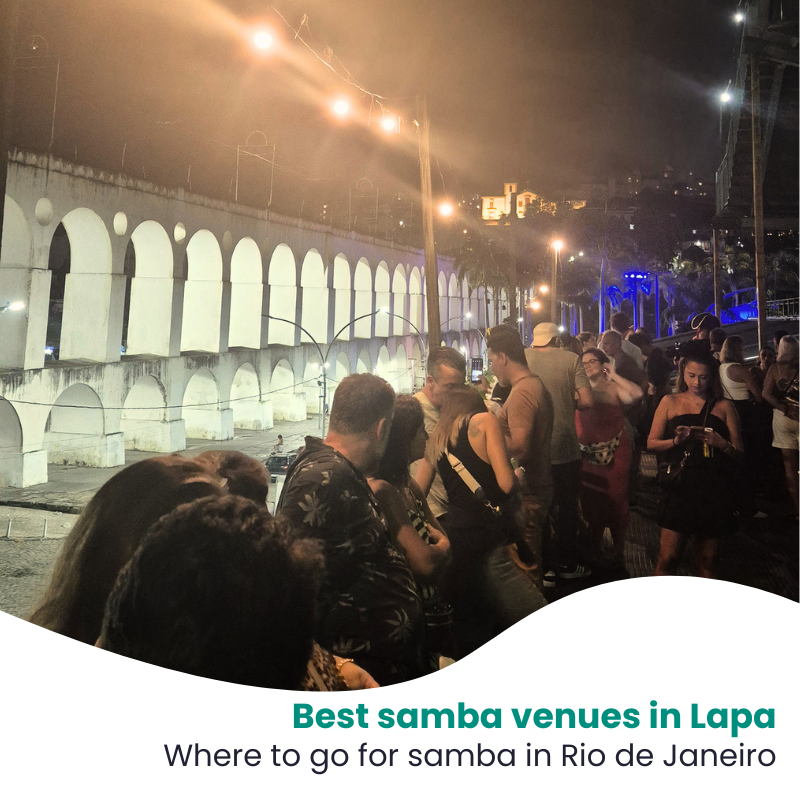
Samba happens all over the city, and the experience changes a lot depending on where you go. Street rodas, like the ones at Pedra do Sal and on the streets of Downtown Rio, are free, crowded and full of locals.
Lapa's venues, like Rio Scenarium and Fundição Progresso, offer a stage, a bar and a more comfortable night out. Beach kiosks in Arpoador and Copacabana add the sunset and ocean breeze to the music.
And for something more intimate, Bip Bip, a tiny bar in Copacabana, takes its music so seriously that the audience listens from the sidewalk and snaps their fingers instead of clapping.
Since many of these only happen on specific days, check my weekly guide to live samba in Rio to plan which nights to go where.
Going to samba alone in Rio de Janeiro
Samba is one of the easiest things to do on your own in Rio. Rodas are social by nature, people sing together, share tables and start conversations with whoever is standing next to them. A beginner class is also a great way to meet other travelers before heading out at night.
If you'd rather not go alone, joining a samba tour lets you experience the rodas as part of a group, with someone who knows the way and the best time to arrive. My guide for solo female travelers in Rio includes tour options and tips for nights out.
Samba etiquette: what to know before joining a roda
Rodas are informal, but there are a few unwritten rules worth knowing.
The music comes first. In a roda, the music is the only sound that matters. Avoid loud conversations or phone calls near the musicians, the people around you came to listen.
Film the band, not the crowd. Recording the musicians is usually fine, but not everyone in the audience wants to end up in your video, so keep the camera on the band.
Give the musicians space. The table in the middle belongs to the band. Don't lean on it, put your drink on it or touch the instruments.
Support the roda. Many rodas are free or ask for a small contribution. Buying drinks from the bar running the event, or chipping in when the hat goes around, is what keeps them alive.
FAQ - Samba in Rio de Janeiro
What is the famous dance of Rio de Janeiro?
Samba. The solo style, samba no pé, is the one you'll see at Carnival and in the rodas, while samba de gafieira is a partner dance from Rio's traditional dance halls.
Where did samba originate?
Samba's roots are in the African rhythms of Bahia, but samba as we know it took shape in Rio, in the early 20th century, in the area around the port now known as Pequena África.
Do I need to know how to dance to enjoy samba?
Not at all. Most people at a roda are there to sing and listen, and nobody cares if you just sway along. If you want to learn the basic step, a beginner class takes about an hour.
Where can I take a samba class in Rio?
There are beginner-friendly classes across the city, and Ipanema has some of the easiest options for travelers, with several time slots a day and instructors used to international visitors.
Can tourists visit a samba school?
Yes. In the months before Carnival, the samba schools open their quadras to the public for weekly rehearsals, the closest you'll get to the parade without a ticket to the Sambadrome.
What is the Cidade do Samba?
It's the complex in Rio's port zone where the top samba schools build their floats and costumes. Guided tours take you behind the scenes of Carnival.
Want to see how this all comes together on the streets?

Not all samba experiences in Rio are the same. If Lapa is all about nightlife and Pedra do Sal is famous for its crowds, Downtown Rio is where you'll find relaxed weekend street samba in the heart of the city's historic center.