

Rio de Janeiro in July: Weather, beaches and what to expect
It's quite common for people to picture Rio de Janeiro in winter as cold, rainy, and not worth considering. Rio de Janeiro in July, however, when winter is at its peak, is one of my favorite times of the year.
The skies are clear, the days are warm enough for the beach, the hiking trails are at their best, and the humpback whales are out in full force.
July is also when Brazilian families take their school holidays, which means the city is busier than June but still nowhere near the chaos of summer.
If you're checking the weather in Rio de Janeiro in July before booking, here's the short version: little rain, warm days, clear skies, and a cool breeze at night.
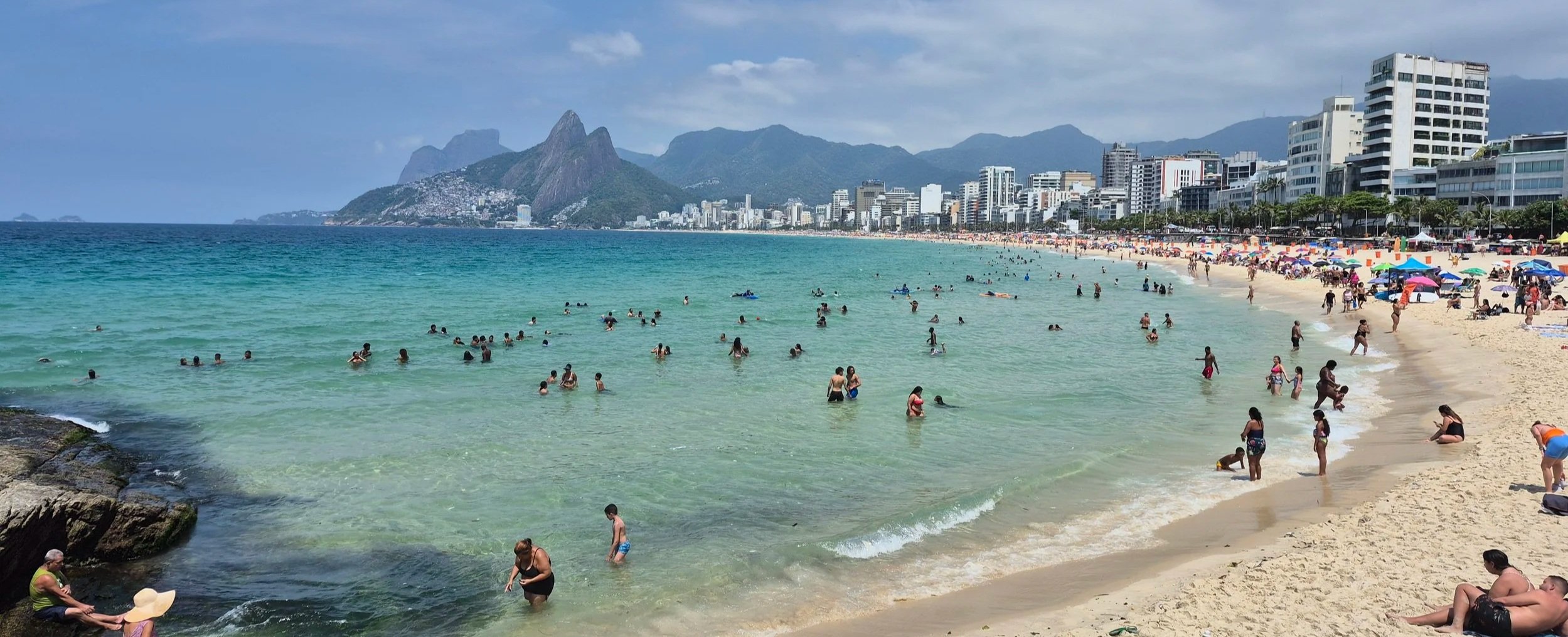
Ipanema beach view from Arpoador rocks
July at a glance
🏖️ Beach crowds: Moderate — school holidays bring Brazilian families back to the sand
💰 Value for money: Medium — prices rise with domestic demand, but still below summer peak
☀️ Weather: Very good — dry and clear, with occasional cold fronts and some chance of rain early in the month
🥾 Hiking conditions: Excellent
🌅 Sunrise/sunset quality: Outstanding
🐋 Whale watching: Peak season — highest chances of sightings
🎉 Month highlight: Humpback whale migration at its most active
Dates to watch
📅 July school holidays — Brazilian school break typically runs through the second half of July. Popular beaches, Christ the Redeemer and Sugarloaf will be busier than usual, especially on weekends. Book accommodation early and visit major attractions on weekday mornings.
Quick pick: Where to stay in July
Grand Mercure Rio Copacabana ⭐⭐⭐⭐⭐
Beachfront with easy metro access and a comfortable stay for first-time visitors.
From $180/night
Hotel Arpoador ⭐⭐⭐⭐
Right on Ipanema's most walkable corner with the best sunset views in the city.
From $300/night
Novotel Praia de Botafogo ⭐⭐⭐⭐
A budget-friendly base in Botafogo with great views and metro access.
From $150/night
The weather in Rio de Janeiro in July
July sits at the heart of Rio's dry season, though August tends to be even drier. Temperatures during the day sit between 22°C and 26°C (72°F–79°F), and nights can drop to 16°C–19°C (61°F–66°F), cool enough that a light jacket becomes genuinely useful.
Rain is infrequent but not impossible, particularly in the first half of the month. By late July the sky tends to stay clear for days at a stretch, and the air quality improves noticeably without the humidity of summer. If you've been to Rio in January or February, July feels like a different city.
One thing worth knowing: cold fronts can pass through in July, bringing overcast skies and wind for a day or two. They usually clear quickly, but it's worth having a flexible itinerary. For a broader look at how Rio's climate shifts across the year, the full weather guide covers it in detail.
What to pack: light clothes for daytime, a mid-layer for evenings, and a compact waterproof layer for the occasional cold front. Sunscreen still applies because the winter sun in Rio is deceptive. For a full packing list, this guide covers everything you need for Rio.
Can I go to the beach in July?
Yes, and July beaches have a particular quality that summer can't match.
The water temperature drops to around 21°C–22°C (70°F–72°F), which most visitors find refreshing rather than cold. The sand is less packed than in summer and the afternoons have a relaxed, almost local feel to them.
What changes in July is who you share the beach with: school holidays bring Brazilian families back, so weekends and afternoons do fill up, just not in the same overwhelming way as January.
For a quieter experience, weekday mornings are ideal. Leme, at the quieter end of Copacabana, tends to be less crowded than the main stretch.
If you're willing to travel a bit further, Prainha and Grumari, both protected areas with limited access, are at their most manageable in winter.
July is also one of the best months to appreciate Rio's beaches for their views rather than just their water. The clear winter sky makes the backdrop with Sugarloaf, the hills and the city sharper and more vivid than at any other time of year. This guide to Rio's beaches by view is worth reading before you decide which ones to prioritize.
Whale watching in Rio de Janeiro in July
Humpback whales migrate along Brazil's coast toward Abrolhos, a marine park on the southern coast of Bahia. On their way, they pass close to Rio between June and August, and July offers some of the best chances of the season, with sightings more frequent. Boat tours out of Rio offer genuinely good chances of seeing them in open water.
Even on trips where the whales don't show, the experience of seeing Rio from the water with the coastline, the mountains, and the city from the bay, is worthwhile on its own. A dedicated guide to whale watching in Rio is coming soon.
Things to do in Rio in July
For first-time visitors, July is one of the best months to experience Rio's highlights.
The dry season means clearer skies and better visibility from the city's most iconic viewpoints as Christ Redeemer and Sugarloaf Mountain, and the beaches without the summer heat is more comfortable than it would be in January or February.
For a complete overview of what the city has to offer, our what to do in Rio de Janeiro guide is a good starting point.
The school holidays do bring more domestic visitors, especially on weekends. The practical solution is simple: book the major attractions in advance and visit on weekday when possible.
The experiences below are a personal selection of tours and activities I recommend for July in Rio. Some links are affiliate links and if you book through them, I earn a small commission at no extra cost to you.
Cycling
Winter's dry trails make this one of the best times of year to get on a bike. The climb into Tijuca Forest is brutal in summer heat but genuinely enjoyable once the humidity drops, especially on an e-bike. I did the guided e-bike tour through Santa Teresa and Tijuca Forest and wrote about what to expect.
Sunsets
July has a practical advantage that's easy to overlook: the sun sets earlier than in summer, which means you can catch a genuinely spectacular sunset and still have the whole evening ahead of you.
A few spots worth planning around: the rooftop bar at Hotel Fasano in Ipanema is one of the best vantage points in the South Zone, with unobstructed views over the ocean.
The Mureta da Urca, the low wall at Urca, draws locals every evening for exactly this reason. And the cycling path along Botafogo bay offers one of the most cinematic views in the city.
After any of these, you're perfectly placed for dinner.
📍 Planning your first trip to Rio de Janeiro?
You're in one of the best months to visit. These guides will help you plan the rest of your trip with confidence.
🗺️ Rio Travel Guide
Everything you need before you arrive, from transportation to local tips.
🛡️ Is Rio de Janeiro safe?
Practical advice from a local.
🍽️ What to eat in Rio
The dishes and restaurants worth trying.
💰 Is Rio de Janeiro expensive?
Typical travel costs and budgeting tips.
Where to stay in Rio de Janeiro in July
Looking for great locations without overspending in July? Here are my picks:
⭐⭐⭐ Windsor Martinique (Copacabana) – Click here for rates & availability
⭐⭐⭐⭐ Hotel Astoria (Ipanema) – Click here for rates & availability
⭐⭐⭐⭐⭐ Yoo2 Rio de Janeiro by Hilton (Botafogo) – Click here for rates & availability
July is one of the busiest months for domestic tourism in Rio, with Brazilian school holidays pushing demand up across the city. Hotels in well-located neighborhoods like Ipanema, Copacabana, and Botafogo fill quickly, and prices reflect that.
If you're planning a July trip, accommodation is one of the things worth sorting early.
For a full breakdown of Rio's neighborhoods and which one suits your travel style, our where to stay in Rio de Janeiro guide covers the options in detail.
Is July a good time to visit Rio?
Yes, with one honest caveat. July is Rio's most popular domestic travel month, which means prices are higher than June and availability tighter, especially in Ipanema and Copacabana.
If you're booking from abroad, the rates are still well below the summer and Carnival peaks, but the city will feel busier than the quieter winter months.
What you get in return is the clearest skies of the year, peak whale watching, ideal hiking conditions, and a Rio that feels alive without feeling overwhelming.
For first-time visitors who want good weather and a city that's fully open, July is one of the strongest months to visit.
Beyond Rio in July
Extending your trip? July is a great month to explore Brazil beyond Rio.
Ilha Grande & Parati — Just a few hours from Rio, July brings calm seas and minimal rain. It’s busy, but the beaches and trails still reward the trip.
Bonito, Mato Grosso do Sul — The dry season makes the rivers crystal-clear for snorkelling with hundreds of fish. July is high season, so book accommodation and activities well in advance.
Florianópolis and Praia do Rosa — July is one of the best times to visit the island. Direct flights from Rio make it an easy add-on, and the winter calm is a sharp contrast to the packed summer season.
Praia do Rosa, a small beach town on the southern coast of Santa Catarina, is also one of the best spots in Brazil for whale watching where humpbacks can be seen from the cliffs between July and November, no boat required. It's quieter, cooler, and well before the rainy season.
Winter in Rio: other months
Rio in June— The quietest and most underrated month of winter. Fewer crowds, lower prices, and the start of whale watching season. If July feels too busy, June is the answer.
Rio in August — The driest month of the year, peak whale watching, and the first jacarandá trees beginning to bloom across the South Zone.
FAQ
Is July a good time to visit Rio de Janeiro?
Yes. July offers great weather of the year — dry, clear, and comfortable — along with peak whale watching season and ideal conditions for hiking and outdoor activities. The main trade-off is that domestic school holidays mean the city is busier and accommodation prices are higher than in June.
What is the weather like in Rio de Janeiro in July?
July sits at the heart of Rio's dry season, though August tends to be even drier. Daytime temperatures sit between 22°C and 26°C (72°F–79°F), with cooler nights around 16°C–19°C (61°F–66°F). Rain is infrequent but not impossible, particularly in the first half of the month. Occasional cold fronts can bring overcast days for 24–48 hours, but these pass quickly.
What is the temperature in Rio de Janeiro in July?
During the day, expect 22°C–26°C (72°F–79°F). Nights cool to around 16°C–19°C (61°F–66°F), particularly in higher-altitude areas like Santa Teresa or near the water. Light layers for the evening are worth packing.
Can I swim at the beach in July?
Yes. The water sits around 21°C–22°C (70°F–72°F) — cooler than summer but swimmable for most visitors. Beaches are open and active, especially on weekends during school holidays.
What to wear in Rio de Janeiro in July?
Light clothes work for daytime — t-shirts, shorts, summer dresses. Evenings call for a light jacket or mid-layer, especially near the water or in hillside neighborhoods. A compact rain layer is worth having for cold fronts. Good walking shoes are useful if you plan to hike.
What to do in Rio de Janeiro in July?
July is ideal for whale watching (peak season), hiking the city's trails, cycling, and exploring beaches with fewer summer crowds. The winter arts calendar also fills up, with theatre and cultural events across Centro and Lapa. School holidays mean major attractions like Christ the Redeemer are busier than June — visit on weekday mornings for the best experience.
