

Best Restaurants in Rio de Janeiro: A Brazilian Food Guide
Rio's restaurant scene is genuinely international and a list of best restaurants in Rio de Janeiro could easily include excellent Italian, Japanese or Mexican restaurants across the city. But this is not the idea with this guide.
Brazilian cuisine is one of the richest and most diverse in the world, shaped by indigenous, African, and Portuguese influences, wildly different from region to region, and still underrepresented in the way the world talks about food.
When you're in Rio, you have access to not just carioca cooking but dishes from the Northeast, the South, and Minas Gerais, all within a few kilometers of each other. In my opinion, that's where your attention deserves to go.
This guide is focused on the best restaurants in Rio de Janeiro that serve Brazilian food from carioca classics, northeastern cuisine, to fine dining rooted in Brazilian ingredients.
And since this is a guide written by a carioca, it only makes sense to start at home, with an institution that most visitors never even hear about it: the braseiros.
Best Braseiros in Rio de Janeiro
No restaurant feels more authentically carioca than a braseiro. These neighborhood institutions are where many locals gather for grilled meats, generous side dishes, and long, relaxed meals with family and friends.
If you're curious about what makes a braseiro different from a churrascaria, we've explained the tradition in our guide to Food in Rio de Janeiro.
These places are fast, informal, and unmistakably carioca: a stool at a zigzag counter, the smell of charcoal, a cold draft beer. They're not fine dining and they don't try to be. Let's start where any carioca would.
You may have heard of Braseiro da Gávea thanks to Dua Lipa, who reportedly became a regular during her stay in Rio. I almost included it here too, but I love it for its grilled picanha as much as its galeto. So instead, you'll find it in my guide to Rio's best churrascarias and steakhouses, where it feels right at home.
Braseiro
Open in Copacabana since 1962, Braseiro is the kind of place that hasn't needed to change to stay relevant. The room is small, the counter is the main event, and the menu has stayed faithful to what it does best: galeto and filé à braseiro, both cooked over charcoal.
Order the galeto with farofa de ovo, fries, and molho à campanha, and don't skip the steak (filé mignon à braseiro) if you're craving beef instead. It's fast, cheap by Copacabana standards, and exactly the kind of unpretentious carioca cooking that tourist-focused restaurants in the neighborhood rarely offer.
📍 Rua Domingos Ferreira, 214 — Copacabana
Galeto Sat's
An institution and one of the most recognizable names in carioca cuisine. Sat's has been grilling galeto over coals for decades, and it's earned a reputation as the place where a night out tends to end, no matter how it started.
The grilled spring chicken is the reason to come: about 700 grams of meat, crisp skin, served with homemade lemon or orange garlic gravy. My go-to choice is with the egg farofa and fries, paired with one of the more than 300 cachaças on the menu or a well-poured chope. Open late, loud, and unmistakably Rio.
📍 Rua Barata Ribeiro, 7 — Copacabana
📍 Rua Real Grandeza, 212 — Botafogo
Joaquina
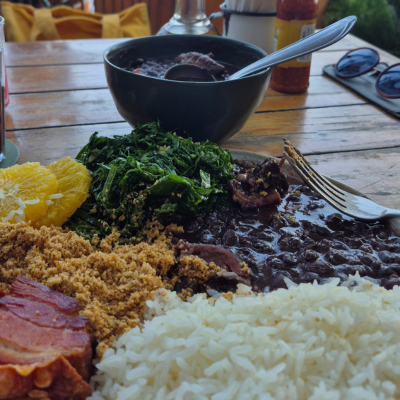
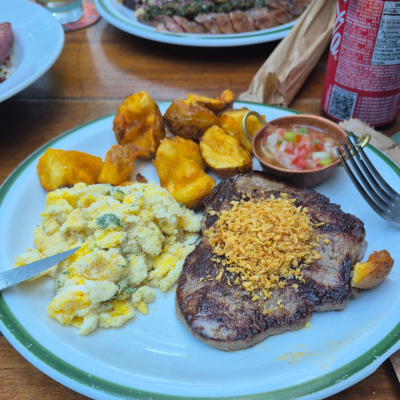
Joaquina splits the difference between a proper carioca boteco and a restaurant that takes Brazilian ingredients seriously, and it's one of the places I keep coming back to.
One thing worth knowing: there's almost always a line. It doesn't seem to matter when you go, so I'd plan for a wait, or get there earlier than you think you need to. The upside is that you don't wait empty-handed: they'll take your order for petiscos and drinks while you're still in line, so by the time you sit down you're usually already on your second round.
The menu has the format of a bar: petiscos, sharing plates, good drinks, but the cooking goes further than most. What makes it stand out, and what's kept me ordering from it on repeat, is the combination: genuinely well-executed Brazilian food, a relaxed boteco atmosphere, and prices that don't ask you to choose between eating well and spending wisely.
The rice croquette with coalho cheese is what I order on autopilot at this point. If you've never tried Brazilian churrasco-style and want a low-risk way in, the carioca rump steak or the garlic steak are both well-executed options here. The cocktail list is a tour of Brazilian cities.
📍 Rua Voluntários da Pátria, 448 — Botafogo
📍 Avenida Atlântica, 974 — Leme
Café Lamas
One of the oldest restaurants in Rio, Café Lamas has been open in Flamengo since 1874, and I went for lunch on a quiet weekday, which felt like the right way to experience it. The room is charming in a way that earns its age and the menu is classic carioca, rooted in Portuguese tradition: generous portions, good cuts of meat, and dishes built for the kind of long, unhurried lunch that the city used to do as a matter of course.
I recommend the filé à Osvaldo Aranha, a filet mignon with crispy toasted garlic, the signature dish that's been on the menu for as long as anyone can remember.
A restaurant that has survived 150 years in Rio has earned its place on any list, and the way the staff treats every table tells you why it's lasted this long.
📍 Rua Marquês de Abrantes, 18 — Flamengo
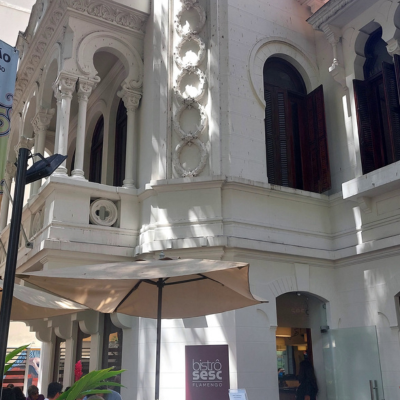
Bistrô Sesc
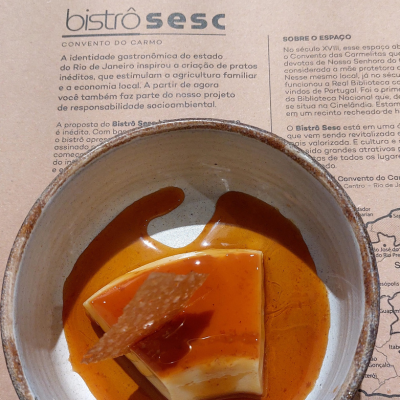
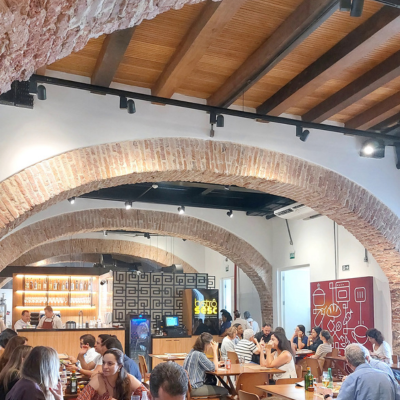
Two locations, one kitchen philosophy: seasonal ingredients from small Rio de Janeiro state producers, menus signed by chef Teresa Corção, and prices that make this kind of cooking accessible in a way that fine dining rarely is.
I've eaten at both, and what struck me each time is how lean and honest the menu is: no filler dishes, nothing on there that doesn't earn its place.
The Convento do Carmo location is set inside one of the most historically significant spaces in downtown Rio. The Flamengo location occupies a century-old mansion listed as a heritage site, reopened in 2022. Sophisticated without being formal, and one of the best-value lunches in the city.
Wherever you go, save room for dessert. Every dessert I've tried at either location has been excellent.
📍 Bistrô Sesc Convento do Carmo — Rua Primeiro de Março, 34 — Downtown
📍 Bistrô Sesc Flamengo — Rua Marquês de Abrantes, 99 — Flamengo
Casa do Saulo
Pará is Brazil's second largest state, deep in the Amazon, and its cuisine is one of the most distinct in the country, built around river fish like pirarucu and tucunaré, Amazonian fruits like cupuaçu, the worldwide famous açai, and ingredients like jambu, a leaf that causes a mild tingling sensation on the tongue.
It's a cuisine that most Brazilians outside the North have never experienced properly, let alone international visitors.
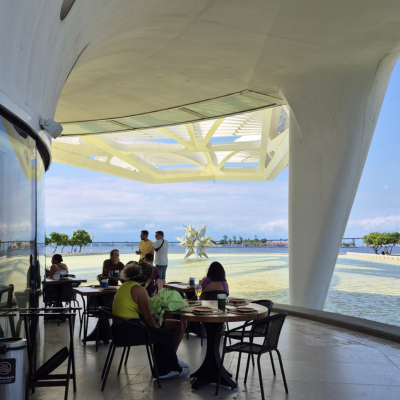
The first outpost of Casa do Saulo outside of Pará opened at the Museum of Tomorrow in downtown Rio, and it's one of the most exciting things to happen to the city's food scene in recent years. The room itself is worth a visit: colorful, filled with plants and local crafts, with windows that look out over Guanabara Bay and the Rio-Niterói bridge.
On the menu, the smoked pirarucu carpaccio arrives in thin slices with buffalo cream cheese and grated Brazil nuts. The Feijoqueca, pirarucu medallion with shrimp in a moqueca sauce, Santarém beans, plantain, jambu crispy, and farofa, is exclusive to the Rio location. Don’t skip the jambu caipirinha.
📍Praça Mauá, 1 — Centro (Museum of Tomorrow)
Sabores de Gabriela
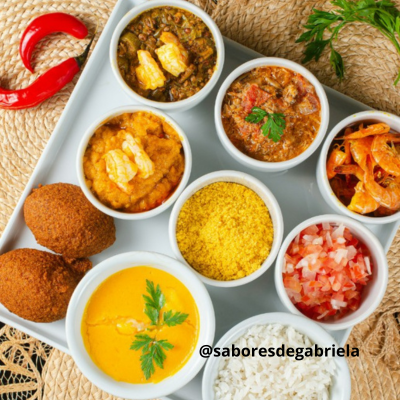
A piece of Bahia in Jardim Botânico. The name nods to the famous writer Jorge Amado, where food is inseparable from the story, and the menu lives up to it.
Of all Brazilian regional cuisines, Bahian food has my heart, and this is where I send anyone in Rio looking for the real thing.
Start with the acarajé: black-eyed pea fritters fried in dendê oil, served the traditional way with vatapá, caruru, shrimp, and tomato salad. The moquecas are the heart of the menu, available with fish, crab, or shrimp, and a genuinely good vegan version. For dessert, the homemade sweets, guava, banana, or cajá, are a quiet, perfect ending.
📍Rua Maria Angélica, 197 — Jardim Botânico
Yayá Comidaria Pop
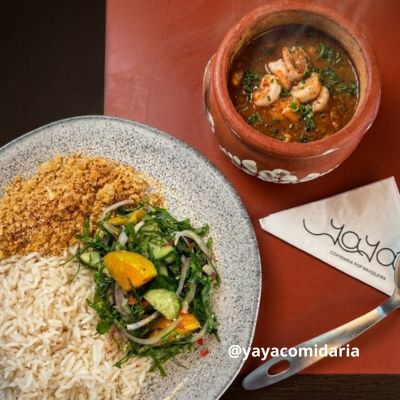
In Leme, chef Andressa Cabral cooks Brazilian food rooted in African ancestry. The menu is built around flavors connected to religious Candomblé traditions, dishes that many Brazilians grew up eating at religious celebrations but rarely find in restaurants.
A good way to start is the patota de cosme, a sampler of small dishes from the Ibeji feast: vatapá, caruru, omolokum, acaçá, and mini acarajé. The chicken with okra comes with citrus couscous.
On Fridays, there's an individual feijoada. To drink, the coconut lemonade is hard to find elsewhere in Rio. To finish, the acaçá dessert, white corn porridge with coconut milk and molasses syrup, is unlike anything on most menus.
📍 Rua Gustavo Sampaio, 361 — Leme
Maria e o Boi
What started as a steakhouse found its true identity under chef Vanessa Rocha, named Revelation of the Year at the Rio Show Gastronomia Awards 2024. The menu takes ingredients from across Brazil and connects them in ways that feel both rooted and inventive.
The beijo mineiro, black angus tongue with tropeiro beans and fried egg, is one of the most distinctly Brazilian dishes on any menu in the city. The tambaqui ribs with açaí barbecue sauce show the same logic: a cut from the Amazon, a sauce from the Amazon, served in Ipanema.
The coconut blancmange with mango cocada closes the meal on a note that feels right.
📍 Rua Maria Quitéria, 111 — Ipanema
Sud, o Pássaro Verde
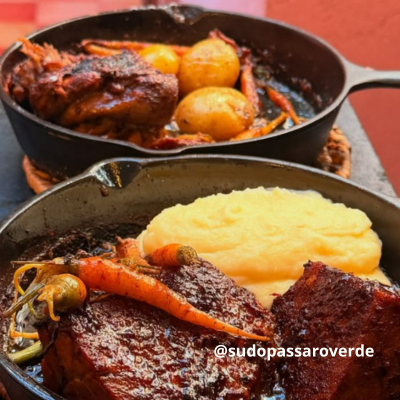
Chef Roberta Sudbrack's restaurant in Jardim Botânico is the kind of place that doesn't announce itself.
A small white house with no sign on the street, intimate and unpretentious in a way that suits the neighborhood. Most of the menu comes from a wood-fired oven: the grilled octopus, the dulce de leche pancake, dishes that are simple in concept and precise in execution.
Sudbrack is one of the most respected chefs in Brazil, and this is her most personal project. Cooking that feels like home rather than performance.
📍 Rua Visconde de Carandaí, 35 — Jardim Botânico
For restaurants built specifically around a romantic setting, I cover those separately in my guide to Rio de Janeiro’s best romantic restaurants.
Rudä
On Rua Garcia d'Ávila in Ipanema, chef Danilo Parah works with Brazilian ingredients through a contemporary lens.
The menu changes with the seasons, but dishes like octopus with jambu, the baião de dois ribs, and the cheese tart with strawberry and guava have become signatures.
The setting, a charming townhouse on one of Ipanema's best streets, matches the food: polished but not stiff.
📍 Rua Garcia d'Ávila, 118 — Ipanema
Café do Alto
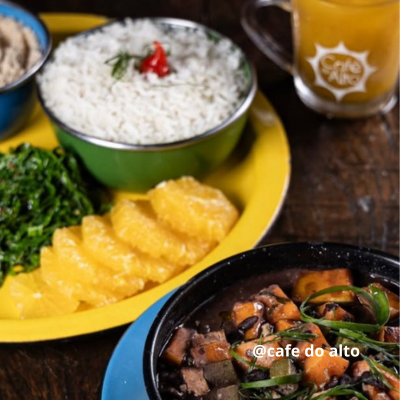
In Santa Teresa, Café do Alto is a neighborhood institution with a weekend brunch that focuses on northeastern Brazilian cooking, and it's one of my personal favorites in the city.
It's the first place I recommend to anyone who wants a real introduction to Brazilian food beyond the usual carioca staples.
The setting fits the bairro: relaxed, slightly bohemian, with the unhurried pace that Santa Teresa does better than anywhere else in Rio. The restaurant is open daily, with a menu built around affective food: tapiocas with sweet and savory fillings, northeastern classics like escondidinho (cassava purée with dried meat) and shrimp bobó, and good vegan options.
The weekend brunch is the main event, and it's the version I always point people to, but any day of the week works.
📍 Rua Paschoal Carlos Magno, 121 — Santa Teresa
Mangue Seco
In the Lapa neighborhood, Mangue Seco has been part of the fabric of Rio's bohemian nightlife for years.
The focus is seafood and northeastern cooking: moqueca, feijoada, dishes built for sharing at a table that goes long into the night. The room has the energy of the Lapa that still knows how to have a good time.
📍 Rua do Lavradio, 23 — Centro
Bar do Mineiro
Minas Gerais is Rio's inland neighbor, and its cuisine is one of the most beloved in Brazil: hearty, generous, built around pork, beans, and the kind of slow-cooked recipes that have been passed down through generations.
It's a cuisine rooted in the farms and small towns of the interior, far from the coast, and completely different in character from carioca cooking. If your trip doesn't include a visit to Minas, the Bar do Mineiro in Santa Teresa is the next best thing.
A classic for over 30 years, the Bar do Mineiro combines a simple room, a bohemian atmosphere, and recipes that taste like the interior of Minas Gerais. It's a safe choice, one I'd recommend without hesitation, for snacks and for feijoada.
The tropeiro beans, pork crackling (torresmo), chicken with okra (frango com quiabo) are the dishes to order: traditional, well-portioned, and exactly what they should be.
📍 Rua Paschoal Carlos Magno, 99 — Santa Teresa
If you're visiting Rio in September, don't miss Rio Gastronomia. The festival brings together many of the city's top restaurants in one place, making it a great introduction before deciding where to book a full meal during your trip.

Written by Karina
Born and raised in Rio de Janeiro, Karina spent over a decade working in the tourism industry, with experience in some of the world's leading travel destinations. She created Going to Rio to bring that same standard of practical, traveler-first guidance to visitors exploring Rio de Janeiro. Learn more about Karina


Upscale Leblon has way more than fine dining. Find braseiros, feijoada, botecos and the city's official Gastronomic Hub. Here's where locals actually eat.