

Rio de Janeiro tourist attractions: Every place worth visiting
Rio is one of those cities where the list of things to see never quite ends, and it's not limited to man-made attractions.
Between the iconic landmarks that appear on every postcard, the hiking trails through urban forest, the beaches, the museums, and the neighborhoods that reward slow exploration, there's enough here for several trips.
This guide covers the best tourist attractions in Rio de Janeiro organized by category, with practical notes on what's free, what's paid, and what to prioritize. Whether you're visiting for the first time or coming back to go deeper, use it as your starting point.
New to Rio? Start with our complete things to do guide for a broader overview of the city.
In this guide
- 1Iconic Landmarks in Rio de Janeiro
- 2Best Viewpoints in Rio de Janeiro
- 3Best Beaches in Rio de Janeiro
- 4Best Hikes in Rio de Janeiro
- 5Best Museums in Rio de Janeiro
- 6Churches in Rio de Janeiro
- 7Parks in Rio de Janeiro
- 8Things to Do in Rio de Janeiro with Kids
- 9Culture and History in Rio de Janeiro
- 10Islands Near Rio de Janeiro
Iconic Landmarks in Rio de Janeiro

Rio's most iconic attractions are the ones that defined the city's image for the world, and they deliver on the expectation.
Christ the Redeemer
The world's biggest Art Deco statue and one of the New Seven Wonders of the World is the most recognizable symbol of Rio, visible from most of the city.
You can get there by train, van, or hiking up through Tijuca Fores, and the views from the top justify every option.
Ticket required; advance reservation recommended.
Plan your visit using this detailed guide.
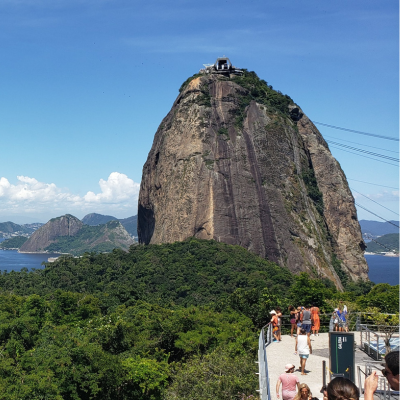
Sugarloaf Mountain
Two cable car rides take you to the top of the iconic granite peak at the entrance of Guanabara Bay.
The view of the city, the ocean, and the mountains from there is one of the best in Rio. Sunset is the most popular time to go. Ticket required; booking in advance avoids queues.
Plan your Sugarloaf visit using this guide.
Maracanã Stadium
One of the most famous stadiums in the world, with a history that includes World Cup finals, Olympic ceremonies, and crowds of over 150,000.
You can visit on a guided tour that includes the pitch, locker rooms, and museum, or watch a local derby between Flamengo, Fluminense, or Vasco.
Paid attraction.
More about Maracanã on this post.
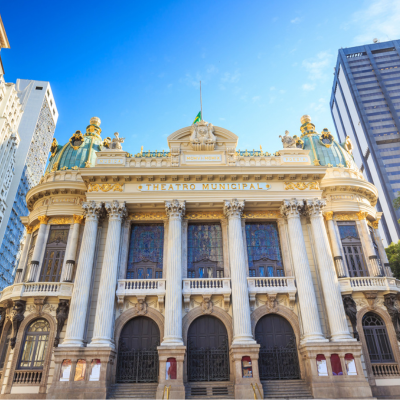
Municipal Theatre
Rio's most important opera house, built in the early 20th century and inspired by the Paris Opéra.
The building is one of the finest examples of Belle Époque architecture in Brazil, with a mosaic ceiling, marble staircase, and stained glass that reward a proper visit.
Guided tours available. Paid attraction.
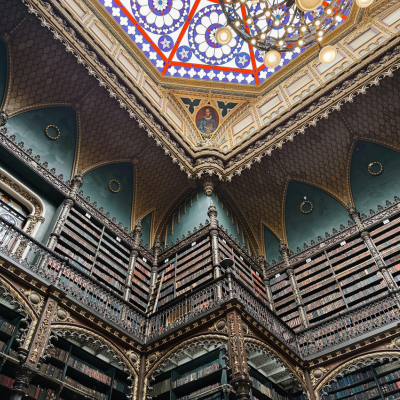
Royal Portuguese Cabinet of Reading
Consistently ranked among the most beautiful libraries in the world, the neo-Manueline building houses the largest collection of Portuguese works outside of Portugal, with nearly 400,000 volumes including rare manuscripts, significant literary works, and unique folios.
The architecture alone is worth the visit, and the smell of old books is part of the experience. Free to visit.
Best viewpoints in Rio de Janeiro
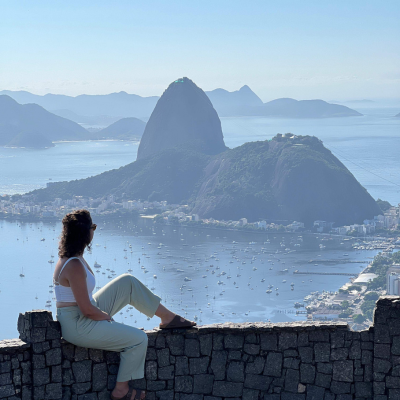
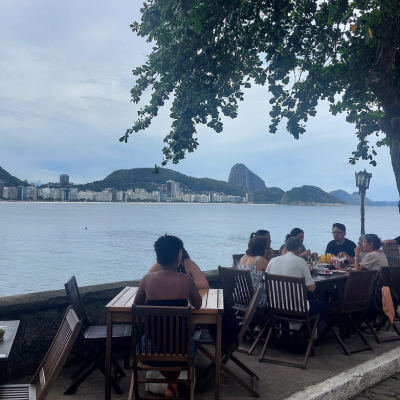
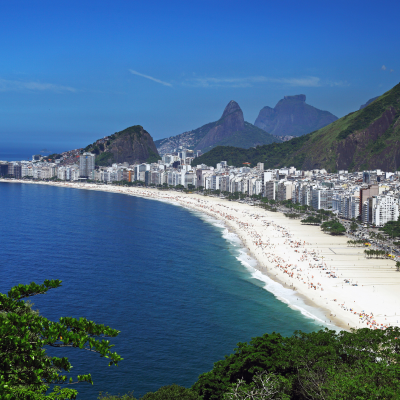
Rio's geography does most of the work. The city sits between mountains and sea, which means viewpoints here don't just show you a skyline, they show you the whole picture.
Copacabana Fort
Built in 1914 at the southern tip of Copacabana beach, the fort was designed to protect the city's coastline and still features the original thick stone walls, artillery guns, and dome-shaped turrets that once housed long-range cannons.
Today it operates as a cultural and historical site, home to the Army Historical Museum covering Brazil's military history. The views are among the best in the city with the full arc of Copacabana beach and the Sugarloaf Mountain on one side.
For food, there are two good options on site: the Confeitaria Colombo outpost and Café 18 do Forte, plus a souvenir shop.
Paid entry; free on Tuesdays.
Leme Fort
At the opposite end of Copacabana, Forte do Leme sits at the top of Morro do Leme and combines a military heritage site with a small ecological reserve.
The hike to the top through the reserva takes about 20 minutes and ends with a panoramic view of Copacabana on one side and the Sugarloaf Mountain on the other. Paid entry.
Dona Marta viewpoint
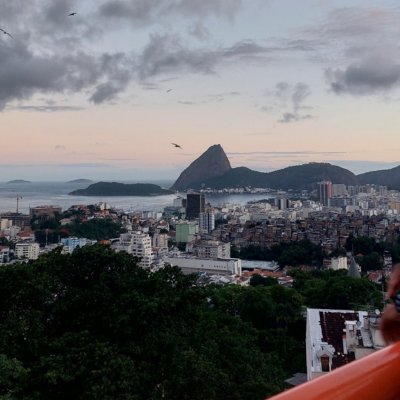
Set inside Tijuca Forest, Dona Marta offers one of the most dramatic views of Guanabara Bay in Rio, with Sugarloaf Mountain centered in the frame and Cristo Redentor in the background.
Sunrise is a great time to visit: the sun rises behind the mountain, gradually illuminating the bay below.
Photographers and early-morning visitors gather here for exactly this moment, it's a lively experience rather than a quiet one. Free to visit.
Full guide to this and other sunrise spots in Rio.
Penhasco Dois Irmãos Park
An environmental preservation park in Leblon, created in 1992. Six wooden viewpoints look out over some of Rio's most iconic scenery: Rodrigo de Freitas lagoon, Botanic Garden, Christ the Redeemer and the beaches of Leblon and Ipanema.
The park also has a 1.5km trail called Janela do Céu, suitable for beginners, that leads toward the base of Two Brothers Hill. Along the way, expect native orchids, bromeliads, capuchin monkeys, squirrels, and the occasional blue morpho butterfly.
A quieter alternative to the more crowded viewpoints, and free to visit.
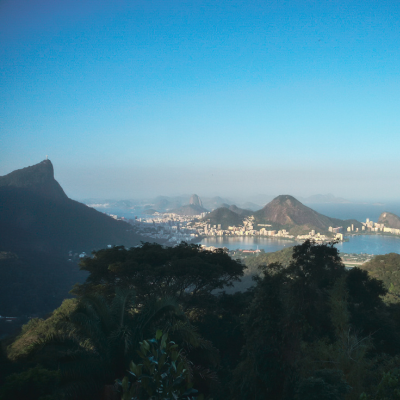
Chinese Viewpoint
A Chinese-style pavilion in the middle of Tijuca Forest, with a view of the South Zone, Lagoon, and the mountains.
A few meters above, the Emperor's Table offers the same scenery from a different angle. Famous among cyclists who ride up for the sunrise, getting here requires a car or Uber into the forest, and that's exactly why it's less crowded than the other viewpoints. Free to visit.
Best Beaches in Rio de Janeiro
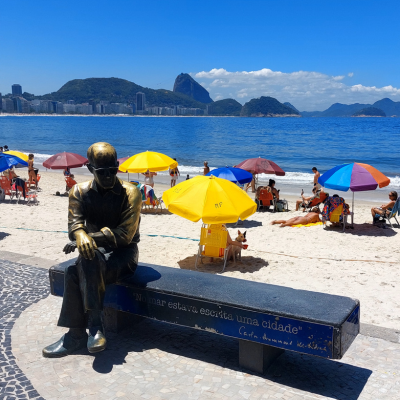
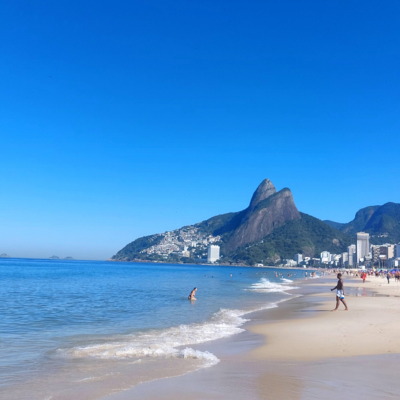
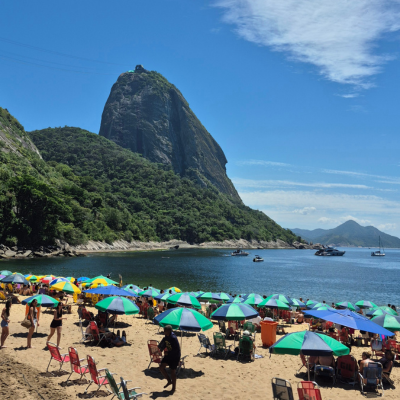
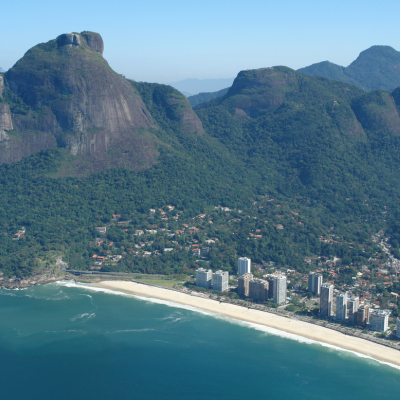
Rio has over 70 kilometers of coastline, and the beaches here are not just places to swim, they're social hubs, sports arena and a way of life. Each one has its own personality.
Copacabana Beach
The most famous beach in the world needs little introduction. Four kilometers of Atlantic coastline, a mosaic promenade, and a constant energy that runs from sunrise to late at night.
More democratic and lively than Ipanema and home to some of the world’s biggest concerts, it’s where the city comes together. Free.
Ipanema Beach
Younger and more fashionable than Copacabana and don't tell anyone, but some locals think it's more beautiful too. Each stretch has its own crowd: families, surfers, the LGBTQ+ community near Posto 8.
The view of Dois Irmãos at the end of the beach is one of the most photographed in Rio. Free.
Praia Vermelha
A small, sheltered cove at the foot of Pão de Açúcar, surrounded by Atlantic Forest and far removed from the bustle of the Zona Sul beaches.
One of the calmest waters in Rio, popular with locals from the Urca neighborhood. Free.
São Conrado Beach
A long, quieter beach between the mountains and the sea, at the end of the South Zone.
Framed by the Gavea Massif, it’s known as a landing spot for hang gliders coming down from Pedra Bonita, which makes for an unusual spectacle on any given afternoon. Free.
Prainha
One of the last wild beaches in Rio, tucked between cliffs at the end of the West Zone. Fewer kiosks, no crowds on weekdays, consistent waves that make it a favorite among surfers. Worth the drive. Free.
For a complete guide to Rio's beaches, including hidden gems and the best spots for views, see our Rio de Janeiro beaches guide, hidden beaches, and gude to the best beach views.
Best Hikes in Rio de Janeiro

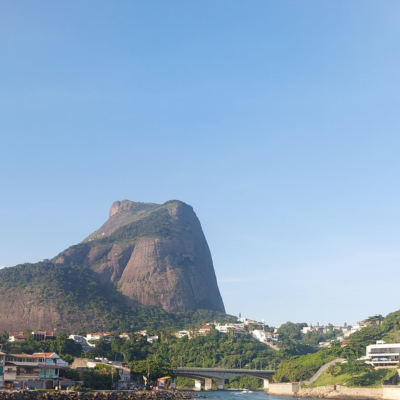
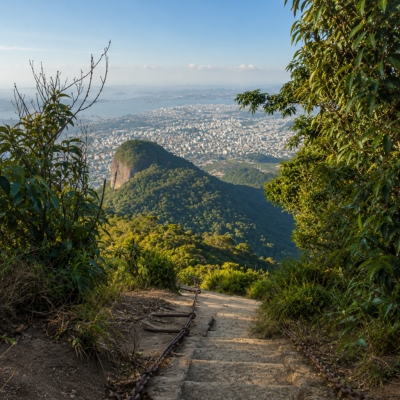
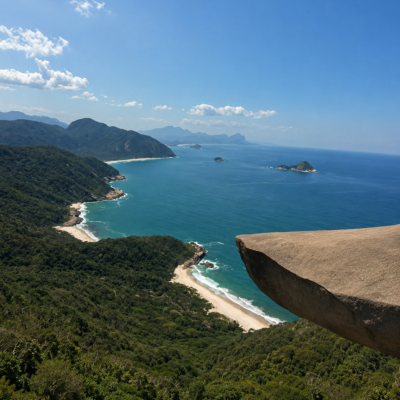
Rio is one of the few cities in the world where you can hike through Atlantic Forest without leaving the city limits. The trails range from easy walks to full-day climbs and here are the five worth knowing.
Pedra Bonita
One of the most accessible hikes in Rio, with a well-marked trail through Tijuca Forest that takes around 40 minutes to reach the summit.
The view of the ocean, São Conrado beach, and the hang gliders launching from the adjacent ramp makes it one of the most rewarding easy hikes in the city. Free.
Pista Cláudio Coutinho - Urca trail
A trail at the base of Morro da Urca, running along the waterfront between the Red Beach and the Morro da Urca, through Atlantic Forest vegetation. Expect monkeys, native plants, and good views of Guanabara Bay along the way.
The trail ends at Morro da Urca, the first summit of Sugarloaf Mountain. From there, you can take the cable car down, which requires purchasing a ticket.
Free to walk; cable car descent is paid.
Pedra do Telégrafo
Located in the West Zone, further from the tourist center but worth the trip. The famous rock ledge at the summit creates the optical illusion of hanging over a cliff above the ocean, the most photographed hiking spot in Rio.
Moderate difficulty. Free.
Pedra da Gávea
One of the most challenging and famous hikes in Rio, involving steep rocky sections that require using ropes and feet to climb.
The reward is a 360-degree view from one of the largest coastal monoliths in the world. Not recommended for beginners. Free.
Pico da Tijuca
The highest point in Tijuca Forest and one of the most complete hikes in the city, passing through dense Atlantic Forest before reaching the summit at 1,021 meters.
Full-day hike; guide recommended. Free.
Best Museums in Rio de Janeiro
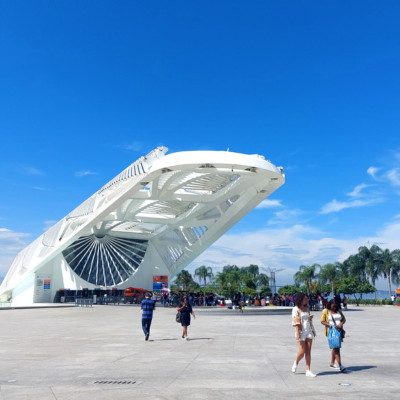
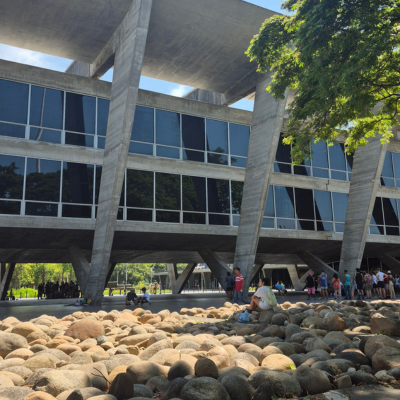
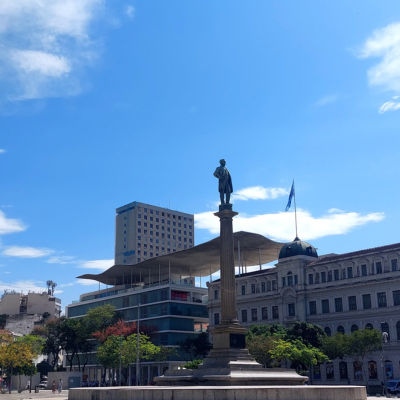
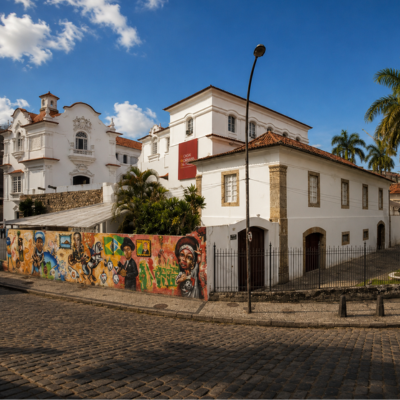
Rio's museum scene goes well beyond the postcard version of the city. From cutting-edge science to Afro-Brazilian history, here are the five worth your time.
Museu do Amanhã (Museum of Tomorrow)
One of the most visited museums in Brazil, designed by Spanish architect Santiago Calatrava on a pier in the revitalized Porto Maravilha district.
The permanent exhibition explores the future of humanity through science, sustainability, and technology. It’s interactive, visually striking, and genuinely thought-provoking.
Next door, the Museu de Arte do Rio (MAR) covers the history and culture of Rio through art and photography, and the two make a natural combination for a full day in the area.
Paid attraction.
MAM — Museum of Modern Art
Set in a landmark modernist building in Aterro do Flamengo, with a permanent collection of Brazilian modern art and a strong program of temporary exhibitions.
The garden, designed by Roberto Burle Marx, is worth seeing on its own. Beyond the museum itself, the complex includes a cinema and a library, making it one of the most complete cultural spaces in Rio.
Entry by donation.
More about the cultural side of Rio.
MIS — Museum of Image and Sound
The new MIS building in Copacabana, opened in 2026 after years of construction, sits on Avenida Atlântica facing the beach.
The museum focuses on Brazilian music, cinema, and audiovisual culture, with an immersive exhibition dedicated to the history of bossa nova, born just a few blocks away in Ipanema.
Paid.
Museum of Afro-Brazilian History and Culture (MUHCAB)
Located in Downtown Rio, in the area known as Little Africa, which also hosts Cais do Valongo, the primary landing and trading point for enslaved Africans in the Americas.
MUHCAB documents the history and cultural contributions of Afro-Brazilians through art, artifacts, and archives. An essential stop for understanding how much of what feels distinctly Brazilian, from music and food to religion and language, has African roots. Free.
National History Museum
One of the largest museums in Brazil, housed in a colonial-era stunning building in Dwntown.
The collection covers Brazilian history from the pre-colonial period through the Republic, with over 300,000 items including imperial furniture, weapons, maps, and documents. A full visit takes at least two hours.
Paid; free on Sundays.
Churches in Rio de Janeiro
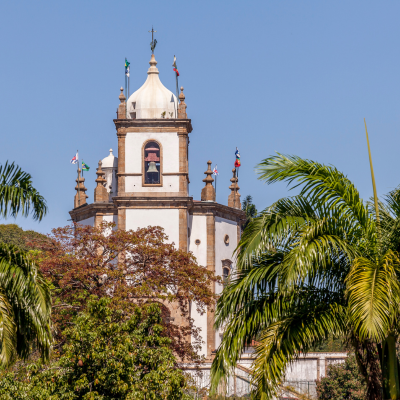
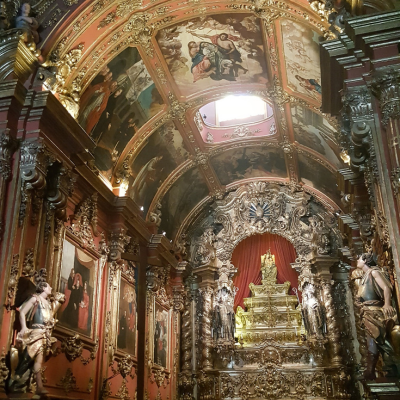

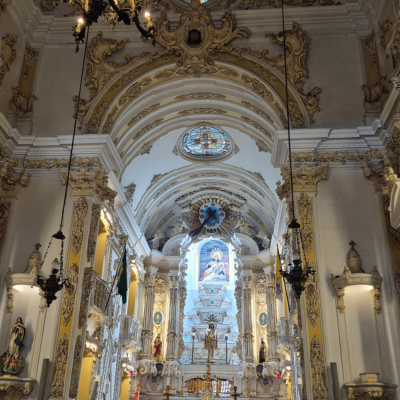
Rio's religious spaces are some of the most historically and architecturally significant in Brazil.
The city was the capital of the Portuguese Empire in the Americas, and the churches built during that period reflect both the ambition and the craftsmanship of colonial Brazil.
From baroque masterpieces to a modernist cathedral that looks like nothing else in the world, these are the spaces worth seeking out.
Outeiro da Glória
A small baroque church perched on a hill overlooking Flamengo and Guanabara Bay, built in the early 18th century.
To reach it, you can take the Funicular do Outeiro da Glória, a historic cable railway opened in 1944 and modernized in 2003, which makes the climb in about two minutes.
One of the finest examples of colonial religious architecture in Rio, and the view from the top is worth the trip on its own.
Free to visit the exterior; small fee for the interior and museum.
Mosteiro de São Bento
Founded in 1590, the Benedictine monastery is one of the oldest and most important religious sites in Rio.
The interior is a baroque jewel with gilded altars, carved woodwork, and painted ceilings that took decades to complete.
Sunday mass with Gregorian chanting is one of the most remarkable experiences the city offers, and it's free.
Free to visit; donations welcome.
Cathedral of Rio de Janeiro
One of the most unusual religious buildings in the world. A 96-meter cone inspired by Mayan pyramids, completed in 1979.
The interior is vast and striking, with four enormous stained glass windows rising from floor to ceiling. A complete contrast to the baroque churches of colonial Rio, and all the more interesting for it.
Free.
Igreja Nossa Senhora do Carmo da Antiga Sé
The former Royal Chapel and cathedral of Rio de Janeiro during the Portuguese imperial period, located in the historic heart of Centro.
The church witnessed some of the most significant events in Brazilian history, including the coronation of Dom Pedro I. The interior combines baroque and neoclassical elements, with gilded altars and remarkable ceiling paintings.
Free.
Igreja de São José
One of the oldest churches in Rio, dating back to the 17th century, located near the former Royal Chapel in Downtown.
Modest in scale compared to the others on this list, but historically significant and worth a visit as part of a walk through the historic center.
Free.
Parks in Rio de Janeiro

Parks in Rio de Janeiro are not an afterthought, they're part of what makes the city livable.
Between the Atlantic Forest that covers the mountains and the landscaped gardens at the foot of the hills, green space is woven into the urban fabric in a way few cities can match.
Botanical Garden
Founded in 1808 by Dom João VI, the botanical garden covers 54 hectares in the neighborhood that shares its name.
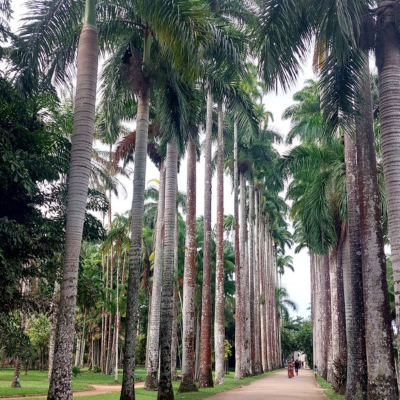
The imperial palm avenue at the entrance is one of the most photographed spots in Rio outside of the main landmarks. The collection includes over 6,500 plant species, an orchid greenhouse, a carnivorous plant section, and resident monkeys and toucans. Paid.
Lage Park
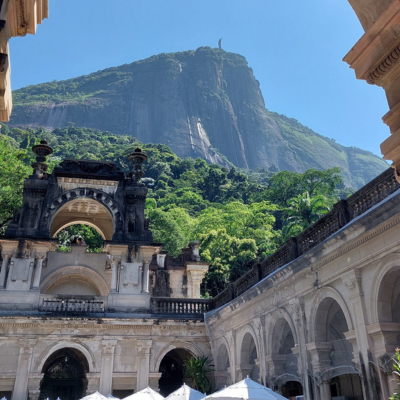
At the foot of Corcovado, a 19th-century mansion surrounded by Atlantic Forest and formal gardens.
The mansion houses the School of Visual Arts, and the courtyard café is one of the most charming spots in the city for a coffee.
The park connects directly to hiking trails up to Cristo Redentor. Free.
Aterro do Flamengo
The largest urban park in Rio, stretching along the bay from Downtown to Botafogo.
Designed by landscape architect Roberto Burle Marx in the 1960s, it combines cycling paths, sports courts, gardens, and waterfront views.
On Sundays and holidays the access roads close to cars, and the park fills with locals. Free.
Catete’s Palace gardens
The gardens surrounding the former presidential palace in Catete are one of the most undervisited green spaces in Rio.
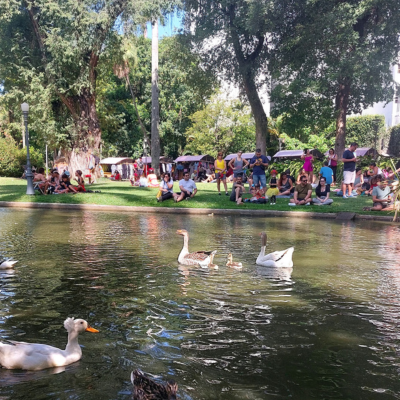
Shaded paths, a small pond, and resident birds make it a quiet retreat in the middle of the city. The palace itself houses the Museum of the Republic.
Free.
Guinle Park
A small, elegant park in Laranjeiras, designed in the French landscape tradition in the early 20th century.
Less visited than the other parks on this list, with a fountain, wooded paths, and the kind of calm that's harder to find in busier neighborhoods.
Free.
Tijuca Forest
The largest urban forest in the world, covering over 32 square kilometers of Atlantic Forest across the mountain range above Rio.
It's not a park you visit in an afternoon, it's a living ecosystem that contains waterfalls, hiking trails, viewpoints, and wildlife within the city limits.
Chinese viewpoint, Lage Park, and several of the hikes on this list all sit within or at the edge of the Tijuca Forest.
Free to enter; some attractions within have their own fees.
Things to do in Rio de Janeiro with kids
Rio has plenty to offer families with children and most of it goes well beyond the beach.
AquaRio
The largest aquarium in South America, located in the revitalized Porto Maravilha district near the Museum of Tomorrow.
Over 8,000 marine animals across 350 species, including sharks, rays, and sea turtles. The tunnel walkway through the main tank is the highlight. A full visit takes two to three hours.
Paid.
Rio de Janeiro Zoological Garden
One of the oldest zoos in Brazil, located inside the Quinta da Boa Vista park in São Cristóvão.
Home to over 2,000 animals across 350 species, with a focus on Brazilian fauna including jaguars, tapirs, and a large collection of birds.
Paid.
Quinta da Boa Vista
The former imperial estate that surrounds the zoo, now a large public park popular with local families on weekends.
The neoclassical National Museum building partially destroyed by fire in 2018 and currently under restoration sits at the center of the grounds.
The park itself is free; zoo entry is paid.
YupStar
The biggest Ferris wheel in Latin America, located right next to AquaRio.
At 88 meters high, with 54 air-conditioned gondolas each holding up to eight people, a full ride takes around 20 minutes and offers panoramic views of Guanabara Bay and the city. Accessible for people with disabilities. Paid.
Catacumba Park
A 16-hectare park on the banks of Lagoa Rodrigo de Freitas in Lagoa, combining open-air sculpture with nature trails and a treetop adventure course with zip lines and rope bridges.
One of the more active options for families who want something beyond a museum or aquarium. Paid for the adventure course; free to walk the park.
Culture and History in Rio de Janeiro

Rio's cultural infrastructure is concentrated in the historic center, where colonial-era buildings, renovated warehouses, and public squares form one of the most walkable cultural circuits in Brazil.
Centro Cultural Banco do Brasil (CCBB)
One of the most important cultural centers in Brazil, housed in a beautifully restored early 20th-century building in Centro.
The CCBB hosts major art exhibitions, theater, cinema, and music, with a program that consistently brings the best of Brazilian and international culture to Rio.
Entry to most exhibitions is free or low-cost.
National Library
The largest library in Latin America and one of the most important in the world, with a collection of over 9 million items including rare manuscripts, maps, and photographs documenting Brazilian history.
The neoclassical building on Rio Branco Avenue is worth visiting for the architecture alone. Guided tours available.
Free.
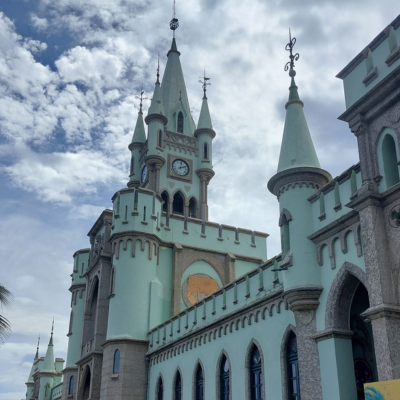
Ilha Fiscal
A small neo-Gothic island palace in Guanabara Bay, built in 1889 and best known for hosting the last imperial ball in Brazilian history, three days before the proclamation of the Republic.
Accessible only by boat tour departing from the Espaço Cultural da Marinha.
Paid.
Selarón Steps
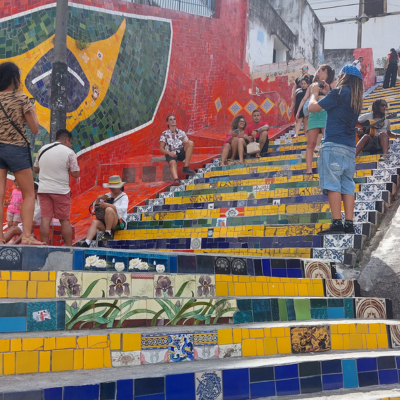
A mosaic staircase in Santa Teresa, created by Chilean artist Jorge Selarón starting in 1990 and left to the city upon his death in 2013.
Over 2,000 tiles from more than 60 countries cover the 215 steps connecting Lapa and Santa Teresa. One of the most visited spots in Rio and completely free.
Gloria Maria Park (Former Ruines Park)
A cultural center built within the ruins of a 19th-century mansion in Santa Teresa that once belonged to Brazilian socialite Laurinda Santos Lobo.
The open-air structure hosts exhibitions and events, and the terrace offers one of the best views of Centro and Guanabara Bay from the hillside. Free.
For more things to do in Santa Teresa, check this guide.
Islands near Rio de Janeiro
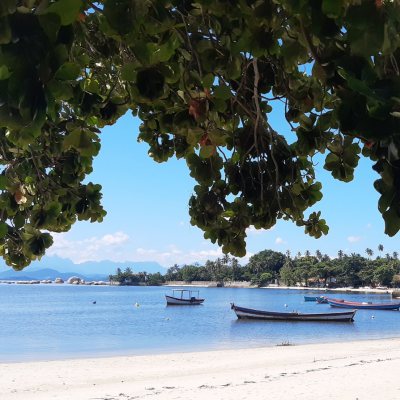
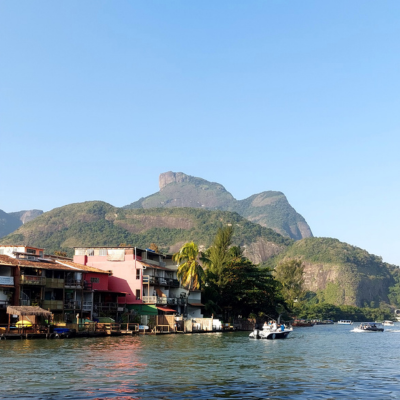

The city itself is enough for most trips, but Rio's surrounding islands offer a side of the city that few visitors see, a quieter, wilder, and worth the detour if your schedule allows.
Paquetá Island
A car-free island in Guanabara Bay, accessible by ferry from Downtown, Praça 15, in about an hour.
The island has the pace of another era where residents get around by bicycle or horse-drawn carriage, and the streets are lined with 19th-century architecture.
A good half-day trip for those who want to see a different side of Rio. Stay for sunset. Ferry ticket required.
Cagarras Islands
A small archipelago just off the coast of Ipanema, visible from the beach on clear days. The islands are an environmental protection area and home to one of the largest seabird colonies on the Brazilian coast, including frigatebirds and brown boobies.
Accessible by boat tour from Barra da Tijuca or Marina da Glória.
Tijuca Islands
A group of islands inside Guanabara Bay, part of the Tijuca National Park. The main island has a historic fort, coral reefs for snorkeling, and some of the clearest water near Rio. Accessible by boat tour.
Gigóia archipelago
A small group of islands in the Jacarepaguá lagoon system in Barra da Tijuca, connected to the mainland by boats.
Known for its waterfront restaurants and bars, it's more of a local dining destination than a tourist attraction but it gives a glimpse of a side of Rio that visitors rarely reach.
Where to go next
Rio rewards visitors who go beyond the highlights. Use this guide as a starting point and explore the topics that match your travel style.
Need help getting around? My Rio de Janeiro Metro Stations Guide shows which station to use for every major attraction, beach, museum and neighborhood, plus when to combine the metro with the VLT or Uber.
For the full picture of what to do in the city, our things to do in Rio de Janeiro guide covers experiences beyond the attractions.
If the weather doesn't cooperate, our rainy day guide has plenty of good options.
And if you're still planning your trip, the Rio de Janeiro weather guide will help you choose the right time to come.
