

Rio de Janeiro beaches: how to choose the right one for you
Rio de Janeiro's beaches stretch over 30 kilometers of coastline within the city limits. Dozens of them, each with a different energy and a different relationship with the city around it.
The famous ones you already know: Copacabana, Ipanema, Barra. But knowing the name isn't the same as knowing which beach is right for you.
Calm water or strong waves? Iconic backdrop or fewer crowds? Easy access from the South Zone or willing to go further for something wilder?
This guide breaks down Rio's main beaches by what actually matters for your trip, from water conditions to crowds, access, and who each beach is really for, so you can stop guessing and start planning.




Which Rio de Janeiro beach is right for you?
🏊 Calm water for swimming: Praia Vermelha, Copacabana Posto 6
👨👩👧 Beach with kids: Praia Vermelha, Copacabana Posto 6, Praia da Urca
🌟 Iconic first visit: Ipanema, Copacabana
🏄 Surf: Arpoador, Joatinga, Barra da Tijuca
🌿 Fewer crowds: Leblon, Barra da Tijuca (central stretch), Praia da Reserva
🌅 Great views without swimming: Botafogo, Flamengo
Best beaches in Rio de Janeiro for calm water and families
Not all Rio beaches are safe for swimming. The open Atlantic coastline means strong currents and unpredictable waves in many spots, knowing where the water is genuinely calm makes a real difference, especially if you're not a confident swimmer.
Always check the flags that indicate water safety levels.
Praia Vermelha is a reliable option. Tucked at the base of Sugarloaf Mountain, the beach sits inside a protected cove that blocks the open ocean swell.
The water is calm and typically clear by Rio standards, and the setting, with Sugarloaf rising directly behind you, is one of the most dramatic in the city. It's small, fills up on weekends, but on a weekday morning it's hard to beat.
Copacabana Posto 6 is the quieter end of Copacabana, closest to Arpoador. The sand narrows here, the crowd is more local and family-oriented, and the waves are noticeably gentler than the rest of the beach.
The view of Sugarloaf framing the bay is excellent, and Forte de Copacabana is a short walk away.
Praia da Urca sits on the opposite side of the Sugarloaf peninsula, facing Guanabara Bay rather than the open ocean. The water is sheltered and very calm, great for children. It fills up quickly on weekends and hot days, so early mornings are best.
Flamengo and Glória follow the same logic: calm water, beautiful setting, good infrastructure, and genuinely enjoyable for young children.
The honest caveat is water quality since it varies, and in summer and on busy weekends both beaches get crowded. Check conditions before going.
Botafogo is worth mentioning for the view, one of the best in Rio, with Sugarloaf framing the bay.
Swimming is not recommended due to water quality, but as a place to sit, have a cold drink, and watch the city, it's hard to match.
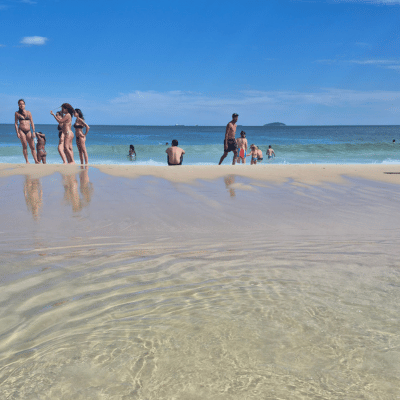


Iconic Rio de Janeiro beaches for first-time visitors
If this is your first time in Rio, Copacabana and Ipanema are non-negotiable, not because they're the best beaches in the city in every category, but because they're the ones that explain why Rio is Rio.
Copacabana is bigger, louder, and more democratic than its neighbor. The four-kilometer promenade, the famous black and white wave pattern underfoot, the vendors, the football games on the sand.
It's the full Rio beach experience in one place. Go at least once, even just to walk the length of it.
Ipanema is a little more stylish, a little more self-aware. The sunset ritual at Arpoador Rock, where the crowd gathers every evening to watch the sun drop behind Dois Irmãos and applauds when it disappears, is one of those Rio moments that you need to experience.
Get there 30 minutes early for a spot on the rocks.
Best surf beaches in Rio de Janeiro
Rio has a genuine surf culture where locals surf year-round, and conditions are more consistent than most visitors expect. That said, not every spot works every day. Waves depend on swell direction, wind, and season, and knowing which beach suits which conditions makes a real difference.
The best season for surf in Rio is autumn and winter, roughly April to September, when south Atlantic swells are more frequent and stronger. Summer tends to be flatter at most spots, though waves can appear on any given day throughout the year.
Arpoador is the most accessible surf spot in the city right at the junction of Copacabana and Ipanema. It's a beach break that works on most swells, attracts experienced local surfers, and gets crowded when conditions are good. Even if you're not surfing, watching from the rocks above is worth it.
Joatinga requires more effort to reach with access through a private condominium, but the wave quality rewards it. Best visited on a weekday.
Barra da Tijuca is where Rio's surf scene gets serious. The long exposed coastline picks up south swells well, conditions are consistent, and the crowd is almost entirely local. Strong currents mean it's not the place for beginners.

Quieter beaches in Rio de Janeiro worth the extra distance
The most crowded beaches in Rio are also the most accessible. Going slightly further, or choosing your timing carefully, changes the experience entirely.
Leblon sits just west of Ipanema, separated by the Jardim de Alah canal. The energy is quieter, the crowd more neighborhood-local, and the beachfront playground makes it a good option for families. The views of Dois Irmãos from here are excellent.
Barra da Tijuca central stretch is where the beach opens up and the density of people drops significantly. Parts of it are bordered by preserved natural areas with no buildings on the horizon, just ocean and Atlantic Forest. The tradeoff is distance from the South Zone, but for visitors based in Barra or willing to make the trip, it's a genuinely different Rio.
Praia da Reserva sits at the western end of Barra, bordering the Reserva Biológica de Marapendi. It's one of the least developed stretches of Rio's coastline within the city limits, quieter, wilder, and almost entirely local. Strong waves, so not recommended for casual swimming, but for the atmosphere it's worth it.
There's more to Rio's beaches than choosing the right one
Choosing a beach by water conditions is the practical starting point but Rio's coastline goes deeper than that.
There's the view, because in Rio, choosing a beach also means choosing what landmark you want framing the scene.
There's the culture, because the beach here is daily life, not a destination, and understanding the unwritten codes of how cariocas use it can make your experience feel less like a visit and more like belonging.
And there are beaches that most guides never mention, hidden behind access roads and limited parking, where the city feels far away.
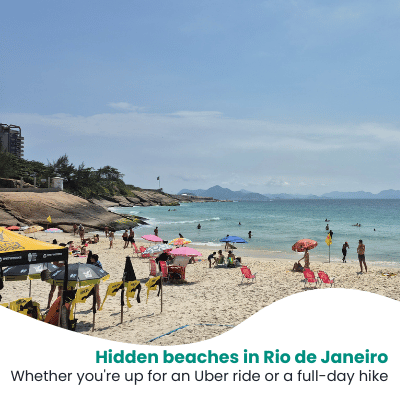
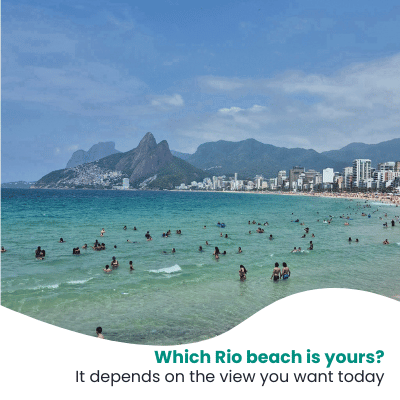

Calm water, surf, fewer crowds or an iconic first visit? A guide to Rio de Janeiro's beaches by what actually matters