

Rio de Janeiro itinerary: How many days do you need?
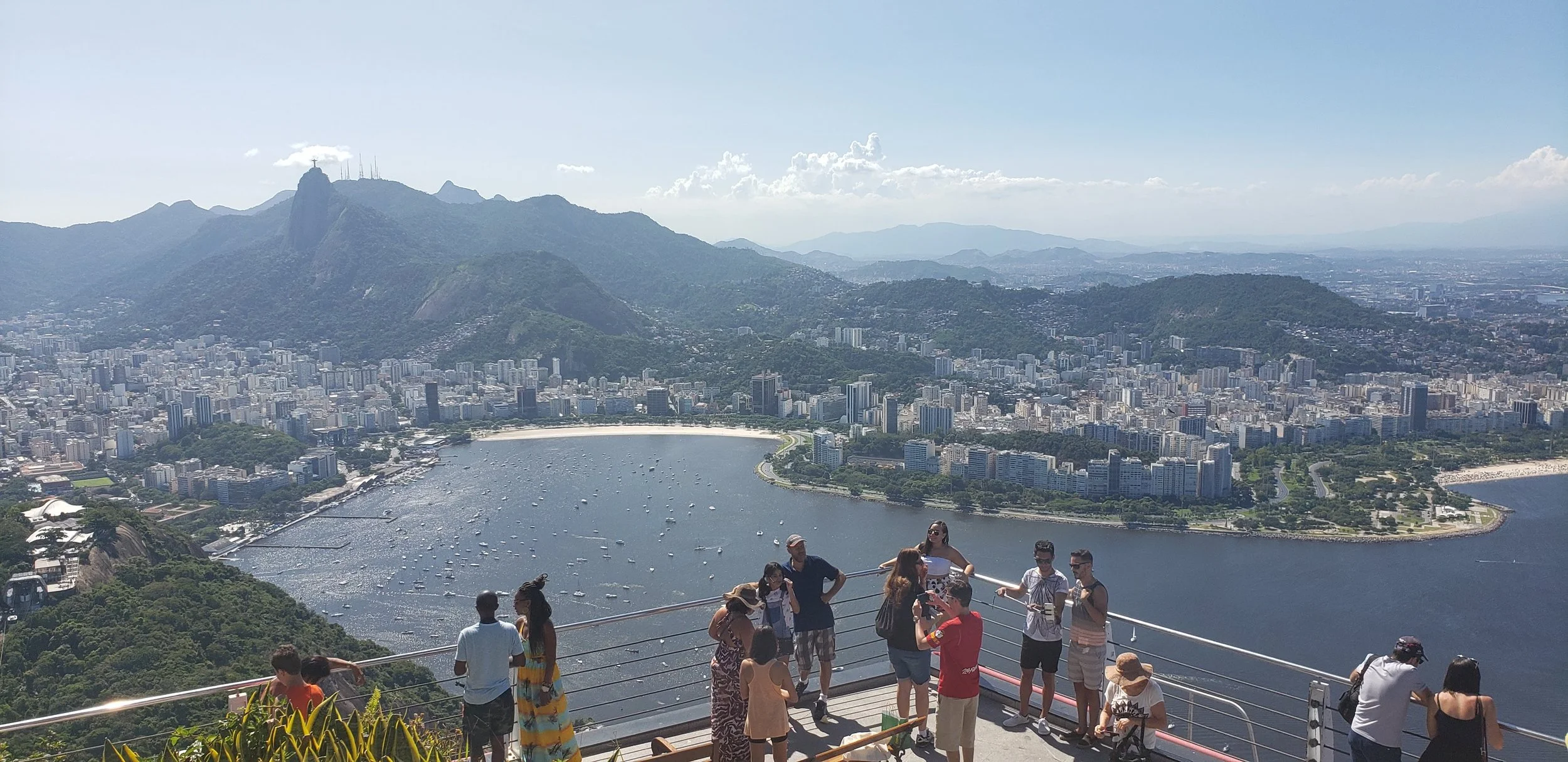
One of the best views of Rio de Janeiro is from the Sugarloaf Mountain
Many visitors ask if 3 or 4 days are enough for a Rio de Janeiro itinerary. My honest answer is no because Rio is not a destination just to be seen, it's to be felt. And that requires time.
Five days is the minimum to start understanding the city; seven days is what I actually recommend.
That said, whatever time you have is worth using well. Below is a 5-day Rio de Janeiro travel itinerary built around the logic of the city with clear suggestions for how to adapt it if you have less time. If you need a 7-days itinerary, this post has one built for couples and romantic trips.
One thing before you start planning: Rio's weather is worth monitoring in the days leading up to each activity and, since tickets to main attractions rarely sell out, and most tours I recommend offer free cancellation up to 24 hours before, so you can book ahead and still adjust to the forecast. For a full picture of what to expect from the sky, the Rio de Janeiro weather guide is worth reading before you go.
Some links in this post are affiliate links. If you book through my links, I earn a small commission at no extra cost to you. Thank you for supporting this blog.
The 5-day Rio de Janeiro itinerary
Day 1 — Ipanema, Lagoa and sunset on the water
You are probably arriving from a long flight and a slow day will be the best option. Start the morning at Ipanema beach. If you're there in summer, arrive early before the heat peaks; in winter, mid-morning works perfectly.
The stretch near Posto 9, around Sol Ipanema Hotel, is the classic choice for people-watching, consistent waves, the Dois Irmãos hills as a backdrop. Lunch in the neighborhood. Ipanema has some of the best restaurants in the city, I’ve listed my favorite places in this post.
After lunch, walk or cycle to Lagoa Rodrigo de Freitas. The 7.5km path around the lagoon is one of Rio's best urban circuits, flat, scenic, and with Corcovado framing one end of the water. Bikes and paddleboats are available to rent around the lagoon.
End the day with a sunset boat tour on Guanabara Bay. From the water, Rio makes a different kind of sense with Sugarloaf, the mountains, the skyline all in one frame as the light drops. Book a day or two ahead and keep an eye on the forecast, since a clear sky makes all the difference. This is the tour I'd pick:
If you're visiting between June and August, this is also when humpback whale watching tours depart, a worthwhile addition to the itinerary. See the complete guide to whale watching in Rio de Janeiro.
Day 2 — Leblon, São Conrado, Tijuca Forest and sunset
Day 2 is built around one of the most beautiful urban bike routes in the world. Or more beach time, if that’s what you are up to. Cycling to São Conrado along Avenida Niemeyer hugs the cliff face above the Atlantic, make sure you make a stop at Mirante do Leblon along the way for one of the best panoramas in the South Zone, with Ipanema and Copacabana stretching in one direction, the mountains rising behind you.
The road eventually opens onto São Conrado beach, where paragliders land on the sand after taking off from Pedra Bonita above. Have lunch near the beach before heading into the afternoon.
The afternoon belongs to Tijuca Forest. A cycling tour (I did one and highly recommend it), open jeep tour, or guided hike through the Atlantic Forest feels like leaving the city entirely, which, technically, you haven't. Viewpoints like Vista Chinesa offer sweeping views over the South Zone and the bay on clear days. In winter, conditions are ideal; in summer, swap the order and do the forest in the morning, before the heat and humidity build. If you'd rather not ride, this is the tour I'd pick:
End the day at Arpoador for sunset, the rocky point between Ipanema and Copacabana is one of the most iconic sunset spots in the city. For dinner, I wrote a guide to the best restaurants in Leblon listing my favorites.
Day 3 — Copacabana, Forte do Leme and Sugarloaf at sunset
Start the morning at Copacabana beach. If you're looking for an active start, book an early morning SUP session as the sun rises. Alternatively, begin at Forte de Copacabana, the old military fortress turned museum, with a café terrace that is one of the best breakfasts and brunch in the city.
My favorite stretch for swimming is Post 6, near the Fortress end: calmer waves, a more local and family-oriented crowd. From there, walk toward the Leme end of the beach, narrower sand, rocks framing the bay, and a quieter pace than the main strip.
From Leme, the walk to Forte do Leme is short and rewarding: a trail through Atlantic Forest inside an active military base, with views over both sides of the coastline, monkeys in the trees, and Sugarloaf visible on the other side. It takes about an hour and advance booking is required.
For lunch, Joaquina is a great choice with contemporary Brazilian food and worth the visit. After lunch, the recently opened MIS - Museum of Image and Sound on Copacabana is worth a stop, with exhibitions and rooftop café views over the beach.
The afternoon and early evening belong to Sugarloaf Mountain. Everything you need to know before you go is in the full guide but the short version is: arrive in time to watch the sunset from the top.
The view over the bay as the light drops is one of the strongest arguments for visiting Rio in the first place. If you're short on time, book skip-the-line tickets, those are worth it.
Day 4 — Aterro do Flamengo, MAM and Santa Teresa
Start at Aterro do Flamengo, the large waterfront park that stretches along the bay. Morning joggers, cyclists, and families fill the paths early, it's one of the most genuinely local public spaces in the city. You can reach it by metro from Largo do Machado or Flamengo stations, depending on which part of the Aterro you want to start from.
Walk toward the Museum of Modern Art (MAM), where on Saturday mornings capoeira and dance groups gather under the modernist pilotis with Guanabara Bay as a backdrop. Museum entrance is donation-based, and the architecture alone is worth the visit as are the exhibitions.
From MAM, take an Uber to Santa Teresa to enjoy cobblestone streets, colonial houses painted in bold colors, and art studios tucked between the trees make it feel like a different city. For a full breakdown of what to see and how to spend the rest of the day here, follow the itinerary in my complete guide to Santa Teresa.
Once you're back down, you can use my itinerary via Selarón Steps, you'll land in Lapa, the neighborhood that gave Rio its reputation for nightlife, built around the iconic Arcos da Lapa, the 18th-century aqueduct that now carries the Santa Teresa tram overhead. It's worth stopping to take it in from street level before moving on.
If the day still has legs, walk toward Cinelândia, the civic heart of old Rio. The Teatro Municipal, modeled loosely on the Paris Opera House, anchors a square surrounded by the Biblioteca Nacional and other Belle Époque buildings that hint at what Rio looked like at the turn of the 20th century. This is a tour thar covers those areas if you prefer a guided option:
Add to this day: Samba at night. Lapa is right there, and this is the most natural evening to follow with live music. The guide to samba in Lapa covers the best options in the neighborhood.
Day 5 — Olympic Boulevard, Downtown and Christ the Redeemer
Start Day 5 in the musems and Olympic Boulevard area. Begin with the Museu do Amanhã, one of the most visually striking buildings in Rio, designed by Santiago Calatrava, with an exhibition on the future of the planet that's worth one hour of your time. Right next door, the Museu de Arte do Rio (MAR) occupies a restored 1940s building with a rooftop walkway connecting two structures and a strong programme of Brazilian art and culture.
Best way to get there is by metro to Cinelândia or Carioca stations, and then hopping on the VLT to Parada dos Museus station. The guide to getting around Rio covers the VLT and all other transport options in detail.
For a coffee or an early lunch, the recently opened Edifício Touring nearby has become one of the most interesting gastronomic spaces in the port area and worth a stop before moving on.
From there, take the VLT (light tramway) to Sete de Setembro station and step into a different Rio entirely. The Real Gabinete Português de Leitura is one of the most beautiful interiors in the city, a 19th-century Portuguese reading room that feels more like a cathedral of books than a library. Don't skip it. More details about it in Rio de Janeiro tourist attractions guide.
Walk through the Historic Center. If it's lunchtime, the Bistrô do SESC offers excellent food in a stunning historic space. Along the way, the churches of Carmo and São José are worth a pause, as is the Confeitaria Colombo, the grand Belle Époque café that has been serving Rio since 1894. For something even older, Casa Cavé is the city's oldest confeitaria, a delicious and more local alternative.
To understand the full weight of what you're walking through, a guided tour of the Centro is worth considering because few parts of Brazil carry as much history per square metre as these streets.
End the day at Christ the Redeemer. Take the cog train up Corcovado in the late afternoon, in this guide I explain you why, and watch the city transition from day to evening from 710 metres above.
Bonus day — A beach day at Grumari and Prainha
Save this for the best weather day you get. It's the most weather-dependent day of the itinerary as clear skies make it extraordinary, and there's not much else to do if the beach isn't right.
Grumari is located inside a protected environmental area on the far west of the city, with Atlantic Forest coming down to the sand and no buildings on the horizon. Getting there requires a car or a pre-arranged transfer; it's about 45 minutes from Ipanema without traffic. Go early if you choose a weekend.
There are a few beach kiosks but the point of Grumari is the absence of infrastructure. The waves are strong, the scenery is dramatic, and the crowds are a fraction of what you'll find on the South Zone beaches.
On the way back, stop at Prainha, another protected beach, smaller and wilder, worth the extra 10 minutes. For more details, check this complete guide on the hidden beaches of Rio de Janeiro.
Add to any day of your Rio de Janeiro itinerary
For an early start on any day, Rio's sunrise spots are some of the most spectacular in the world and most of them are free. The guide to the best sunrise spots in Rio covers where to go and what to expect.
Helicopter tour — One of the most dramatic ways to see Rio, with routes that fly over the coastline, Cristo Redentor and Sugarloaf in a single pass. Departures from Morro da Urca and from Jacarepaguá. Worth it on a clear day. How to choose a safe, authorized company.
Hang gliding — Take off from Pedra Bonita and land on São Conrado beach. One of the most accessible hang gliding experiences in the world, with tandem flights available for beginners. Pairs naturally with Day 2 if you're already heading to São Conrado.
Little Africa — The port neighborhood of Gamboa is the historical heart of Afro-Brazilian culture in Rio — the area where enslaved Africans first arrived in Brazil. Guided tours cover the history of the Valongo Wharf, a UNESCO World Heritage Site, and the cultural legacy that shaped the city. Pairs naturally with Day 5 if you're already in the port area.
Pedra da Gávea hike — One of the most rewarding hikes in Rio, with a summit at 844 metres and panoramic views over the South Zone, the ocean and the forest. The trail is demanding and the final stretch requires some scrambling. A guide is strongly recommended. Allow a full morning or half day, and go on a clear day for the views to pay off.
Planning your Rio de Janeiro itinerary?
These guides will help you to understand Rio de Janeiro deeply:
What to do in Rio de Janeiro
A local's overview of how to approach the city and what it has to offer.
Rio de Janeiro tourist attractions
The guide to Rio’s main attractions in Rio de Janeiro organized by category, with practical notes.
Unique things to do in Rio
My personal list of favorite experiences, beyond the classic attractions.
What to do in Rio when it rains
Because Rio's weather can surprise you, and a rainy day doesn't have to mean a lost day.
If you have less time in Rio de Janeiro
3-Day Rio de Janeiro Itinerary
Focus on Days 1, 3 and 5 of this guide. You'll cover Ipanema, Copacabana, Sugarloaf at sunset, Christ at the end of the day, and the cultural layer of Downtown. It's the essential Rio and you'll leave having seen it properly.
4-Day Rio de Janeiro Itinerary
Add Day 2 or Day 4 of the itinerary above depending on your priorities. Day 2 if you want coastline, cycling and nature. Day 4 if you want culture, history and a samba night in Lapa.
7-Day Rio de Janeiro Itinerary
Do all five plus the bonus day, add a day trip to Ilha Grande or Petrópolis or a hike, and start thinking about coming back. Traveling as a couple? I've put together a full 7-day itinerary for romantic trips in Rio, with restaurants, sunsets and a few splurges worth planning for.
Rio de Janeiro itinerary - FAQ
How many days do you need in Rio de Janeiro?
Seven days is ideal; five is the minimum to actually feel the city, not just see it. Three days covers the icons: a beach, Christ the Redeemer, Sugarloaf. Five days is when Rio starts to make sense, when the neighborhoods have rhythm and the city stops feeling like a checklist. Seven gives you room for a day trip on top of that.
What is the best itinerary for Rio de Janeiro?
One that groups neighborhoods by geography instead of crossing the city back and forth. The five days above follow that logic: Ipanema and Lagoa, Leblon and Tijuca Forest, Copacabana and Sugarloaf, Aterro do Flamengo and Santa Teresa, then Downtown ending at Christ the Redeemer. Leave room for the weather to reshuffle the days, since the views from the top depend on a clear sky.
What should I do first in Rio de Janeiro?
Start with the neighborhood where you're staying: get your bearings, find a beach, eat lunch. Rio makes more sense at street level before you go up to the viewpoints. Once you've walked the city a little, Christ the Redeemer and Sugarloaf will mean more from the top.
Is Rio de Janeiro worth visiting?
Yes, consistently and emphatically. Very few cities in the world combine this density of natural scenery, urban energy, cultural life and beach culture in the same place. The reputation for complexity is real, but it doesn't take long to understand how the city works, and once it clicks, it's hard to leave.
Can I add a helicopter tour to my Rio de Janeiro itinerary?
Yes, and it fits easily into Day 1 or Day 3. Book it for a clear day and keep it flexible, as flights are often rescheduled when the weather turns. Before booking, make sure the company is authorized by Anac, Brazil's civil aviation authority, for panoramic flights. Not every operator sold online is. I explain how to check that in my guide to choosing a safe helicopter tour in Rio de Janeiro.
What should a 3-day Rio de Janeiro itinerary include?
Focus on Days 1, 3 and 5 above: Ipanema and Lagoa, Copacabana with Sugarloaf at sunset, and Downtown ending at Christ the Redeemer. That covers the beach, both main viewpoints and the cultural heart of the city. It's the essential Rio in three days.
What should I add for a 4-day Rio de Janeiro itinerary?
Take the three-day plan and add Day 2 or Day 4, depending on what you want more of. Day 2 brings coastline, cycling and Tijuca Forest; Day 4 brings culture, history and a samba night in Lapa. Both work, it just depends on whether you're chasing nature or nightlife.
What does a 5-day Rio de Janeiro itinerary include?
Ipanema and Lagoa, Leblon and Tijuca Forest, Copacabana and Sugarloaf Mountain, Aterro do Flamengo and Santa Teresa, and Downtown Rio ending at Christ the Redeemer. It's built around distances, so you're never backtracking across the city, and it's the minimum time to feel Rio's rhythm instead of just checking off its landmarks.
Is 7 days too much for Rio de Janeiro?
Not at all, seven days is when Rio really opens up. Do the five days above, add the bonus beach day at Grumari and Prainha, and use the last one for a day trip to Ilha Grande or Petrópolis, or a proper hike like Pedra da Gávea. Traveling as a couple? My 7-day itinerary for romantic trips in Rio lays out a full week day by day.

Written by Karina
Born and raised in Rio de Janeiro, Karina spent over a decade working in the tourism industry, with experience in some of the world's leading travel destinations. She created Going to Rio to bring that same standard of practical, traveler-first guidance to visitors exploring Rio de Janeiro. Learn more about Karina



Christmas in Rio de Janeiro isn't what most visitors expect starting with when it’s celebrated. From floating Christmas trees lighting up the Lagoa and Guanabara Bay to seasonal markets around the city, here's how we actually celebrate the holidays.