

Bike Tour through Tijuca Forest and Santa Teresa: I did it, here's why you should too
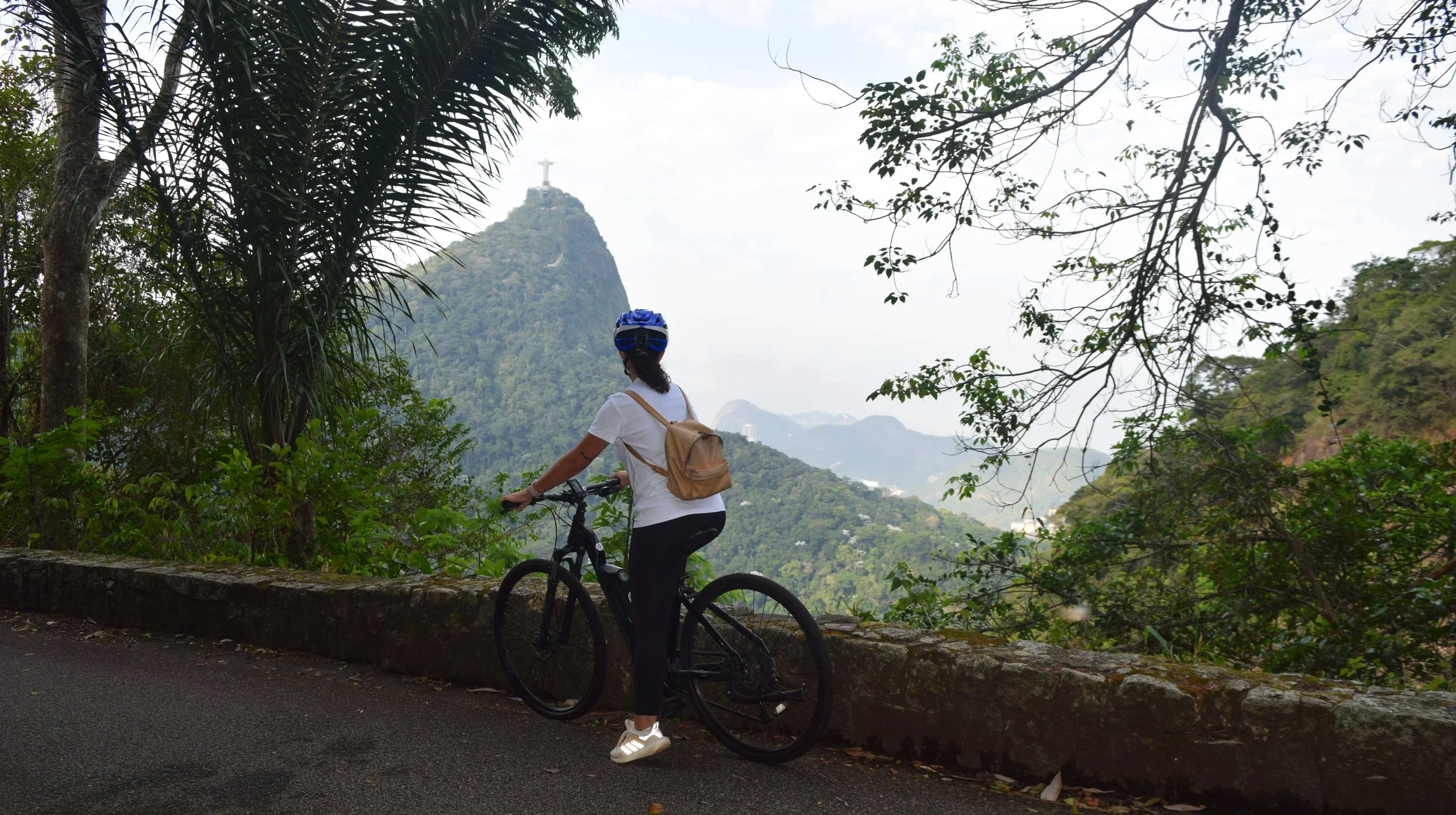
One of the stops to enjoy the breathtaking views along the way
I cycle in Rio constantly. It's one of my favorite ways to move through the city, and over the years I've built a list of routes I go back to again and again, including the coastal ride from Leblon to São Conrado along Avenida Niemeyer.
But there was one road I'd never ridden: Estrada das Paineiras, the climb into Tijuca Forest.
I found out why one morning on my way to watch the sunrise from Vista Chinesa. I passed cyclist after cyclist grinding up that hill, and I knew immediately I wanted to do it too.
The problem is that the climb is brutal, steep and relentless for several kilometers, and there was no way I'd survive it on a regular bike without ending up the slowest, most miserable person on the road.
So I started looking for options, and that's how I found Stefano Glauco's e-bike tour through Santa Teresa and Tijuca Forest. I booked a spot on the end of June, right at the start of winter, and it turned out to be one of the best things I've done in this city, despite living here my whole life.
This post contains affiliate links. If you book through them, I may earn a small commission at no extra cost to you.
Bike tour through Tijuca Forest at a glance
Guide: Stefano Glauco, an Italian who moved to Rio and became a tour guide and built this route specifically with e-bikes, on bike paths and low-traffic roads, to make the climb accessible to more people
Duration: This tour offers a 3-hour and a 5-hour version, the longer one including the beachfront, Rodrigo de Freitas lagoon, and Aterro do Flamengo. I booked the 3-hour one because my focus was the forest, but I'm looking forward to trying the long one.
Price: $76 per person for the 3-hour route
Rating: 5.0 stars from 285 reviews at the time I booked
What's included: electric bike, helmet, bottle of water, snack, and photos taken by Stefano along the way
Meeting point: Santa Teresa
Difficulty: listed as moderate, intermediate skill level
Why I chose this specific tour
What pushed me from "I should try this someday" to actually booking it was a Condé Nast Traveler piece where the writer recounted a honeymoon trip to Rio and named this same e-bike tour as the highlight of her entire stay, ahead of a surf lesson and dinner at one of the city's best-known fine dining spots.
She described pausing mid-ride while Stefano tracked down the call of a toucan hidden in the canopy, and spotting wild monkeys and even a sleepy python along the forest paths.
I'm naturally skeptical of "best of" claims, but the route matched exactly what I'd been curious about since that sunrise morning, and Stefano's profile backs it up: he says he was the first guide to bring e-bike tours to Rio, with a five-star average across hundreds of reviews.
That was enough for me to book.
What the route through Tijuca Forest actually looks like
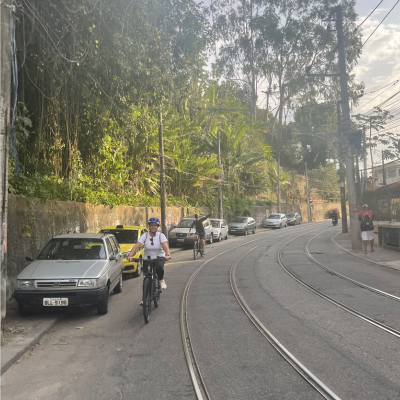
The tour starts in Santa Teresa, where Stefano gives a quick briefing on how the e-bikes work. They're pedal-assist, not throttle-controlled, so you still have to pedal the whole time, the motor just takes the edge off. Helmets and water are handed out here.
For more details of how to get to Santa Teresa and what to do there, this guide will help you.
From there, the ride heads toward Mirante dos Prazeres, a viewpoint overlooking one of Rio's well-known favelas. Stefano stops here, sharing his own personal experiences with the community, places he likes to eat there, and stories that go well beyond a generic history lecture.
It's one of the moments where the tour stops feeling like a checklist and starts feeling like you're getting Rio through someone who actually lives it.
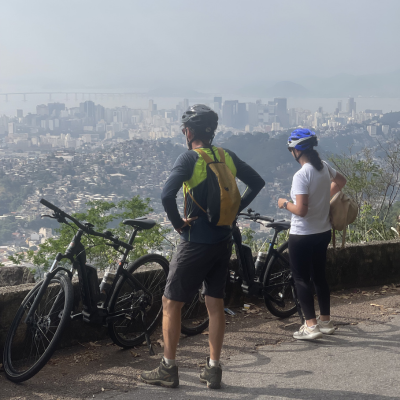
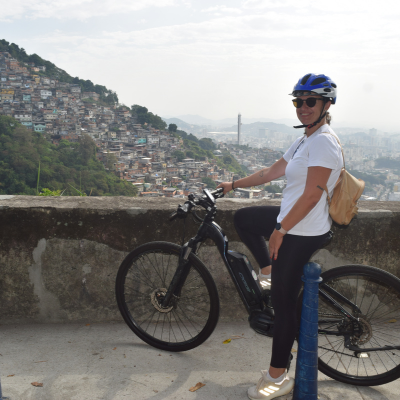
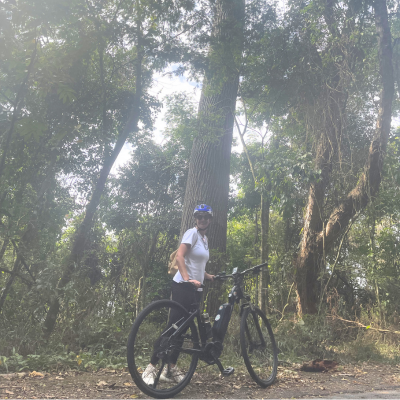
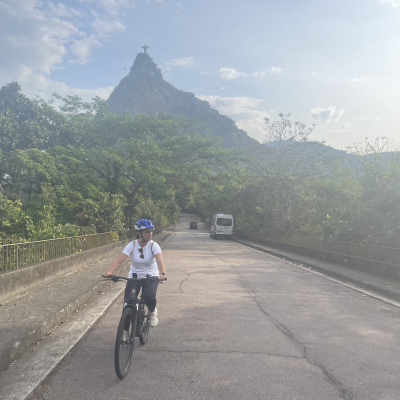
Then comes the part I'd come for: the climb into Tijuca National Park, on a road closed to cars, which makes a real difference. No traffic, just forest closing in around you and the city dropping away below. This is also where you have the best odds of spotting wildlife.
After reaching the highest point of the route, it's a long descent out of the park, which after that climb feels like a reward in itself. Part of the descent overlaps with the cycling course used for the 2016 Olympics, including a stop with one of the most striking perspectives I've seen of this city: Christ the Redeemer framing Sugarloaf Mountain, which sits well below it from this angle.
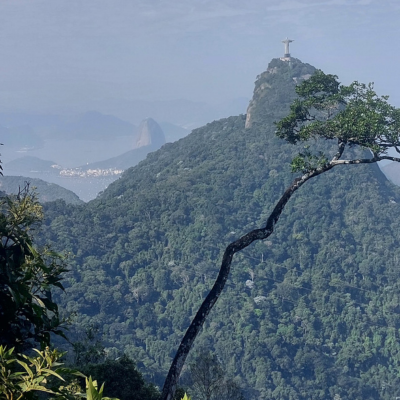
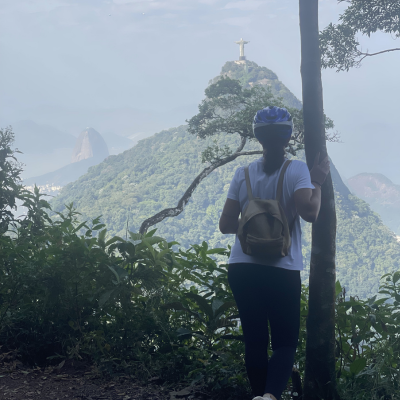
A little further down, the route passes the Paineiras visitor center, the place where the vans depart to Christ the Redeemer.
It's where Stefano hands out a snack, usually a banana, though mine got swapped for a paçoca since I don't eat bananas, and there's a café where you can buy coffee or a drink. It's a welcome break before the final stretch.
Stefano is also generous with local tips along the way. As a Santa Teresa resident himself, he shared his favorite bars and restaurants and answered every question we had about the city.
Since the activity is very weather dependent, on rainy days he'll likely suggest rescheduling for a clearer day rather than running the tour in poor visibility, which is worth keeping in mind if your itinerary is tight.
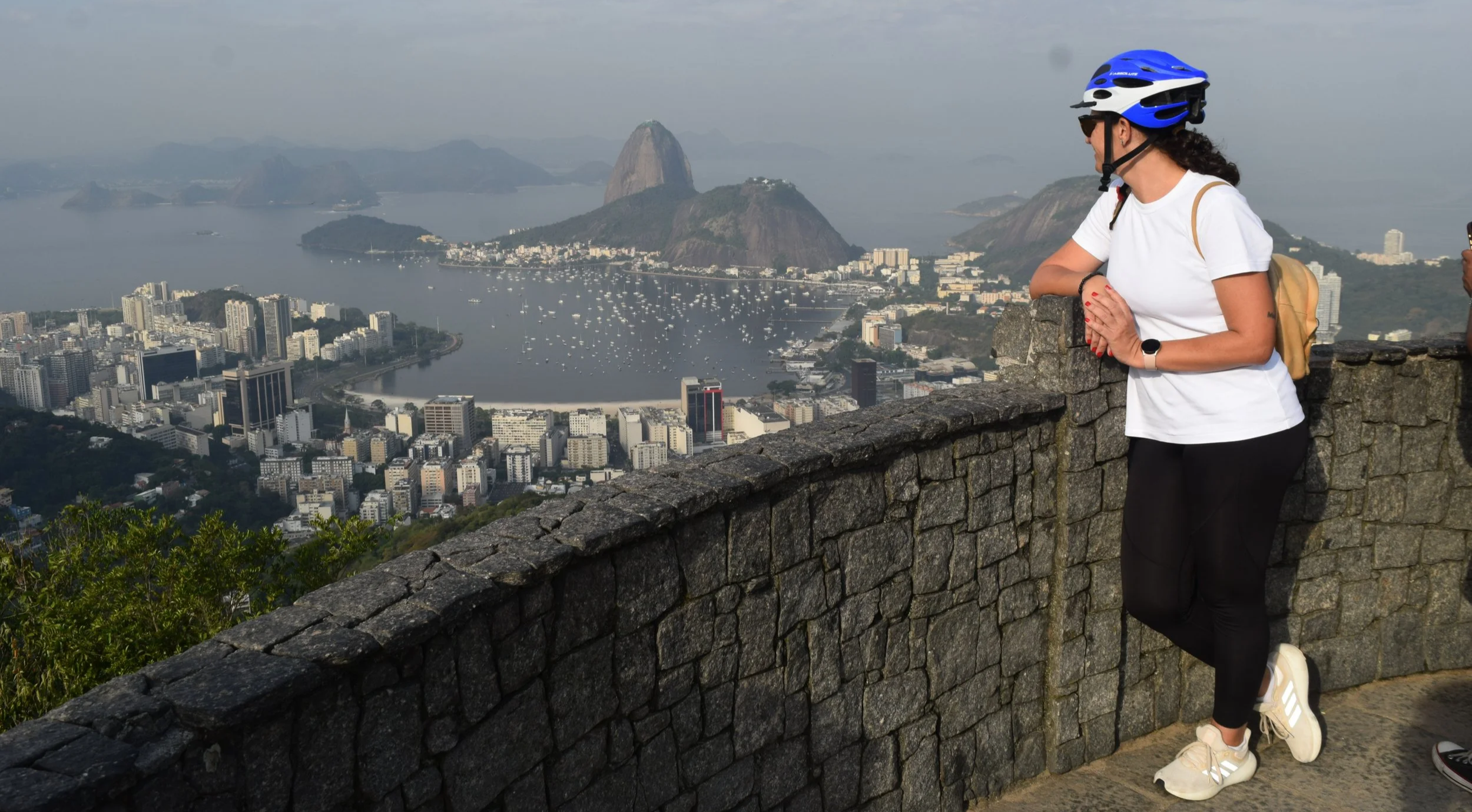
The last stop is Mirante Dona Marta, one of the most incredible viewpoints in the whole city, with Sugarloaf and Guanabara Bay laid out in front of you. A great way to end the ride before heading back to Santa Teresa to close the loop.
How hard is the Tijuca Forest bike tour?
I cycle regularly and I'm used to riding e-bikes, and both of those things made a real difference here.
We covered around 30 kilometers in roughly 3 hours of riding, and I want to be upfront that my experience of "moderate" might not match someone who rarely gets on a bike or has never used an e-bike before.
For me, the ride felt comfortable the whole way through, including the climb, which on a regular bike would have been genuinely tough. The motor assist made the difference between struggling and actually enjoying the scenery while pedaling.
That said, this isn't a passive ride. You're still working the whole time, the road has real elevation, and 30 kilometers adds up even with assistance. You do need a baseline level of fitness to hold up through the full route. If you're reasonably active and comfortable on a bike, you'll be fine.
If cycling isn't something you do at all, consider the flat beachfront bike paths along Copacabana, Ipanema, and Leblon instead, either on a rented Bike Itaú or on one of the guided tours mentioned below.
Best time of year for a Tijuca Forest bike tour
I did this in late June, right as winter was starting, and the timing worked in my favor. Skies were clearer, temperatures were cooler and more comfortable for a climb, and the views from both Mirante dos Prazeres and Mirante Dona Marta had none of the haze that's more common in the hotter months.
If you're planning a winter trip to Rio, this is one more reason to add it to the list.
Is the Tijuca Forest e-bike tour worth the price?
Yes. Between the guide, the e-bike rental, the route planning, and access to a road I wouldn't have known how to navigate or pace myself on alone, the price felt fair. Stefano clearly knows the park well, and having someone set the pace and point out what to look for added more to the experience than I expected going in.
If you cycle and have been curious about Tijuca Forest but assumed the climb was out of reach, this is the way to do it.
A quick note on booking: I did the shorter, 3-hour version through Airbnb Experiences. Stefano also runs a longer half-day version, listed on Viator, which covers the same Tijuca Forest climb plus a lot more, descending past Vista Chinesa to Lagoa Rodrigo de Freitas, then along Copacabana, Botafogo, and Aterro do Flamengo before heading back to Santa Teresa.
If you have more time and want to see a wider stretch of the city by bike in one go, that's the one to book.
Other guided bike tours in Rio worth knowing about
Stefano's tour is the one I can speak to firsthand, but if you're comparing options or want something with a different focus, here are a few other guided bike tours in Rio that come up often:

Written by Karina
Born and raised in Rio de Janeiro, Karina spent over a decade working in the tourism industry, with experience in some of the world's leading travel destinations. She created Going to Rio to bring that same standard of practical, traveler-first guidance to visitors exploring Rio de Janeiro. Learn more about Karina
