

Is Rio de Janeiro expensive? A cost breakdown for travelers of all budgets
Is Rio de Janeiro expensive for travelers? The honest answer is: it depends entirely on how you travel.
Rio can be one of the more affordable major destinations in South America, or it can rival the cost of a European capital. The difference comes down to the neighborhood you choose, when you travel, and the comfort level you expect.
As someone who actually uses this city, paying these prices myself and hosting visiting friends and family, I've put together this guide using real, current rates rather than rough estimates.
Keep in mind that where I reference specific hotels, those prices reflect what those properties are actually charging for low-season stays, checked directly against their listings.
One thing working in every visitor's favor: Rio is genuinely generous with free fun. Beaches, hiking trails, parks and free outdoor concerts and cultural events. Some of Rio's best experiences cost nothing at all, regardless of where you're staying or what time of year you visit.

Free sunset at Ipanema Beach
Rio de Janeiro cost snapshot
Here's a quick look at what a day in Rio costs across three travel styles:
Budget traveler
Accommodation - $20–50/night (shared dorm to simple private room)
Food - $15–25/day
Transport: $5–10/day
Activities: $0–25/day
Mid-range traveler
Accommodation - $50–150/night (3 and 4-star hotels)
Food - $25–50/day
Transport: $10–35/day
Activities: $0–50/day
Luxury traveler
Accommodation - $170–1,100/night (5-star hotels incl. Copacabana Palace)
Food - $75–250/day
Transport: $50–150/day
Activities: $0–350/day
Here's a closer look at what drives the cost in each category, with real numbers to help you plan your own trip.
Cost of accommodation in Rio de Janeiro
Accommodation is where your budget moves the most. The same star rating can cost very differently depending on the neighborhood, as a 5-star stay in Ipanema or Leblon will run well above the same category in Botafogo or Flamengo, even when the room itself is comparable.
Here's what a night looks like in low season, by neighborhood and travel style:
Ipanema
Budget (shared dorm): El Misti Hostel — $35/night
Budget (private room): Astoria Ipanema — $115/night
Mid-range: Ipanema Inn — $220/night
Luxury: Arpoador Hotel — $300/night
Luxury (top-tier): Fasano Hotel — $750/night
See the full guide to where to stay in Ipanema.
Leblon
Budget (shared dorm): Leblon Beach Hostel — $44/night
Mid-range: Leblon Design Hotel — $120/night
Mid-range (upper): Ritz Leblon — $280/night
Luxury: Janeiro Hotel — $580/night
Copacabana
Budget (shared dorm): Che Lagarto Hostel Copacabana — $22/night
Budget: B&B Copacabana Posto 5 — $95/night
Budget beachfront: Astoria Palace — $110/night (Read my full hotel review)
Mid-range (upper): Grand Mercure Copacabana — $180/night
Luxury: Emiliano Rio — $500/night
Luxury (top-tier): Copacabana Palace — $750/night
See the full guide to where to stay in Copacabana.
Botafogo
Budget (shared dorm): Gaia Hostel — $19/night
Budget: Ibis budget Praia de Botafogo — $60/night
Mid-range: Novotel Rio de Janeiro Praia de Botafogo — $150/night
Luxury: Yoo2 Rio de Janeiro by Hilton — $180/night
Flamengo / Gloria
Budget: Hotel Monte Castelo — $45/night
Budget: Hotel Regina — $58/night
Mid-range: Windsor Florida Hotel — $80/night
Downtown / Lapa
Budget: Casa Nova Hotel — $55/night
Mid-range: Americas Granada Hotel — $80/night
Luxury: Vila Galé Rio de Janeiro — $150/night
Barra da Tijuca
Budget: Ibis Rio de Janeiro Barra da Tijuca — $75/night
Mid-range: Windsor Oceanico Hotel — $120/night
Luxury: Grand Hyatt Rio de Janeiro — $250/night
See the full guide to where to stay in Barra da Tijuca.
Looking to stretch every real? Our budget travel guide breaks down how to save on accommodation, food, and transport.
Want to go the other direction entirely? Here's our guide to Rio's best luxury hotels and experiences.
Cost of food in Rio de Janeiro
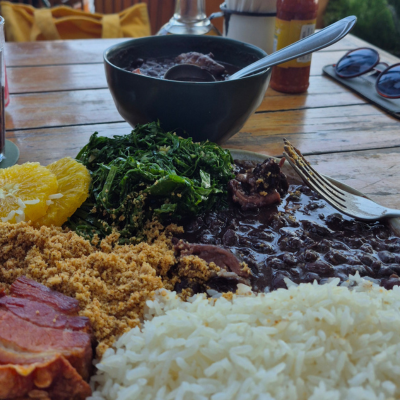
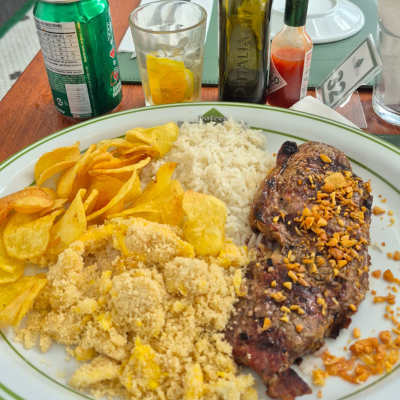
Eating like a local is one of the easiest ways to control costs in Rio, and the price difference between a neighborhood spot and a beachfront kiosk can be significant. Here's what real prices look like across the spectrum, from a casual coffee to a sit-down dinner.
Quick bites & drinks
Água de coco (beach vendor): $3
Mate com limão (beach vendor): $2-3
Biscoito Globo (beach vendor): $1.5
Açaí bowl (beach kiosk / juice bar): $5-7
Tapioca (street vendor / feira): $4-6
Beer, can (beach vendor): $2-3
Chopp, draft beer (boteco): $3-6
Caipirinha (beach kiosk): $5
Caipirinha (upscale bar): $5-10
Coffee + pão de queijo (neighborhood padaria): $5
Meals
Prato feito (casual lunch spot): $6-10
Lunch at a beachfront restaurant: $10-20
Dinner, mid-range restaurant: $20-30
Churrascaria rodízio: $35-100
Tasting menu, fine dining: $100-200
For a deeper dive into where to eat, our complete guide to the best restaurants in Rio de Janeiro covers everything from fine dining to local classics.
If churrasco is on your list, here's our guide to Rio's best churrascarias, and for a broader look at the city's food scene, check out our food in Rio de Janeiro guide.


Cost of transport in Rio de Janeiro
The metro in Rio is cheap, clean, and covers most of the city's main attractions, making it the easiest way to get around for most visitors. Here's a full breakdown of the metro's stations and which ones to use for the city's main sights.
Uber and local ride-share apps like 99 are just as convenient and affordable for the gaps the metro doesn't reach. That said, Uber is cheap in Rio, but needing it several times a day adds up fast, which is exactly why choosing where you stay based on what you actually plan to do also saves you money.
For a complete guide to getting around the city, check out our full transport guide. And if you're wondering how to get from the airport to your hotel, here's everything you need to know about getting from the airport to Copacabana.
Public transport
Metro, single ride: $1.5
Bus and VLT, single ride: $1
BRT, single ride: $1
Rideshare & taxis
Uber/99, short ride (within Zona Sul): $3-10
Uber/99, longer ride (e.g., airport to Ipanema): $9-20
Traditional taxi: typically 15-30% more than rideshare
Other options
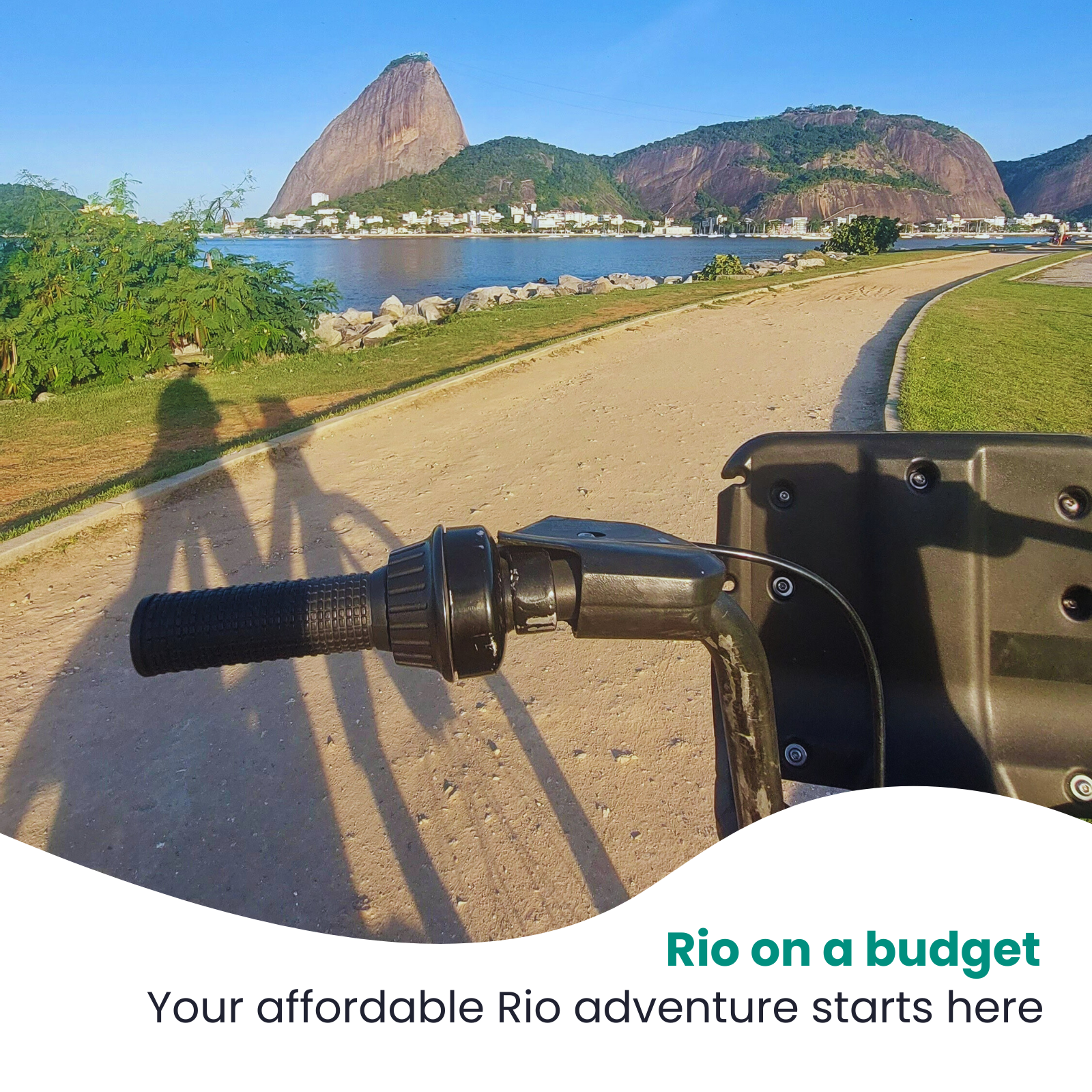
Bike share (Itaú/Bike Rio), 2-hour ride: $1.5
Car rental, per day: from $25



Cost of activities and tours in Rio de Janeiro
Some of Rio's biggest landmarks come with a price tag, and the cost can vary depending on how you choose to get there or which experience you book.
Iconic landmarks
Christ the Redeemer by train: $27
Christ the Redeemer (van from Copacabana): $26
Sugarloaf Mountain cable car: $41
Sugarloaf Mountain cable car, skip-the-line: $65-75
Copacabana Fort: $2
Museum of Tomorrow: $8
AquaRio: $28
Yup Star Rio (Ferris wheel): $12
Nature & adventure
Guided tour of Tijuca Forest: $52-95
Hang gliding from Pedra Bonita: $230-370
Helicopter tour (guide to choose a company): $150-350
Tours on the water and beyond
Guanabara Bay boat cruise: $55-75
Full-day private tour: $120-200
Samba school rehearsal tour: $68-100
For the full list of Rio's must-see landmarks, check out our complete guide to Rio de Janeiro's tourist attractions. And if you're ready to put it all together, here's our suggested itinerary for Rio de Janeiro.

Paying for things in Rio de Janeiro
PIX, Brazil's instant payment system, is used everywhere, from beach kiosks to high-end restaurants, and it's often faster than paying with a card.
Foreign credit cards work in most places, though it's worth checking with your bank about international transaction fees before you go, and carrying some cash for smaller vendors who may not accept cards.
For a complete breakdown of how PIX works for visitors and how to use it during your trip, check out our full guide to PIX in Brazil for foreigners.
Final thoughts about costs of travel in Rio de Janeiro
Rio isn't the cheapest destination in South America. But it may be one of the best-value cities you'll ever visit.
Is Rio de Janeiro expensive? It can be, but it doesn't have to be. The same city that's known for its luxury beachfront hotels and upscale neighborhoods also gives you world-class beaches, breathtaking hikes, and unforgettable sunsets for free. Your final number depends far more on the choices you make than on the city itself.
Whatever your budget, the goal is the same: build a trip around what you actually want to do, choose your neighborhood and pace accordingly, and let Rio's free side do a lot of the heavy lifting.
Planning your trip and not sure where to start? I can help you put together the perfect itinerary, from where to stay to what to do each day. Let's plan your Rio trip
FAQ
Is Rio de Janeiro expensive?
It depends entirely on how you travel. Rio can be one of the more affordable major destinations in South America for budget travelers, or it can rival the cost of a European capital for those staying in luxury hotels and dining at high-end restaurants. Neighborhood, timing, and travel style make the biggest difference.
How expensive is Rio de Janeiro?
A budget traveler can get by on roughly $40–95/day, a mid-range traveler on $165–305/day, and a luxury traveler on $490+/day, covering accommodation, food, transport, and activities.
Is food expensive in Rio de Janeiro?
Not if you eat where locals do. A coffee and pão de queijo at a neighborhood padaria costs a few dollars, while a prato feito lunch runs $6–10. Prices climb significantly at beachfront restaurants and fine dining, where a tasting menu can run $100–200 per person.
Is it expensive to visit Rio de Janeiro compared to other South American cities?
Rio sits in the middle to upper range for South America. It's generally pricier than cities like Lima or Bogotá, comparable to Buenos Aires in many categories, and more affordable than it might appear if you stick to local spots rather than tourist-heavy areas.

Written by Karina
Born and raised in Rio de Janeiro, Karina spent over a decade working in the tourism industry, with experience in some of the world's leading travel destinations. She created Going to Rio to bring that same standard of practical, traveler-first guidance to visitors exploring Rio de Janeiro. Learn more about Karina

Rio de Janeiro's best hotels for a day use, from beachfront pools in Copacabana to secluded escapes in the hills.