

Food in Rio de Janeiro is an experience in itself.
The cuisine is the result of centuries of cultural exchanges: Portuguese, African, and Indigenous influences that combined into something unique and genuinely difficult to replicate anywhere else.
From world-famous feijoada and churrascarias to uniquely Carioca traditions like braseiros, a type of restaurant many visitors have never heard of, Rio's food culture rewards anyone willing to look beyond the obvious.
Add in the city's iconic juice houses and the açaí bowl that fuels countless beach mornings, and eating becomes part of the experience itself.
Beyond the dishes themselves, the way people eat in Rio reflects the city's creativity, with everything from botecos and kilo restaurants to bustling street markets and beach kiosks playing a role in everyday life. The rodízio japonês, an all-you-can-eat sushi format that exists nowhere else in the world in quite the same way.
This guide covers all of it: the dishes, the dining formats, and the restaurants worth knowing in each category.
Visiting Rio in September? Rio Gastronomia is the best opportunity to experience the city's food scene in one place, bringing together award-winning chefs, local restaurants and live music. Read my complete guide to Rio Gastronomia.
🍽️ Food in Rio de Janeiro at a glance
🥩 Braseiros: Casual neighborhood restaurants serving grilled chicken meats and classic Brazilian dishes.
🍢 Churrascarias: Brazilian steakhouses, often rodízio style, where waiters bring endless cuts of meat to your table.
⚖️ Kilo restaurants: Buffet-style restaurants where you pay by weight, perfect for affordable lunches.
🍺 Botecos: Traditional neighborhood bars known for cold beer, finger food, and local atmosphere.
🥤 Juice houses: Rio's iconic spots for fresh tropical juices, smoothies, sandwiches, and açaí.
🏖️ Beach kiosks: Relaxed seaside restaurants serving seafood, snacks, and cold drinks with an ocean view.
🍣 Rodízio japonês: Brazil's unique all-you-can-eat sushi experience with an extensive menu served at the table.
🍲 Must-try dishes: Feijoada, picanha, moqueca, pastel, pão de queijo, brigadeiro, and more.
What is a braseiro (and why you should include one in your trip)?
If you ask me what I crave most after spending time away from Rio, the answer probably isn't a famous tourist attraction. It's sitting at a braseiro with a plate of galeto, crispy fried polenta, rice, beans, and farofa.
While galeto, a small chicken grilled over charcoal until the skin turns crispy while the meat stays incredibly juicy, is the classic order, the menu usually goes far beyond that. You'll find steaks, pork, sausages, seafood and vegetarian options, all served with generous side dishes, all prepared simply and meant to be shared.
Braseiros are one of Rio's most beloved restaurant traditions, yet they're almost unknown outside Brazil. Unlike a churrascaria, where the experience revolves around rodízio, an all-you-can-eat service with endless cuts of meat, a braseiro is a casual neighborhood restaurant centered around food cooked over charcoal.
Many braseiros have Portuguese roots, which helps explain their focus on charcoal grilling, generous portions, and long family lunches. They're the kind of place where cariocas gather after a morning at the beach, celebrate birthdays, or linger over a lazy Sunday lunch with family and friends.
If you want to experience how locals actually eat, don't just book a famous churrascaria. Make room for at least one meal at a braseiro.
Looking for a great place to try one? Our guide to the best restaurants in Rio includes some of my favorite braseiros.
Best churrascarias in Rio de Janeiro
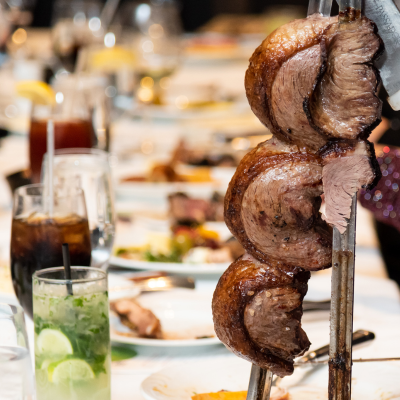
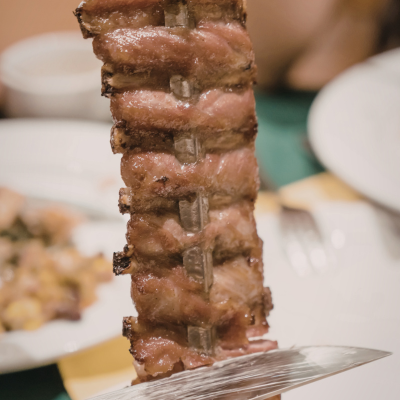
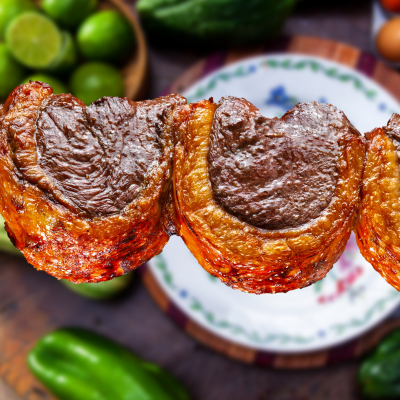
Brazilian churrascaria rodízio is one of the great meat traditions of the world, and Rio has some of the finest churrascarias in the country.
The classic format is rodízio, a fixed price, with passadores (waiters carrying skewers) bringing cuts to the table until you signal them to stop. The cuts to know: picanha, fraldinha, costela, and cupim.
A good churrascaria also offers lamb, chicken hearts, and linguiça (pork sausage) alongside the premium cuts.
A great place to experience a traditional rodízio is Assador Rio's, at Aterro do Flamengo. Its spectacular setting overlooking Guanabara Bay and Sugarloaf Mountain is matched by an excellent selection of meats, from classics like picanha to premium cuts such as Tomahawk and slow-cooked short rib.
Looking for more options? Check out our complete guide to the best churrascarias in Rio de Janeiro.
Kilo restaurants in Rio: Eat like a local
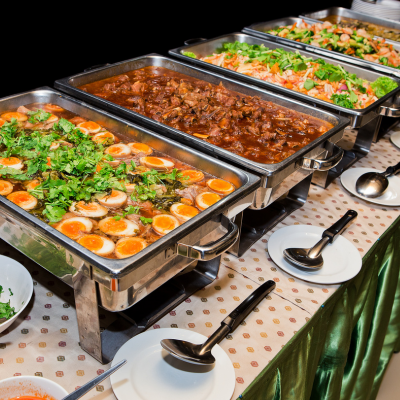
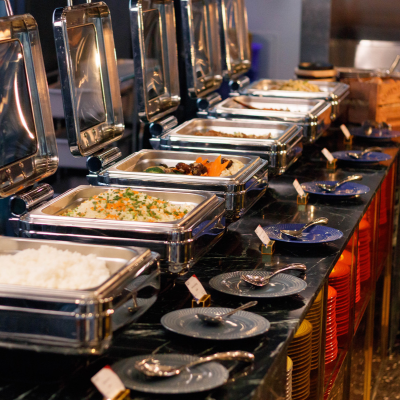
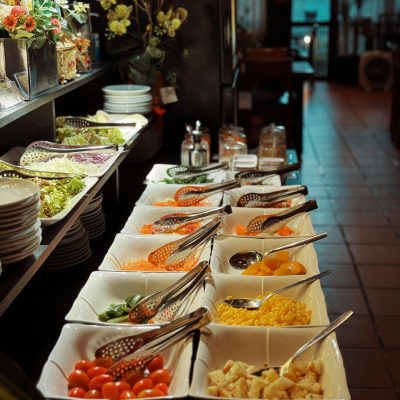
The restaurante a quilo, or simply a kilo restaurant, also known in Rio as self-service, is one of the most practical and democratic inventions of Brazilian food culture.
The buffet offers a wide selection of freshly prepared dishes, from salads and vegetables to grilled meats, beans, rice, and daily specials. You take a plate, serve yourself, and pay by weight at the end. It's fast, varied, and one of the best-value meals you'll find in Rio.
For visitors, it's one of the best ways to eat like a carioca on a weekday and a great option for vegetarians.
A great first introduction is Celeiro, in Leblon. It elevates the kilo concept with beautifully prepared dishes, an ever-changing menu, and a quality level closer to a good restaurant than a typical buffet.
Looking for more vegetarian-friendly restaurants? Our guide to vegan and vegetarian food in Rio de Janeiro includes more excellent options across the city.
Botecos: Rio's corner bar culture

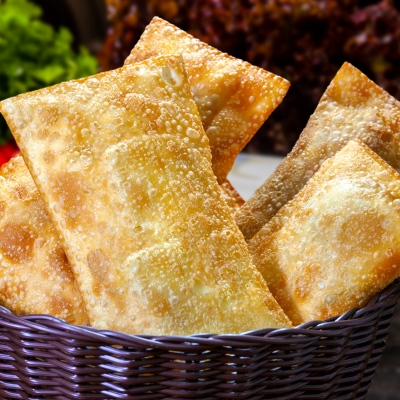
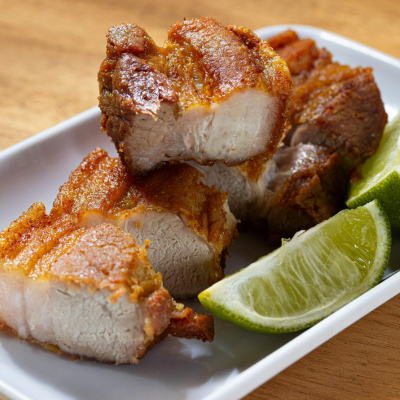
The boteco is more than a bar. It's a uniquely carioca institution, an informal neighborhood spot where cold beer, fried snacks (petiscos), and unhurried conversation are the whole point.
No reservations, no dress code, no particular reason to leave.
The classic petiscos include bolinhos de bacalhau (salt cod fritters), croquetes de carne (beef croquettes), aipim frito (fried cassava), and pastéis. But a great boteco is defined less by its menu than by its atmosphere: sidewalk tables spilling onto the street, an ice-cold chopp (draft beer), football on TV, and friends lingering for hours over one more round.
For boteco recommendations by neighborhood, see our guide to Rio de Janeiro nightlife.
Juice houses: A carioca institution
Rio's juice houses are much more than places to grab a fresh juice. They're an essential part of everyday life, where locals stop for breakfast, a quick lunch, a post-beach snack, or something to take on the go.
The first thing you'll notice is the display of tropical fruits stacked in the shop and a menu with seemingly endless juice combinations. Mango with orange, pineapple with mint, acerola, graviola, cajá... mixing fruits is part of the fun, and every regular has a favorite.
But juice is only half the story. Most juice houses also serve fresh sandwiches, baked pastries, omelets, açaí bowls, and healthy snacks, making them one of the easiest places to find a quick, affordable meal.
A great place to experience this is BB Lanches, a beloved local chain where generations of cariocas have stopped for a fresh juice and a chicken or tuna sandwich after the beach.
Eating at the beach in Rio de Janeiro
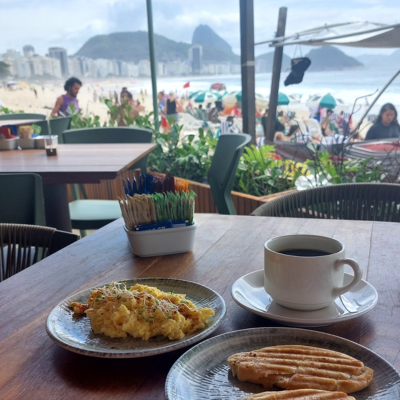
Rio's beaches have their own food ecosystem, and discovering it is as much a part of the experience as swimming in the ocean itself.
🌴 Beach kiosks
Rio's beach kiosks are far more than places to grab a coconut water. The best ones serve excellent seafood, cocktails, and full meals in a setting no dining room can compete with.
A great place to experience this is La Carioca Cevicheria (Leblon). Located right on the sand, it serves Peruvian coastal cuisine adapted for carioca beach life: ceviches in multiple versions, tiraditos, pokes, and fresh dishes. One of the most charming spots on the waterfront.
🚶♂️ Beach vendors
But the real magic happens away from the menus. Vendors circulate constantly along the beaches selling a set of items that haven't changed in decades. Mate gelado, an iced tea served from a thermos, usually with lemon or passion fruit, is the quintessential beach drink.
Cold, slightly bitter, and completely refreshing in the heat. The vendor shakes the thermos, pours it into a plastic cup, and moves on. It costs almost nothing and is one of those things that tastes exactly right in context.
Alongside the mate: fresh coconut water straight from the coco, açaí bowls, grilled corn, grilled queijo coalho, a firm Brazilian cheese served on a skewer, tapioca crepes, and the omnipresent Biscoito Globo, light, airy polvilho crackers sold in small plastic bags since 1953, in salted or sweet versions.
🍹 Caipirinha
Sit down at almost any beach kiosk and you'll inevitably end up ordering a caipirinha, Brazil's national cocktail, made typically with cachaça, lime, and sugar, served over ice. You'll also find versions made with tropical fruits or vodka instead of cachaça, but for your first one, go with the tradition, you won’t regret.
In Rio, the beach doesn't stop when you're hungry. You simply keep enjoying it with something good to eat.
Rodízio Japonês: All-you-can-eat sushi, Rio style
The rodízio japonês is a Brazilian invention that doesn't exist in quite the same form anywhere else in the world.
Instead of ordering individual dishes, you pay a fixed price and choose from an extensive menu of sushi, sashimi, hot dishes, and creative rolls. Everything is freshly prepared and brought to your table, and you simply keep ordering until you're done.
Rio has a large Japanese-Brazilian community, and the best rodízios here take the format seriously with fresh fish, skilled sushimen, and creative rolls alongside the classics.
A great place to try the concept is JapaNao (Ipanema and Copacabana), created by celebrated sushiman Nao Hara, is the benchmark for good-value rodízio japonês in Rio with a menu that includes both classics and Nao's own creations.
Brazilian dishes you shouldn't miss
Now that you know where cariocas eat, it's time to go deep on what they eat.
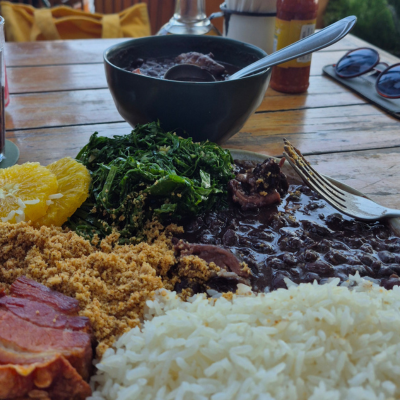
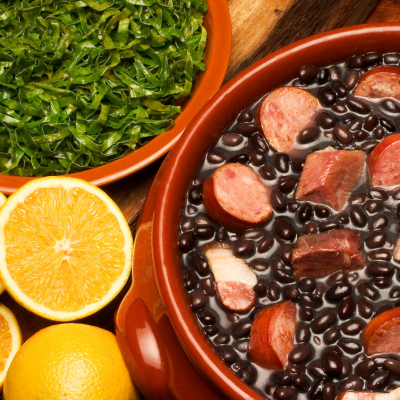
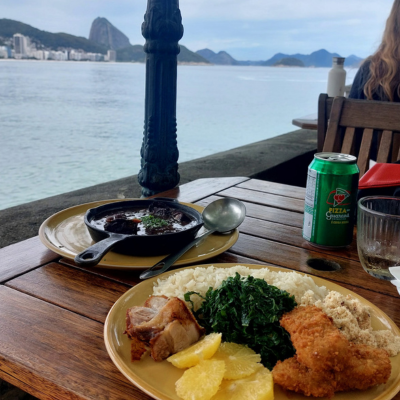
Feijoada may be Brazil's most famous dish, but it's only the beginning. Rio's menus are filled with dishes that locals grow up eating, from picanha and moqueca to escondidinho, bolinho de bacalhau, and pastel. Many restaurants also celebrate regional Brazilian cuisines, bringing flavors from Minas Gerais, Bahia, and Brazil's Northeast to the city.
If you're only visiting Rio once, don't spend every meal on international food. The city's greatest restaurants aren't just places to eat, they're one of the best ways to experience Brazilian culture.
A great place to start is Academia da Cachaça, where the award-winning feijoada is served every day alongside one of the city's finest selections of cachaça.
Ready to explore Brazil's most iconic dishes? Continue with our guide to the Best Restaurants in Rio de Janeiro, where you'll find the city's best places to try feijoada, moqueca, churrasco, seafood, and much more.

Food tours and cooking classes in Rio de Janeiro
Eating your way through Rio is one thing. Understanding what's on your plate is another. If you want to go beyond the restaurant table, these are the two experiences I'd pick.
Rio de Janeiro food tour
Downtown Rio is where the city's food history is easiest to taste: centuries-old streets, traditional botecos and dishes that carry Indigenous, African and Portuguese roots on the same plate. A food tour there takes you to the spots you'd likely walk past on your own, with a local guide telling the story behind each dish. All tastings are included, and it ends on something sweet. This is the one I'd book:
Brazilian cooking class in Rio
If you'd rather take Rio home with you, a cooking class teaches you the dishes you'll miss most after the trip, and usually the caipirinha to go with them. It's also a great plan for a rainy day. This is the class I'd pick:
Continue exploring Rio de Janeiro's food scene
🍽️ Best Restaurants in Rio de Janeiro
Where to try Brazil's most iconic dishes.
🍺 Rio de Janeiro Nightlife
The city's best botecos, bars and samba venues.

Written by Karina
Born and raised in Rio de Janeiro, Karina spent over a decade working in the tourism industry, with experience in some of the world's leading travel destinations. She created Going to Rio to bring that same standard of practical, traveler-first guidance to visitors exploring Rio de Janeiro. Learn more about Karina


Upscale Leblon has way more than fine dining. Find braseiros, feijoada, botecos and the city's official Gastronomic Hub. Here's where locals actually eat.