

Churrasco in Brazil is not just a meal. It's a ritual that brings together family, friends, and a philosophical commitment to good meat cooked well.
While the best churrascarias in Rio de janeiro are the all-you-can-eat rodízio houses where premium cuts arrive at the table on skewers, there are other ways of enjoying meat. Understanding the difference between formats is the first step to choosing the right experience.
And whatever format you choose, the experience is never just about the meat. The classic accompaniments are farofa (toasted cassava flour, sometimes with butter, egg, or bacon), vinagrete (a light tomato and onion salsa), french fries, and fried banana.
Those are as much part of the experience as the meat itself. Farofa in particular divides opinion among first-timers, but most come around quickly.
Churrascaria Rodízio: the classic format
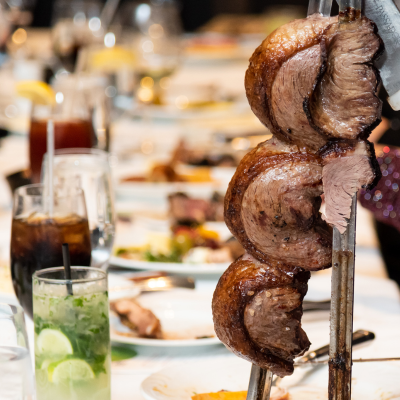
In a churrascaria rodízio, you pay a fixed price for all-you-can-eat. Waiters called passadores circulate through the dining room carrying skewers of meat and slice directly onto your plate until you signal them to stop.
Rodízios also include a full buffet of salads, hot sides, and sometimes sushi and seafood.
Tip: It's common for a lot of Brazilian delicacies to arrive at your table as soon as you sit down: cheese bread, pastel, fried cheese balls, garlic bread. Resist.
These will be available throughout the meal and tend to move the focus away from what matters most: the meat.
Assador Rio’s
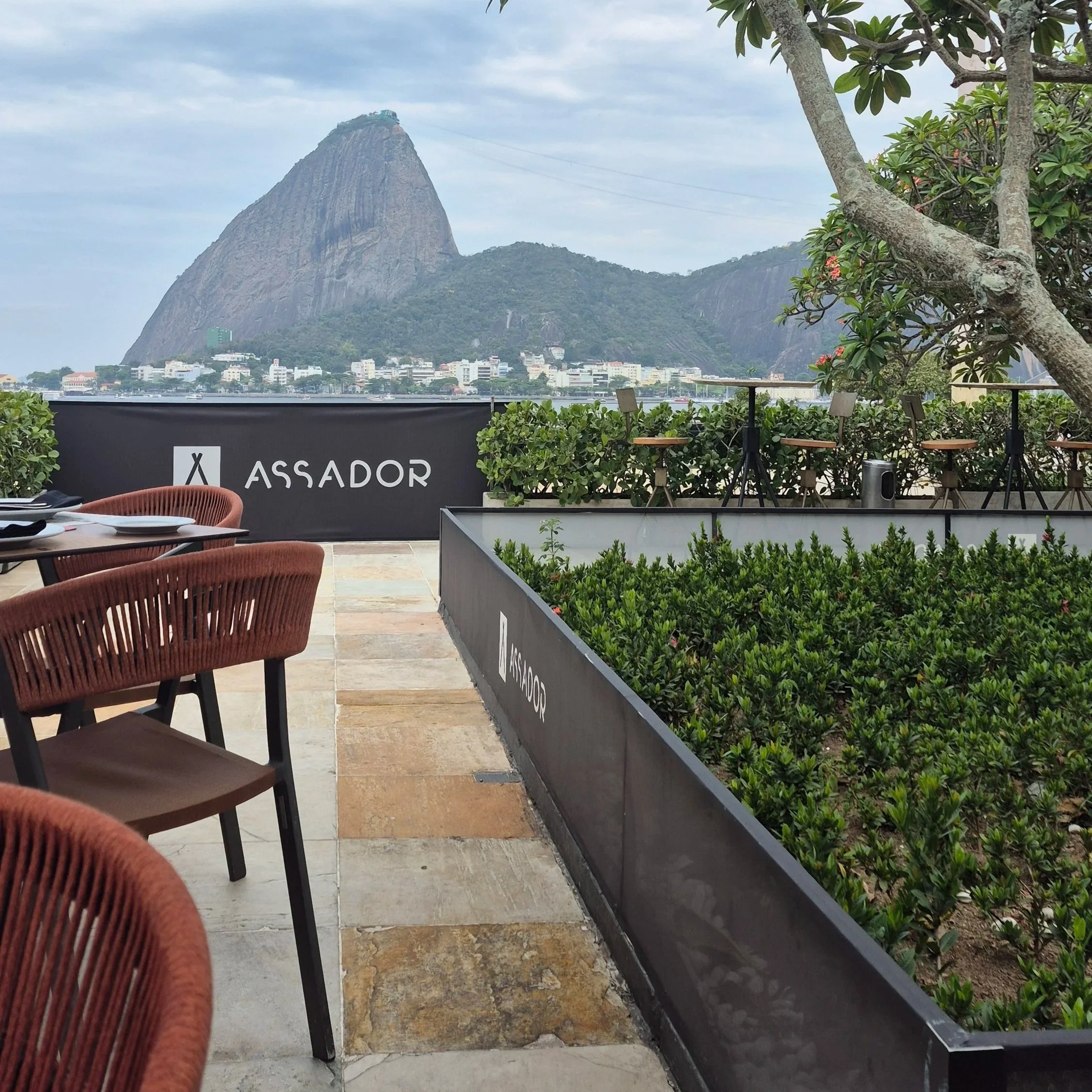
One of the great settings for a meal in Rio. On the Aterro do Flamengo, surrounded by Burle Marx-designed gardens, facing Guanabara Bay and Sugarloaf Mountain. I recommend it as much for this view, one that's genuinely hard to replicate anywhere else in the city, as for the food itself.
The rodízio includes premium cuts like Tomahawk and French rack of lamb alongside the classics, and the costela slow-cooked for nearly ten hours is the highlight.
Request a table outside for the full view. A la carte option is also available. After the meal, it's worth stretching your legs along this stretch of the Aterro do Flamengo, joining the families who come out to enjoy the same scenery.
📍 Av. Infante Dom Henrique, s/n – Aterro do Flamengo, Rio de Janeiro
Churrascaria Palace
One of Rio's most historic churrascarias, founded in 1951 and recognized as a Cultural Heritage site of the city.
Palace has a classic rodízio format, and an interior that feels lived-in and purposeful rather than designed for effect. What I appreciate most is the balance: it offers a more sophisticated experience than most churrascarias in the city, but never loses the informal, unpretentious charm that makes carioca dining what it is.
The wine cellar and bar at the entrance set the tone: serious about what it does, without needing to announce it.
📍 Rua Rodolfo Dantas, 16, Copacabana.
Churrascaria Carretão
A well-established rodízio in Ipanema with a mixed crowd of locals and visitors.
The format is straightforward with prime cuts, solid buffet, relaxed service, and the location makes it a natural choice for those coming in from the beach. It's the kind of place I'd suggest to round off a beach day in Ipanema: no fuss, no need to dress up, just good rodízio nearby.
Consistent and reliable, without pretension.
📍 Rua Visconde de Pirajá, 112 – Ipanema, Rio de Janeiro.
Marius Degustare
The most ambitious rodízio format in Rio, where meat and seafood are given equal weight, with passadores bringing lobster, shrimp, and grilled fish to the table alongside the classic beef cuts.
The buffet follows the same logic, with a wide range of cold and hot seafood dishes running parallel to the churrasco. Honestly, the hardest part of a meal here is pacing yourself: with this many good options coming at you from both sides, eating in moderation is easier said than done.
A good option for groups where not everyone is a dedicated carnivore.
📍 Av. Atlântica, 290, Copacabana.
Barra Grill
A long-standing churrascaria in Barra da Tijuca with a reputation built on consistency.
The rodízio includes prime cuts alongside a buffet that goes further than most including oysters and Spanish jamón among the highlights. Spacious, family-friendly, and well-suited to a leisurely Sunday lunch. It's my go-to pick for those long lunches with friends and family that end up stretching into the whole afternoon.
📍 Av. Ministro Ivan Lins, 314, Barra da Tijuca.
Traditional meat cuts to know:
Picanha — the Brazilian signature cut, a rump cap with a thick fat layer that bastes the meat as it cooks. The benchmark by which any churrascaria is judged.
Fraldinha — flank steak, flavourful and slightly more textured than picanha.
Costela — short rib, often slow-cooked for hours before finishing on the grill. When done well, it falls off the bone.
Cupim — hump steak from zebu cattle, rich and gelatinous. Unique to Brazilian churrasco.
Cordeiro — lamb, usually ribs or leg, offered at the better rodízios alongside the beef.
Looking for other types of restaurants in Rio? Our food guide covers everything from kilo restaurants to fine dining.
À la carte barbecue restaurants: meat with character
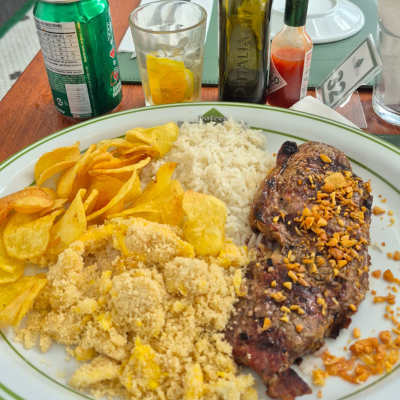
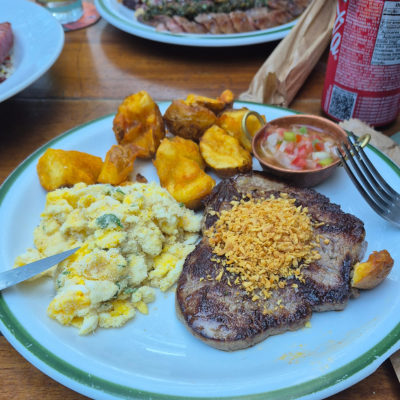
Not all great barbecue in Rio de Janeiro comes in all-you-can-eat format. Some of the most memorable meat experiences in the city are at restaurants where you order from a menu.
Slower, more intentional, and often more carioca in spirit.
Rubaiyat (Jockey Club Brasileiro)
Set within the grounds of the Jockey Club, with the racetrack and Christ the Redeemer as a backdrop, the Rubaiyat manages its own meat production and offers over ten premium cuts, including Wagyu, on an à la carte menu.
On Saturdays, the traditional feijoada is unmissable. One of the most unique dining settings in Rio.
📍R. Jardim Botânico, 971 - Jardim Botânico
Corrientes 348
Rio's finest Argentine steakhouse, with a setting at the Marina da Glória that adds Guanabara Bay views to an already strong proposition.
Corrientes focuses on Argentine cuts and technique — chorizo and ancho are benchmarks — in a refined à la carte format.
📍Av. Infante Dom Henrique, s/n & Av. das Américas, 7777, Barra da Tijuca
CT Boucherie
Chef Claude Troisgros, one of the most celebrated names in Brazilian gastronomy, brings a French-trained precision to Brazilian beef at CT Boucherie.
The menu focuses on premium cuts prepared with the same attention to detail you'd expect from a Troisgros kitchen, in a relaxed Leblon setting. What makes it stand out is the format: it flips the usual rodízio on its head. You choose your cut of meat, and the sides come to your table rodízio-style instead. It's the option I recommend to taste a wide range of Brazilian side dishes without overdoing it on meat.
📍Rua Dias Ferreira, 636.
Braseiro da Gávea
An institution with a distinctly carioca personality: informal, lively, and completely unpretentious. The name comes from the braseiro, the charcoal grill format that's a Rio institution in its own right; if you want to understand more about it, we cover it in detail here.
The Braseiro is the kind of place where artists, musicians, and locals mix without ceremony, and where the quality of the meat is taken seriously despite the relaxed atmosphere. International artists visiting Rio regularly end up here, including Dua Lipa.
The food is the draw, but the vibe is what makes you stay.
Technically, Braseiro da Gávea is a braseiro rather than a churrascaria, but it's one of my favorite places for grilled meat, so it absolutely deserves a place on this list.
📍Praça Santos Dumont, 116, Gávea
Caravela do Visconde
This traditional churrasqueira in Humaitá has a loyal local following.
The open grill turns out picanha in the classic carioca style in a setting that feels more neighborhood institution than tourist destination.
I visited years ago and don't remember it in detail, but the kind of place regulars have been coming to for years and have no intention of stopping says more about its consistency than any single meal could.
📍Rua Visconde de Caravelas, 136, Botafogo.
Classic meat dishes to try in Rio de Janeiro
Beyond the churrasco tradition, Rio has a set of meat dishes that are deeply embedded in the city's food culture with dishes that appear on menus across the city and that any visitor should try at least once.
Filé Oswaldo Aranha One of the most iconic dishes in Rio's culinary history, the Filé Oswaldo Aranha was named in honour of the Brazilian diplomat and statesman.
The dish is simple and perfect: a grilled beef fillet served with an absurd quantity of golden garlic fried in butter, accompanied by farofa, white rice, and banana frita. Garlic is the star.
Found on menus across Rio, but best experienced at a traditional carioca restaurant.
Picanha na chapa Different from the rodízio version, picanha na chapa is grilled directly on a hot iron plate and served whole or sliced, with the fat cap still on, alongside rice, farofa, and vinagrete.
Simpler and more direct than the rodízio experience where the quality of the meat and the heat of the grill are the only variables that matter.
Check our guide to Best restaurants in Rio de Janeiro for meat dishes like the listed above.
Visiting in September? While this guide focuses on Rio's best churrascarias, Rio Gastronomia is another great way to explore Brazilian cuisine, with dishes from renowned restaurants across the country, including plenty of options for meat lovers.
FAQ - Churrascarias in Rio de Janeiro
What is the best churrascaria in Rio de Janeiro?
For setting and premium cuts, the Assador Rio's at the Aterro do Flamengo is the benchmark — Burle Marx gardens, Guanabara Bay views, and exceptional meat. For a more intimate and carioca experience, Braseiro da Gávea and CT Boucherie in Leblon offer a different kind of quality. For history, Café Lamas in Botafogo has been serving Rio since 1874.
Is churrasco the same as barbecue?
Churrasco shares the same basic principle as barbecue with meat cooked over fire but the technique, cuts, and culture are distinct. Brazilian churrasco uses specific cuts like picanha and cupim that are rarely found in other traditions, and the cooking method (skewers over wood or charcoal) produces a different result from American or European barbecue styles.
How much does a churrascaria rodízio cost in Rio de Janeiro?
Prices vary significantly by restaurant. Mid-range rodízios typically cost between R$150–250 per person. Premium establishments like the Assador or Rubaiyat start from R$200. À la carte restaurants like CT Boucherie are priced per dish, with mains typically in the R$150–250 range.
Are there options for vegetarians at churrascarias?
Most churrascaria rodízios in Rio include a buffet with salads, hot sides, cheeses, and vegetable dishes so vegetarians won't go hungry. That said, a churrascaria is fundamentally a meat experience, and the buffet is secondary to the main event. If you're visiting as part of a group with mixed dietary preferences, it works well; if you're vegetarian and looking for a restaurant to truly enjoy, the city has much better options. See our guide to vegan restaurants in Rio.


Upscale Leblon has way more than fine dining. Find braseiros, feijoada, botecos and the city's official Gastronomic Hub. Here's where locals actually eat.