

Rio de Janeiro nightlife: A guide to nights out in the city
Rio de Janeiro nightlife doesn't follow a single script. The same city that has locals drinking cold beer on plastic chairs outside a corner boteco at 6pm also has refined rooftop bars, dinner inside the largest aquarium in South America, and samba rehearsals that go until dawn. The range is part of the point.
This guide organizes Rio's nightlife by energy and budget, from casual to memorable, so you can choose what kind of night you're actually looking for.
Casual nights: bars, botecos and beachfront kiosks
The easiest and most carioca way to start a night in Rio is at a boteco, an informal bar where cold beer, fried snacks, and good conversation are the main event. No reservations, no dress code, no particular plan required.
In Leblon and Ipanema, the classics are well-established.
Jobi, in Leblon, has been around for decades and remains one of the most beloved botecos in the city, simple, unpretentious, always busy. Boteco Belmonte has multiple locations across the South Zone and is a reliable choice for petiscos and chopp. Boa Praça, also in Ipanema, is a neighborhood favorite with a good outdoor vibe.
In Botafogo, the stretch around Rua Arnaldo Quintela and its surroundings has become one of the liveliest bar corridors in Rio. Multiple bars and botecos sit within walking distance of each other, making it easy to move between them over the course of an evening.
In Copacabana, Cervantes is a classic, known as much for its sandwiches as for the late-night crowd that keeps it busy until the early hours. Combinado Carioca, Conserva and Adega Pérola are worth knowing for a more relaxed evening in the neighborhood.
For a night that blends music with the beach atmosphere, the kiosks along Copacabana are a good option. Wave by Othon and Areia MPB both have live music regularly, with the ocean breeze included at no extra charge.
For a full list of the Best restaurants in Rio de Janeiro, check this guide.
Samba: from street rodas to Carnival rehearsals
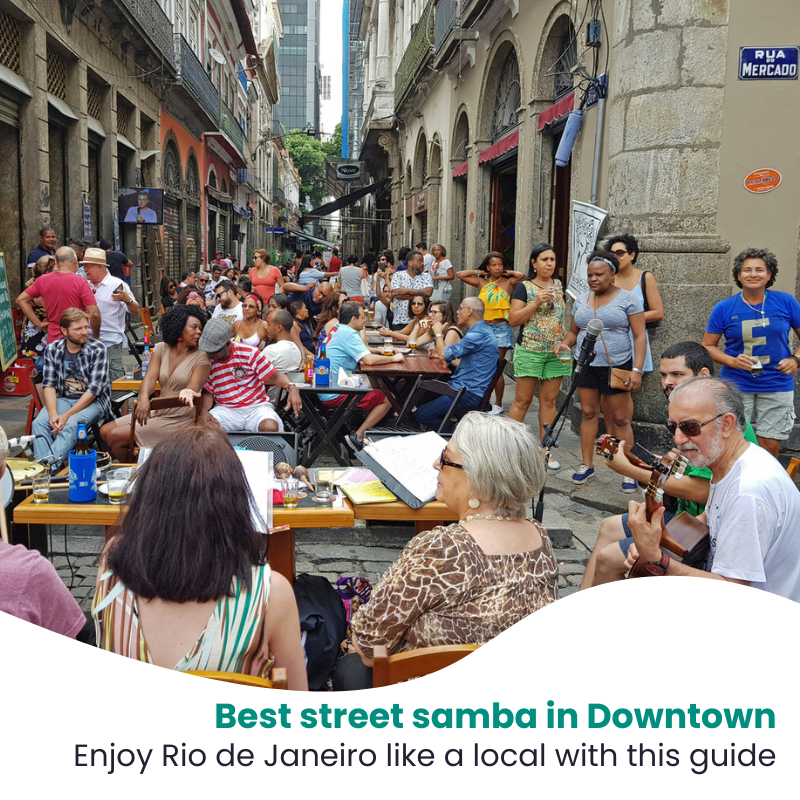
Samba is Rio's most consistent nightlife offer happening every week, across every neighborhood, from open-air street gatherings to structured venues with sound systems and full bars.
For a full breakdown of where to go by day of the week, neighborhood, and budget, the complete guide to where to see samba in Rio covers every option with practical details and visitor snapshots.
If you want to understand the history and culture behind the dance before you go, this guide to samba in Rio covers the origins, the best places to dance, and how to take classes.
Planning a night out in Lapa? Compare Rio Scenarium, Beco do Rato, SIBC and other iconic venues in my guide to the best samba in Lapa.
For visitors here between July and February, one of the most memorable samba experiences in Rio is attending a rehearsal at a samba school.
These are not tourist shows, they are the actual weekly rehearsals where samba schools prepare for Carnival, open to the public, with the full drum section, dancers, and the kind of energy that is hard to describe and harder to forget.
The most practical way to attend is through an organized tour that includes round-trip transport from your accommodation, a certified guide, and a shared table inside the quadra.
Jazz and Bossa Nova: live music with a refined atmosphere
For a different kind of night, seated, unhurried, focused on the music, Blue Note Rio is the reference.
One of the best live music venues in the city, it hosts international and Brazilian acts in an intimate setting. The programming covers jazz, bossa nova, and MPB. Worth checking the schedule in advance and booking ahead, especially on weekends.
Rooftops: Rio from above
Some of the best views in Rio are best enjoyed at night, from a rooftop bar with a cold drink and the city spread out below. Copacabana, Botafogo, Flamengo and Ipanema all have strong options at different price points.
A full guide to rooftop bars in Rio de Janeiro is coming soon.
Themed dinners and dinner shows
For an evening that combines food, setting, and entertainment in one experience:
Roxy Dinner Show is Rio's classic dinner show with live music, Brazilian cuisine, and a theatrical production in one structured evening. A good option for travelers who want a cultural night out without having to plan multiple stops.
Dinner at AquaRio is a monthly dinner experience inside the largest marine aquarium in South America, with a menu signed by Laguiole Buffet, a Michelin Star 2017 recipient.
One of the more unique settings you'll find for a dinner in Rio, surrounded by the aquarium's marine life on all sides. Check AquaRio's official website for dates and reservations.
Chorinho and Forró
Chorinho is one of Brazil's oldest musical genres, an instrumental style born in Rio in the 19th century, characterized by fast, intricate melodies played on acoustic instruments like the cavaquinho, flute, and seven-string guitar.
It's intimate by nature, best heard in small bars and cultural spaces where the musicians are close enough to watch.
Forró is a different energy entirely, a northeastern Brazilian rhythm built for dancing, with a strong accordion and percussion base. It picks up as the night goes on and draws a younger, mixed crowd.
The most beloved gathering for both in Rio is at Praça São Salvador, in Laranjeiras, an informal, open-air space that has been part of the neighborhood's rhythm for years. Local, unpretentious, and welcoming to anyone who shows up.
The weekly schedule runs forró on Fridays, a samba roda on Saturday nights, and chorinho from 11am on Sundays. No tickets, no reservations — just find a spot and let the music do the rest.
Live music venues worth following
For visitors who want to catch a show or a special event during their stay, three venues are worth keeping an eye on:
Circo Voador, in Lapa, is one of Rio's most iconic cultural spaces. It’s a semi-open-air venue that has hosted some of the most important names in Brazilian music since the 1980s. The programming leans toward samba, MPB, and Carnival-adjacent events, with a strong local following.
Fundição Progresso, also in Lapa, is a larger cultural complex with a more varied schedule, from weekly samba rodas like SIBC on Thursdays to concerts, festivals, and special events throughout the year.
Vivo Rio, in Flamengo, is one of the city's main mid-size concert venues, with a covered outdoor terrace and a consistent schedule of Brazilian and international acts.
All three have active social media and websites where you can check current programming before your trip.


Hot days, full beaches, and Carnival warming up in the streets. Here's what to expect in Rio de Janeiro in January, from weather to where to stay.