


Last updated: November, 10
Ask anyone born and raised in Rio, and they’ll admit it: we’re terrible with gray skies. A cloudy morning is enough to cancel beach plans, and a rainy weekend feels almost like a personal offense. But Rio de Janeiro has a tropical climate, and rain is part of the deal, especially in summer, when heavy showers can roll in and clear out within a couple of hours.
Growing up here, I learned that a rainy day doesn’t mean staying in. There are plenty of things to do in Rio de Janeiro when it rains, and it’s when the city shows its other side: grand old libraries, historic cafés, food markets and museums that most visitors skip because they’re busy at the beach. These are the places I head to myself when the weather turns, and some of them are even better under a cloudy sky.
If you’re wondering how much rain to expect during your trip, my guide to Rio de Janeiro weather explains why showers are usually short-lived and how to plan around them.
And if you haven’t picked your dates yet, my guide to the best time to visit Rio de Janeiro breaks down rain, crowds and prices season by season.
This post contains affiliate links. If you purchase through them, I may earn a small commission at no extra cost to you.
Best things to do in Rio de Janeiro when it rains: quick pick
If you're short on time or looking for something specific, here are a few ideas based on your interests:
With kids: AquaRio, Rio Planetarium
For architecture lovers: Royal Portuguese Reading Room, Municipal Theater, Museum of Modern Art
For history lovers: Museum of the Republic, Museum of Afro-Brazilian History and Culture, Old Cathedral
For art and culture: Banco do Brasil Cultural Center, Museum of Art of Rio, National Museum of Fine Arts
For food lovers: São José Market, São Cristóvão Fair
For football fans: Maracanã Stadium Tour
Best museums for a rainy day in Rio
Rio has a surprisingly strong cultural scene, with museums and cultural centers that combine history, architecture, and art.
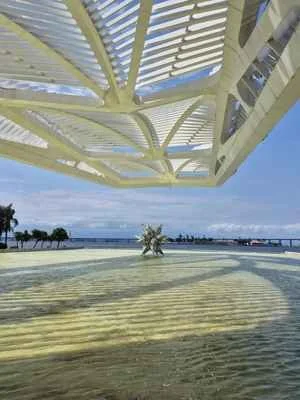
Highlights include the futuristic Museum of Tomorrow, the MAR (Museum of Art of Rio) with its rooftop terrace over Guanabara Bay, and CCBB Rio, housed in a beautiful early twentieth-century building with exhibitions, film screenings, and a branch of Confeitaria Colombo, the century-old patisserie you’ve probably heard of.
Many of these are within walking distance of each other in the downtown and Porto Maravilha areas, making them easy to combine on the same rainy day.
For the full list of museums and cultural centers worth visiting, including the National Museum of Fine Arts, MUHCAB, and MAM, see our complete guide to Rio's tourist attractions.


Historic buildings and churches to explore on a rainy day
Rio’s historic downtown is full of impressive buildings that many visitors overlook. Rainy weather is the perfect excuse to step inside and discover some of the city’s most beautiful interiors, from libraries and historic cafés to theaters and churches.
Real Gabinete Português de Leitura (Royal Portuguese Reading Room)
This is one of the places I always recommend, especially to anyone who has been to Lisbon. The building is a striking example of Neo-Manueline architecture and its stone façade was inspired by Lisbon’s Jerónimos Monastery.
Inside, the reading room is just as impressive, with carved wood, towering bookshelves and a stained-glass skylight flooding the space with light. The space is small and the visit is quick, but it has become much more popular in recent years, so expect a line.
Theatro Municipal (Municipal Theater of Rio de Janeiro)
Inspired by the Paris Opera, Rio’s main theater offers guided tours where visitors can admire its grand halls, chandeliers and decorative details. Its operas, ballets and concerts are wonderful, but tickets are hard to get, so a guided tour is the easiest way to see the inside. You’ll find tour times and more information on the theater’s official website.
And if you’re visiting in December, don’t miss the Christmas projections on its façade. See my guide to Christmas in Rio for more.
Biblioteca Nacional (National Library of Brazil)
Founded more than 200 years ago, the National Library is Brazil’s oldest institution, older than the country itself as an independent nation. It’s the largest library in Latin America and, according to UNESCO, one of the ten largest national libraries in the world, with around ten million items.
Visits are available Monday to Friday, from 10 a.m. to 5 p.m. The library is a short walk from the Municipal Theater, so it’s easy to see both on the same day. The closest metro station is Cinelândia. For tips on using the metro, see my guide on how to get around Rio.
Mosteiro de São Bento (São Bento Monastery)
Rio has plenty of beautiful and well-known colonial churches, but São Bento tends to get fewer visitors because it sits a bit apart from the others. It’s a shame, because it’s one of the most stunning churches in the city, with a richly decorated baroque interior covered in gold leaf.
The good news is that it’s close to Praça Mauá, so it’s easy to combine with a visit to the Museum of Tomorrow and MAR. Here’s the monastery’s location on Google Maps.
Old Cathedral and the Churches Around Praça XV
This historic church served as Rio’s cathedral during the colonial and imperial periods and was the site of important royal ceremonies. What many visitors don’t realize is that it’s just steps away from two other beautiful churches: the Church of Our Lady of Mount Carmel (Igreja de Nossa Senhora do Monte do Carmo), right next door, and the Church of São José (Igreja de São José), a short walk away. You can easily see all three in a single walk around the historic center.
Right nearby is Palácio Tiradentes, the historic seat of the Rio de Janeiro State Legislative Assembly, which turned 100 in 2026. It offers free guided tours on weekdays, and its grand halls are well worth a stop while you’re in the area.
For other churches and places worth visiting, see our complete guide to Rio's tourist attractions.
Most of these places are within walking distance of each other, so here’s a map to help you plan your route around downtown Rio.
Food Markets and Food Halls to visit in Rio
Rio also has a few traditional markets and food halls where you can experience local cuisine while staying sheltered from the rain. These places combine restaurants, bars, and specialty shops, making them great stops for lunch or an afternoon break.
Mercado São José – Laranjeiras
A historic market that has recently been revitalized and transformed into a lively food hall. Today it brings together small restaurants, bars, and local food vendors in a relaxed atmosphere popular with locals.
Feira de São Cristóvão
A large indoor market dedicated to the culture of Brazil’s Northeast, with regional food, handicrafts, live music, and a vibrant atmosphere.
Edifício Touring – Praça Mauá
This historic building in Praça Mauá has recently been restored and transformed into a cultural and gastronomic space. Today it hosts restaurants, cafés, and creative spaces, making it a great stop while exploring the museums of the Porto Maravilha area.
Hungry for more? Rainy days are perfect for a long lunch. See my guide to the best restaurants in Rio for the places I love to eat around the city.
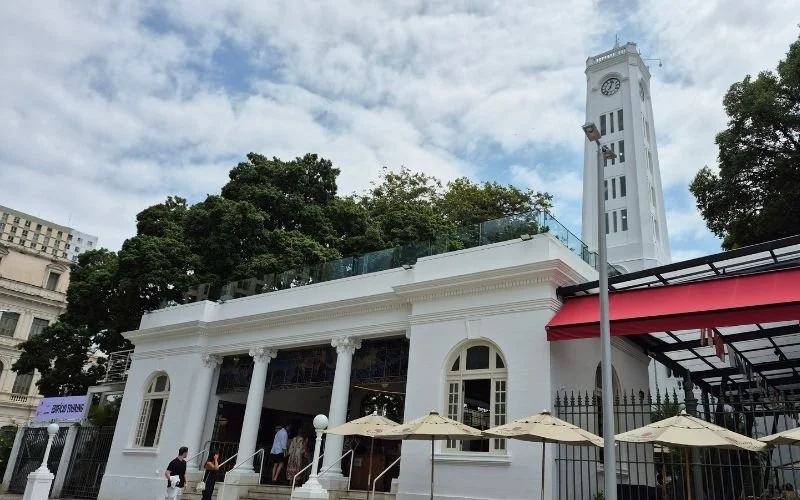
The entrance to Edifício Touring, one of the newest food spots in Praça Mauá
Cultural Spaces and Gardens to Visit on Rainy Days
Even on rainy or cloudy days, some places in Rio offer a peaceful atmosphere where art, architecture, and nature come together. These cultural spaces are great for slowing down and enjoying a quieter side of the city.
Casa Roberto Marinho
Located in a historic mansion in the Cosme Velho neighborhood, Casa Roberto Marinho hosts temporary art exhibitions surrounded by beautiful gardens. The peaceful setting at the foot of Corcovado makes it a relaxing cultural escape from the busy parts of the city.
Museu da República (Republic Museum)
Housed in the former presidential palace in Catete, the Museum of the Republic presents exhibitions about Brazilian history and politics. The surrounding gardens are open to the public and offer a calm green space in the middle of the city.
Indoor attractions and entertainment
AquaRio – Rio de Janeiro Aquarium
Located in the Porto Maravilha area, AquaRio is the largest marine aquarium in South America. The complex features large tanks, underwater tunnels, and exhibits about marine ecosystems, making it an interesting visit for both adults and families.
Book your tickets below:
Maracanã Stadium Tour
Even if there isn’t a match happening, visitors can take a guided tour inside Brazil’s most famous stadium. The tour includes the locker rooms, the players’ tunnel, and the field area, offering a behind-the-scenes look at the history of Brazilian football.
This is the tour I recommend:
Planetário da Gávea (Rio Planetarium)
Located in the Gávea neighborhood, the planetarium offers immersive astronomy shows and interactive science exhibits. It’s a great option for a rainy afternoon, especially for travelers interested in science or visiting with children. Combine with lunch at Braseiro da Gavea for a perfect half-day.
Things to do in Rio de Janeiro when it rains: Rainy days are part of the city too.
Those of us born and raised in Rio may never learn to love a gray sky, but a rainy day is a chance to see a side of the city most visitors miss, from century-old libraries and gilded churches to food halls where locals linger over lunch. And since rain here rarely lasts all day, keep your beach plans flexible: the sun often comes back by the afternoon.
If you’re traveling in the rainiest months, my guide to summer in Rio de Janeiro explains what to expect and how to plan around the afternoon storms.
Looking for more ideas for your trip? My guide to what to do in Rio de Janeiro covers the city’s must-sees, and unique things to do in Rio de Janeiro has the hidden spots most travelers never find.
And if you’d like help putting it all together, you can book a trip planning session with me.

Written by Karina
Born and raised in Rio de Janeiro, Karina spent over a decade working in the tourism industry, with experience in some of the world's leading travel destinations. She created Going to Rio to bring that same standard of practical, traveler-first guidance to visitors exploring Rio de Janeiro. Learn more about Karina

The best things to do in downtown Rio de Janeiro: baroque churches, museums, historic cafés and samba.