

Most visitors come to Rio for the beaches and they miss where the city’s story actually happened. Rio de Janeiro downtown, known locally as Centro, is where the city was born, and as Brazil’s capital for almost two centuries, it’s where that history still stands.
I’m an architect by training, and it was during my studies that I fell in love with downtown Rio, a place where you move between centuries of the city’s history just by crossing the street.
I later worked here for years, chose one of its churches for my wedding, and I still spend afternoons wandering its streets for the exhibitions, the museums and some of my favorite restaurants in the city. And sometimes for Carnival.
In this guide to the best things to do in downtown Rio de Janeiro I could easily list a hundred places. Instead, I’ve kept it to the ones that make sense on a first visit, organized by area so you can explore one part at a time or link them into a full day on foot.
For each area, you’ll find the highlights, the best time to go and how to get there by metro or VLT, the light rail that reaches the parts of downtown the metro doesn’t.
Downtown Rio de Janeiro is also a great base to stay if you look for affordable hotels, good public transportation service and good things to do. For the best areas and my recommended hotels, read my guide to where to stay in Downtown.
Best things to do in downtown Rio de Janeiro: what you’ll find there
Downtown packs more into a few blocks than any other part of Rio. Here’s what to expect, depending on what you’re into:
🏛️ Architecture, from colonial baroque to Brazilian modernism
🖼️ Museums and cultural centers, covering art, history and more
✊🏾 Afro-Brazilian history in Little Africa
☕ Libraries and historic cafés, including the oldest in the city
🥁 Weekend street samba
This guide is organized by area. On the map below, each color marks one area, and the numbered pins match the 15 highlights, to plan your route.
Cinelândia: from Belle Époque to Brazilian modernism
🕐 Best time: weekdays
🚇 Metro: Cinelândia / 🚊 VLT: Cinelândia
Within a few blocks from Cinelândia square you can see how Rio wanted to look like Paris at the start of the 20th century, and how, a few decades later, it helped invent a new architecture of its own.
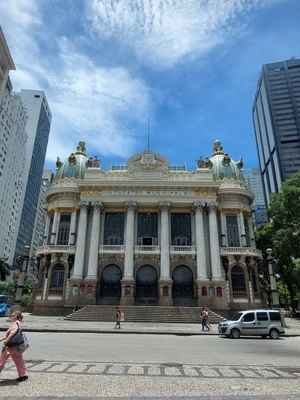
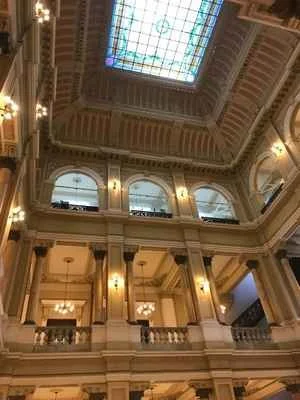
1. Theatro Municipal and the National Library
The two classics of Cinelândia face each other across the square, and both are worth stepping inside: the theater for its Belle Époque grandeur, the library for its collection and reading rooms. You’ll find them in every guide, so I cover them in more detail in my guide to Rio de Janeiro’s tourist attractions. Here, I’d rather show you what most visitors walk past.
2. National Museum of Fine Arts
Housed in a grand early 20th-century building on Avenida Rio Branco, the museum holds one of the most important collections of Brazilian art, with a strong focus on the paintings that shaped how the country imagined its own history. Don’t miss the Gallery of Casts, a hall filled with plaster copies of classical and Renaissance sculptures.
📅 Tuesday to Saturday, 11 am to 5 pm. Free.
3. Capanema Palace
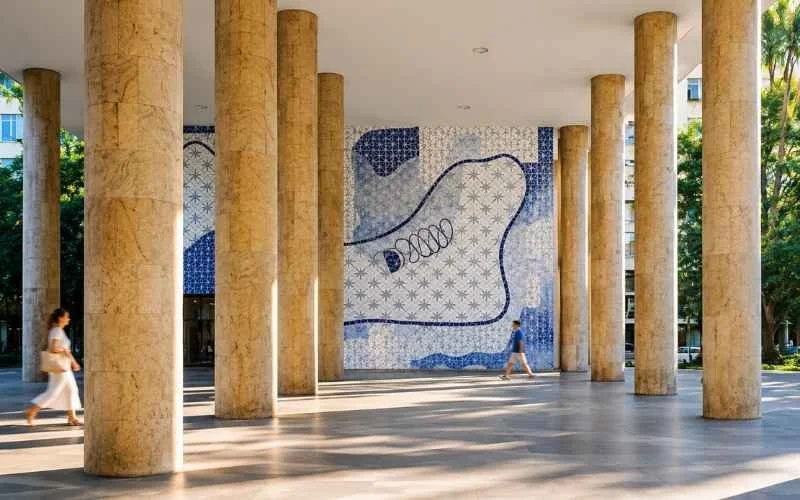
A world landmark of modernist architecture, the Capanema Palace brought together the biggest names of Brazilian modernism: Lucio Costa, Oscar Niemeyer, Candido Portinari and Roberto Burle Marx, with Le Corbusier as a consultant.
What I’d point out first is the ground floor. The building is raised on pilotis, tall columns that free the space underneath, letting the breeze flow through and creating a shaded public area where people can walk, sit and meet. Candido Portinari’s blue and white tile murals and Roberto Burle Marx’s gardens complete the scene.
Also worth checking in Cinelândia: Passeio Público, opened in 1783 and one of the oldest public gardens in the Americas, right next to the square; and Palácio Pedro Ernesto, the eclectic building where the City Council meets, on Cinelândia square itself.
Largo da Carioca: baroque churches and historic cafés
🕐 Best time: weekdays
🚇 Metro: Carioca / 🚊 VLT: Colombo
Largo da Carioca is downtown at its busiest: office workers, street vendors and shoppers heading to the Saara market all cross the square at once. Behind the rush, the streets around it hide some of Rio’s richest baroque interiors and two of its oldest cafés, all within a few minutes’ walk.
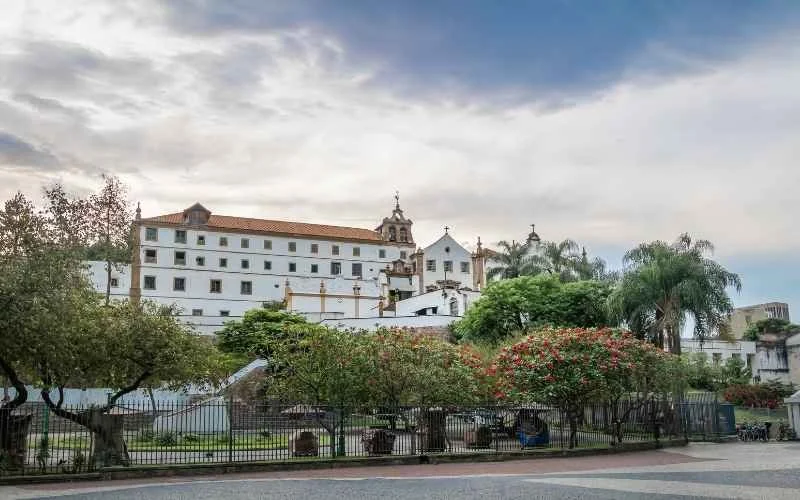
4. Santo Antônio Convent and São Francisco da Penitência Church
When it comes to churches in Rio, most attention goes to the Candelária or the Metropolitan Cathedral. For me, though, there’s no talking about Rio’s churches without São Francisco da Penitência and its interior almost entirely covered in gilded carved wood. One of the finest examples of Brazilian baroque in Rio, along with São Bento Monastery.
The church stands right next to the Santo Antônio Convent, one of the oldest in Rio. The two are connected by the Museu Sacro Franciscano, home to the Franciscans’ collection of sacred art, so you can see all three in a single visit.
📅 Monday to Saturday, 9 am to 5 pm. Ticket required for the museum.
5. Historic cafés: Confeitaria Colombo and Casa Cavé
Confeitaria Colombo is the famous one, and its salon truly lives up to the reputation: opened in 1894, it’s the Belle Époque in its full glory, with giant mirrors, carved wood and a stained-glass skylight. My advice? Step inside, take your photo and have a coffee at most, then save your appetite for a five-minute walk away.
Casa Cavé, open since 1860, is the oldest in the city, and this is where you should actually eat. Both its savory snacks and its sweets stand out, and the mille-feuille alone is worth the visit.
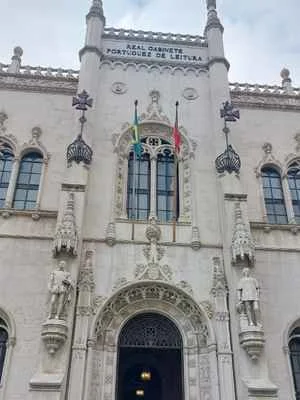
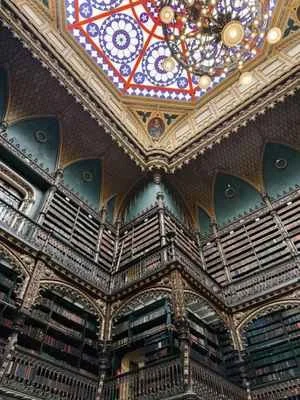
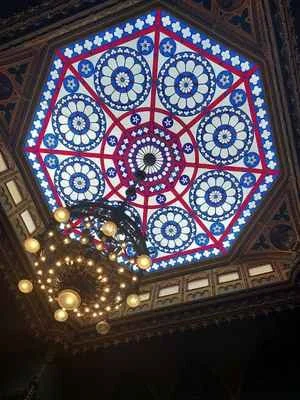
6. Royal Portuguese Reading Room
The Real Gabinete Português de Leitura was founded in 1837 by a group of Portuguese immigrants determined to keep their literature alive in the colony. Fifty years later, their community had grown wealthy enough to build a space that looks like it was shipped from Lisbon, holding the largest collection of Portuguese literature outside Portugal.
The result regularly makes lists of the most beautiful libraries in the world, and lines have grown with its fame. The visit itself is quick, so arrive early and pair it with the rest of this area.
📅 Tuesday to Saturday, 10 am to 5 pm. Free.
Also worth checking around Largo da Carioca: Igreja de São Francisco de Paula, another richly decorated church a few steps from the Real Gabinete; and, on Saturdays, Rua do Senado, where traditional bars and live samba take over the sidewalks. I cover it in my guide to street samba in downtown Rio.
Praça XV: colonial Rio and the birth of Brazil
🕐 Best time: weekdays (Saturdays for Samba da Ouvidor)
🚊 VLT: Praça XV / 🚇 Metro: Carioca, about a 15-minute walk
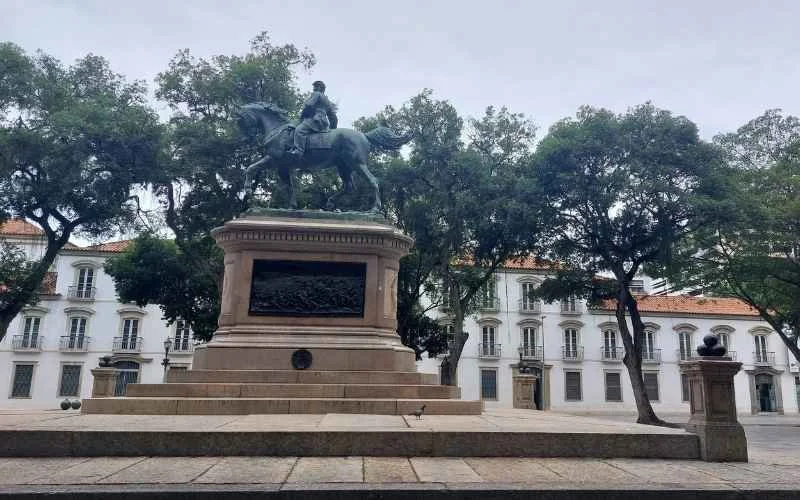
Praça XV is where the Portuguese royal family settled after fleeing Napoleon in 1808, turning Rio into the capital of an empire. Today, colonial churches, palaces and narrow cobbled lanes sit side by side with the ferry station to Niterói and Paquetá.
7. Paço Imperial
Built in the 18th century as the governors’ residence, this palace became the royal family’s home in Rio and later the seat of the Empire. It was here that Princess Isabel signed the law that abolished slavery in Brazil, in 1888. Today it’s a cultural center with exhibitions and home to one of my favorite cafés in downtown, besides a bookstore.
Right across the street, a building with strikingly similar colonial architecture houses the old Carmo Convent, now also a cultural center. It’s home to one of my favorite restaurants in the city, the Bistrô do Sesc, focused on Brazilian cuisine.
8. CCBB (Centro Cultural Banco do Brasil)
Set in a grand early 20th-century bank building on Rua Primeiro de Março, CCBB is one of Brazil’s most important cultural centers, with major art exhibitions, cinema and theater. Even if you don’t see a show, step into the rotunda under its central dome.
It’s also a good spot to take a break from walking, either at the CCBB branch of Confeitaria Colombo, with the same treats as the original but without the crowds, or at Lilia restaurant. Before you leave, stop by Mão Brasileira, a gift shop with a well-curated selection of Brazilian arts and crafts and plenty of good gift options.
9. Igreja de São José
Rua Primeiro de Março is lined with colonial churches built almost side by side, and every one of them is worth a visit for its place in Brazil’s history. If you only have time for one, make it the church dedicated to Saint Joseph.
While the others were reserved for the royal family and its court, São José was built for the people, and its beauty lies in that simplicity, especially compared with the opulence of the former Royal Chapel. It’s my favorite church in the city, and the one where I chose to get married. It’s still the most popular church downtown, filling up every weekday for the noon mass.
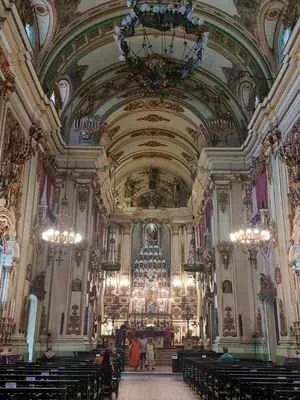
Also worth checking around Praça XV: Mestre Valentim’s 18th-century fountain in the square; and Arco do Teles, a colonial archway leading into cobbled lanes lined with bars. On Saturday afternoons, those same lanes host Samba da Ouvidor, one of the best street rodas in the city.
The waterfront and museums square
🕐 Best time: any day (Thursdays for the Ilha Fiscal tours in English)
🚊 VLT: Parada dos Museus
For decades, an elevated highway cut downtown off from Guanabara Bay. When it was torn down, the port area was revitalized and turned into a great space for leisure and culture, with new museums and a waterfront promenade.
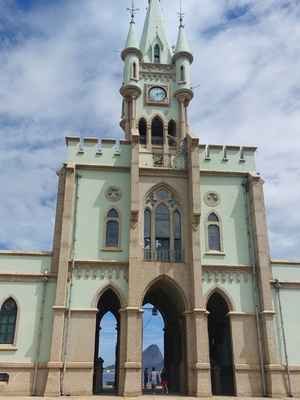
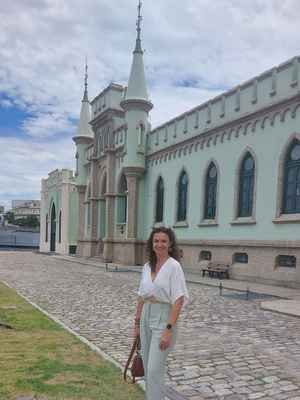
10. Ilha Fiscal
This small island in the bay holds a neo-Gothic palace that looks like it belongs in a fairy tale. Built as a customs post, it went down in history for hosting the last ball of the Brazilian Empire in 1889, before the Republic was proclaimed. The island is worth a visit not just for the palace but for the views of the bay. It can only be visited on guided tours run by the Brazilian Navy, which leave from the Navy Cultural Center.
📅 Guided tours in English: Thursdays at 12:45 pm, 2:15 pm and 3:30 pm.

11. São Bento Monastery
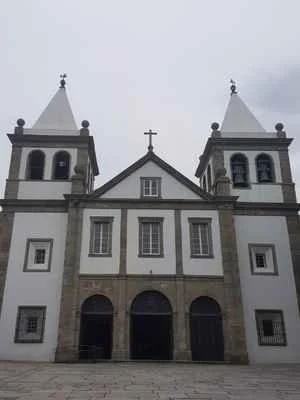
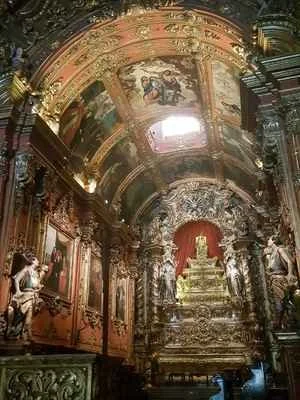
Set on a hill above Praça Mauá, inside a complex that also includes a school, São Bento’s small church is easy to miss, and most visitors walk right past it. It’s worth the detour. Behind its plain facade, the baroque interior is covered in intricate gilded carvings, with painted ceilings overhead, making it one of the finest examples of Brazilian baroque in the city, alongside São Francisco da Penitência.
The Sunday masses with Gregorian chant are the most famous, and hearing the monks sing in that setting is beautiful. Before you leave, walk around to the back of the church, where a viewpoint looks out over the bay and the Museum of Tomorrow. To get up the hill, take the elevator on Rua Dom Gerardo, 40, a short walk from Praça Mauá
📅 Gregorian chant mass: Sundays at 10:00.
12. Orla Conde
The waterfront promenade around Praça Mauá is the heart of the revitalized port. Here you’ll find the Museum of Tomorrow, Santiago Calatrava’s futuristic science museum, and the MAR, the Rio Art Museum, both among the most visited in the city. I cover them in more detail in my guide to Rio de Janeiro’s tourist attractions.
From the square, the Orla Conde continues in both directions. Head toward the Museum of Tomorrow for views of Ilha das Cobras and the bay, or go the other way along the Olympic Boulevard, lined with giant murals, including Eduardo Kobra’s Etnias, toward Little Africa.
Also worth checking: Edifício Touring, a restored 1920s building at Praça Mauá and a gastronomic hub; and, further along the port, the AquaRio aquarium and the YupStar observation wheel.
Little Africa: where samba was born
🕐 Best time: any day during the day; Evenings for Pedra do Sal
🚊 VLT: Cidade de Samba / Parada dos Museus for Pedra do Sal
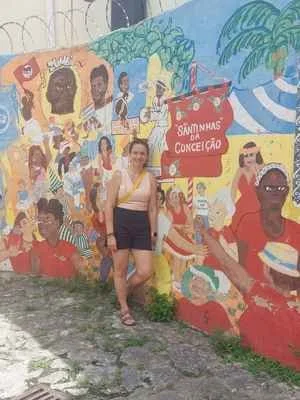
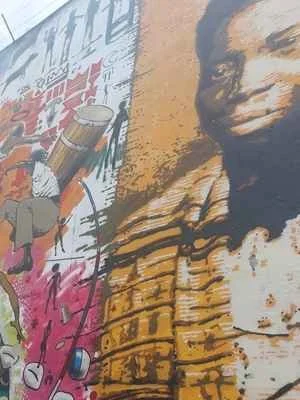
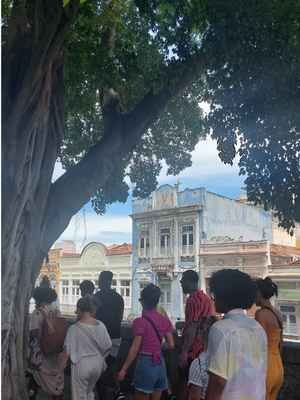
The neighborhoods of Saúde and Gamboa was the heart of Afro-Brazilian life in Rio: the place where enslaved Africans arrived, where freed communities settled after abolition, and where samba was born. It’s an area of downtown where I recommend a guided walking tour because the history here isn’t visible at first glance, so a good guide makes all the difference. This is the tour I recommend:
13. Cidade do Samba (Samba City)
This is where Rio’s Carnival is made. Inside these giant warehouses, the city’s top samba schools build the floats and costumes for the Sambadrome parade, working almost all year. It’s open to visitors throughout the year, with experiences that let you try on Carnival costumes, and it’s the closest you can get to Carnival outside the season itself.
14. Pedra do Sal
The rock where samba was born is still where locals gather to play it. On Monday evenings, the steps carved into the stone fill with musicians and crowds for one of the most famous rodas de samba in the city. I explain how to enjoy it safely in my guide to Pedra do Sal.
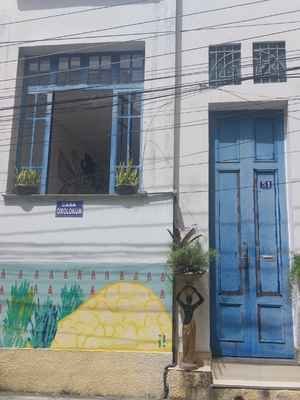
15. MUHCAB
The Museum of Afro-Brazilian History and Culture tells the story of Little Africa and the people who shaped it, from the slave trade to samba and beyond. If you don’t want a walking tour around the area, the museum is the best place to understand the region.📅 Tuesday to Sunday, 10 am to 5 pm.
Also worth checking, ideally with a guide: Cais do Valongo, a UNESCO World Heritage Site and the main landing point for enslaved Africans in the Americas; the Valongo Suspended Garden; the Pretos Novos Institute; and the cobbled lanes of Morro da Conceição.
Is downtown Rio de Janeiro safe?
Downtown is busy and safe to explore during the day, especially on weekdays, when its streets are full of office workers. Things change after dark and on Sundays, when some parts of the area empty out. A few habits make all the difference:
Explore during the day. Plan your visit for daytime hours and stick to the busier streets. Use the VLT between areas. Between Praça XV and Praça Mauá, take the light rail instead of walking.
Book a tour for Little Africa. The streets aren’t the easiest to navigate on your own, and a guide adds the history you wouldn’t see otherwise. Get a ride at night. If you stay for samba at Pedra do Sal or in Lapa, use a ride-hailing app to get back to your hotel.
As anywhere in the city, keep your phone away when walking and bring only what you need to crowded events. For more tips, read my full guide: Is Rio de Janeiro safe?
Best things to do in downtown Rio de Janeiro: final tips
Whether you have a full day or just an afternoon, the best things to do in downtown Rio de Janeiro reward anyone willing to look beyond the beaches. Pick one or two areas, take the metro or the VLT, and see for yourself how you can move between centuries just by crossing the street.
If you’d like to stay close to it all, check my guide to where to stay in Downtown, and for weekend afternoons, don’t miss my guide to street samba in downtown Rio.
FAQ
What is downtown Rio de Janeiro called?
Locals call it Centro. That’s the name you’ll see on street signs, maps and in metro announcements.
How do I get to downtown Rio from Copacabana or Ipanema?
The metro is the easiest way. Line 1 runs from Ipanema and Copacabana to Cinelândia, Carioca and Uruguaiana stations in about 20 minutes. From there, the VLT light rail connects the areas the metro doesn’t reach, like Praça XV and Praça Mauá.
How much time do I need to explore downtown Rio de Janeiro?
One full day is enough to see the highlights of two or three areas. If you want to visit the museums properly or join a tour of Little Africa, plan for two days, or split your visits across a few mornings and afternoons.
Is downtown Rio de Janeiro worth visiting?
Absolutely. It’s where the city was born, and where you’ll find most of Rio’s historic architecture, its most important museums and some of its best street samba. If you only see the beaches, you’re missing half the city.
Is downtown Rio open on weekends?
Yes, but each area has its own rhythm. Some historic buildings and churches are best visited on weekdays, while Saturdays bring street samba to Rua do Ouvidor and Rua do Senado. Check the best time for each area in this guide before planning your visit.

Written by Karina
Born and raised in Rio de Janeiro, Karina spent over a decade working in the tourism industry, with experience in some of the world's leading travel destinations. She created Going to Rio to bring that same standard of practical, traveler-first guidance to visitors exploring Rio de Janeiro. Learn more about Karina
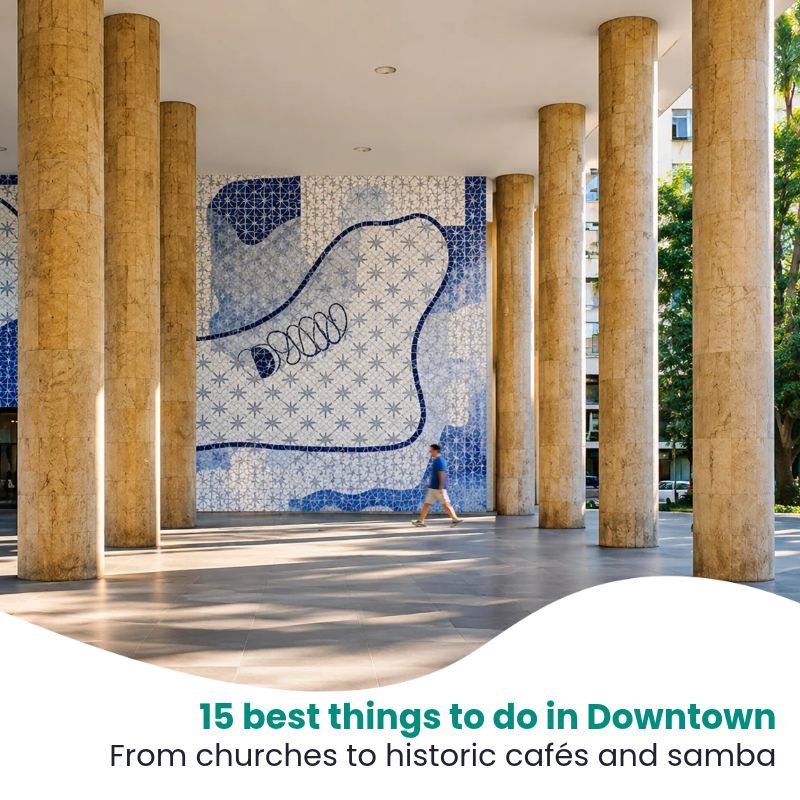

Best-value hotels, easy public transport and safety tips: a guide to where to stay in downtown Rio de Janeiro, by a local who worked there for years.