

Copacabana Beach Concerts: Complete Guide
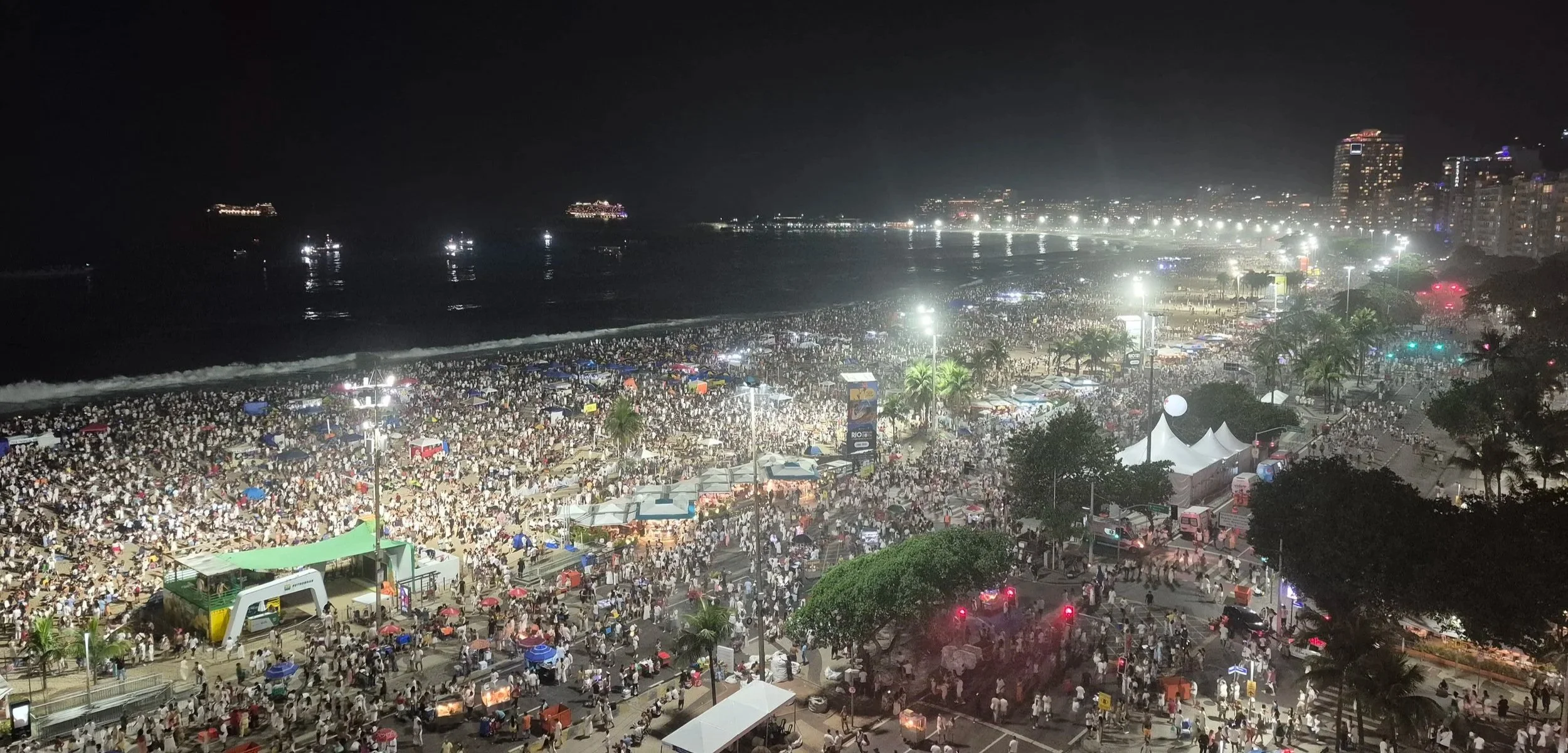
Rio de Janeiro made headlines when Shakira performed a free Copacabana Beach concert on May 2, 2026, drawing an estimated 2 million people to the same stretch of beach where Madonna performed in 2024 and Lady Gaga in 2025.
The three shows are part of Todo Mundo no Rio (Everyone in Rio), a City of Rio de Janeiro initiative bringing major international artists to Copacabana Beach free of charge. The city has confirmed the series will continue through at least 2028, with artists yet to be announced.
If you're planning a trip around one of the upcoming editions, this guide covers where to stay, how to get there, and what to expect.
For context on how Copacabana became the world's biggest outdoor stage, this post is worth reading.
Copacabana Beach Concerts: Hotels Quick Pick
In a rush? Here are my picks for Copacabana Beach concerts
⭐⭐⭐⭐⭐ Copacabana Palace
The most iconic address on the beach just steps from the stage, with front-row history.
⭐⭐⭐⭐ Novotel Rio de Janeiro Leme
Just past the main crowd in Leme, with easier access in and out after the show.
⭐⭐⭐ Hotel Astoria Palace
Beachfront close to the stage without the Copacabana Palace price tag.
Want more options? See our full guide to where to stay for Copacabana Beach concerts.
What’s next: Copacabana Beach Concert 2027
Rio de Janeiro’s free Copacabana beach concert series already has editions confirmed for both 2027 and 2028. The date hasn't been officially confirmed, but the event has traditionally taken place on the first Saturday of May, making early May 2027 the most likely window.
As for the headliner: nothing is official yet, but the rumour mill is already spinning. On May 26, the City of Rio posted on X: "One thing is certain about the 2027 Copacabana concert: there will be fireworks", instantly interpreted as a reference to Katy Perry's hit Firework.
Nothing confirmed, but the signals are hard to ignore.
How Copacabana Beach concerts work
For large concerts at Copacabana Beach, the stage is traditionally positioned near the hotel Copacabana Palace (Atlantic Avenue, 1702), around Posto 2. Postos are the numbered lifeguard stations along the beach that locals use as reference points.
The production is designed to serve a crowd spread across approximately 2 kilometers of beach. LED screens and sound towers are distributed between the stage and the far end at Leme, ensuring the show is visible and audible well beyond the front rows, even from far back in the crowd.
As happens with other large-scale events in the city, vehicle traffic in Copacabana is suspended on concert day. If you are already staying in the neighborhood, you walk. If you are coming from elsewhere, the metro is your only practical option.
If you want a realistic idea of what large-scale crowd flow looks like in this area, our detailed guide to New Year’s Eve in Copacabana explains how the city manages millions of people on the same stretch of sand. Concert logistics often follow a similar pattern.
Where to stay for Copacabana beach concerts
Staying in Copacabana is the best choice but where in the neighborhood matters even more. For the full breakdown with hotels by budget, exactly which blocks to target, and when to book, check out my complete guide to where to stay for Copacabana Beach concerts.
How to get to Copacabana for the concert if you are staying in another neighborhood
If you are staying outside Copacabana, the metro is the most reliable option on concert day. Three stations serve the neighborhood directly: Cardeal Arcoverde, Siqueira Campos, and Cantagalo.
On concert days, these stations typically operate extended hours to accommodate the post-show crowd. I will confirm the specific schedule as it is announced.
Street closures begin early in the day, with vehicle access to the beachfront becoming fully restricted. Ride-share prices peak late at night, and pick-ups work better several blocks away from the beach. Arriving early is strongly recommended.
If you are unfamiliar with Rio's transport options, our complete guide to getting around Rio covers metro lines, ride-share apps, and practical tips for visitors.
Planning a trip around a Copacabana show can be tricky. I've got you.
Let's plan your trip together →
Is Copacabana safe during large concerts like Shakira?
Large-scale concerts at Copacabana Beach are heavily policed and well organized, but basic precautions apply.
Use a crossbody bag or money belt, keep your phone in a front pocket, and avoid carrying passports or unnecessary valuables.
Mobile signal can become unstable in dense crowds, a good call is to agree on a clear meeting point with your group in advance.
For a broader overview of safety in Rio, our guide to safety in Rio de Janeiro covers everything you need to know before your visit.
If you end up watching the sunrise from Copacabana after the show — which is entirely possible — our guide to the best sunrise spots in Rio is worth reading in advance.
How the city operates during major concerts and events
Large-scale concerts affect specific neighborhoods, but Rio de Janeiro continues operating normally overall. Iconic attractions such as Christ the Redeemer, Sugarloaf Mountain, Dona Marta viewpoint, and the Botanic Garden remain open on concert days, though visitor numbers increase and queues tend to be longer.
If possible, plan to arrive a few days before or stay a few days after the event to explore the city more comfortably. Booking attraction tickets in advance is strongly recommended.
Planning to explore Rio beyond the concert? Our guide to the best experiences in Rio de Janeiro covers everything worth seeing and doing in the city.
Copacabana Beach concerts in Rio de Janeiro: is it worth to go?
It depends on what you're looking for. If the appeal is being part of over a million people on a beach, singing together, in one of the most incredible venues in the world then yes, it's a genuinely unique experience.
Madonna in 2024, Lady Gaga in 2025, and Shakira in 2026 all delivered that kind of energy, and every edition has grown larger than the last.
If your priority is actually watching the show close to the stage, hearing the set clearly, seeing the performance, this probably isn't the right format. The crowd is enormous, sightlines are limited unless you arrive very early and position well, and the experience is less "concert" and more "collective moment."
Both are valid reasons to go or not go. This guide assumes you've decided to attend and focuses on making the logistics work.
FAQ
When is the next Copacabana Beach concert?
The next editions of Todo Mundo no Rio are confirmed for 2027 and 2028. Artists have not yet been announced. This guide will be updated as soon as official information is available.
Are Copacabana Beach concerts free?
Yes. All editions of Todo Mundo no Rio are free and open to the public — no tickets required. Planning your position and logistics in advance is strongly recommended given the expected crowd size.
Where is the best place to stand?
The stage is positioned near the Copacabana Palace hotel, around Posto 2. Arriving early and positioning yourself on the Leme side (Posto 1) gives you better crowd control and an easier exit after the show.
How does Copacabana Beach host concert crowds of this size?
The beach stretches for approximately 6 kilometers, with sound towers and LED screens distributed along the full length to serve crowds spread across the sand. For a deeper look at how Rio manages millions of people in this space, and how Copacabana became the world's biggest outdoor stage, this post covers the full story.
What was the largest crowd at a Copacabana Beach concert?
The record belongs to Rod Stewart, whose New Year's Eve concert in 1994 drew an estimated 3.5 million people to Copacabana Beach, still considered one of the largest concert audiences in history. Among the Todo Mundo no Rio series, Shakira's 2026 show holds the record with an estimated 2 million attendees, surpassing Madonna's 1.6 million in 2024 and Lady Gaga's crowd in 2025.

Written by Karina
Born and raised in Rio de Janeiro, Karina spent over a decade working in the tourism industry, with experience in some of the world's leading travel destinations. She created Going to Rio to bring that same standard of practical, traveler-first guidance to visitors exploring Rio de Janeiro. Learn more about Karina



Beachfront hotels in Copacabana can cost up to $900 a night. I stayed at the cheapest one with ocean view for $109, and I'm sharing exactly what it's like.