

New Year's Eve in Copacabana, Rio de Janeiro: What it's really like and how to plan it
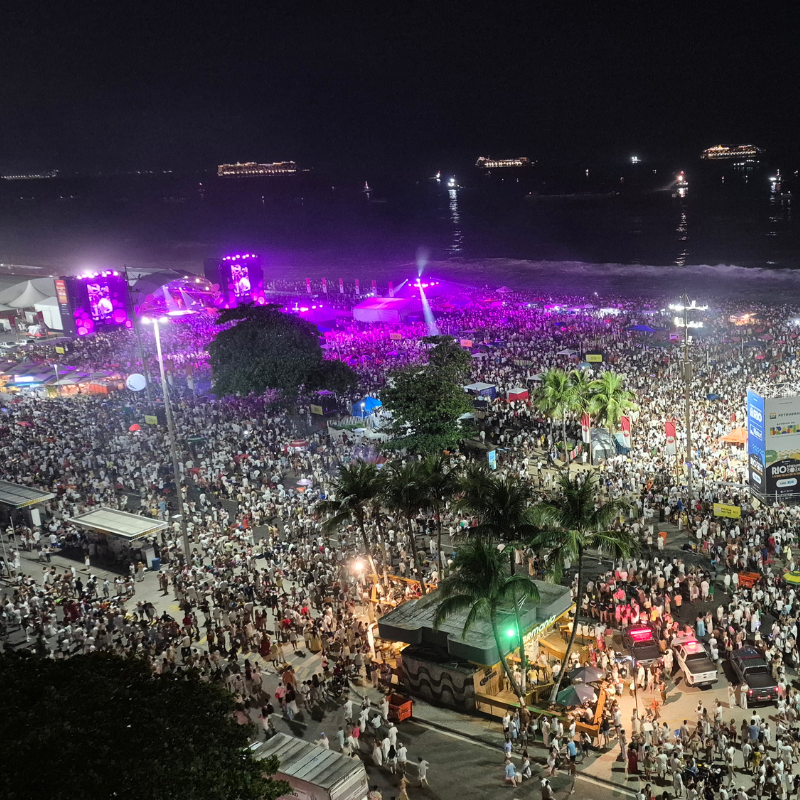
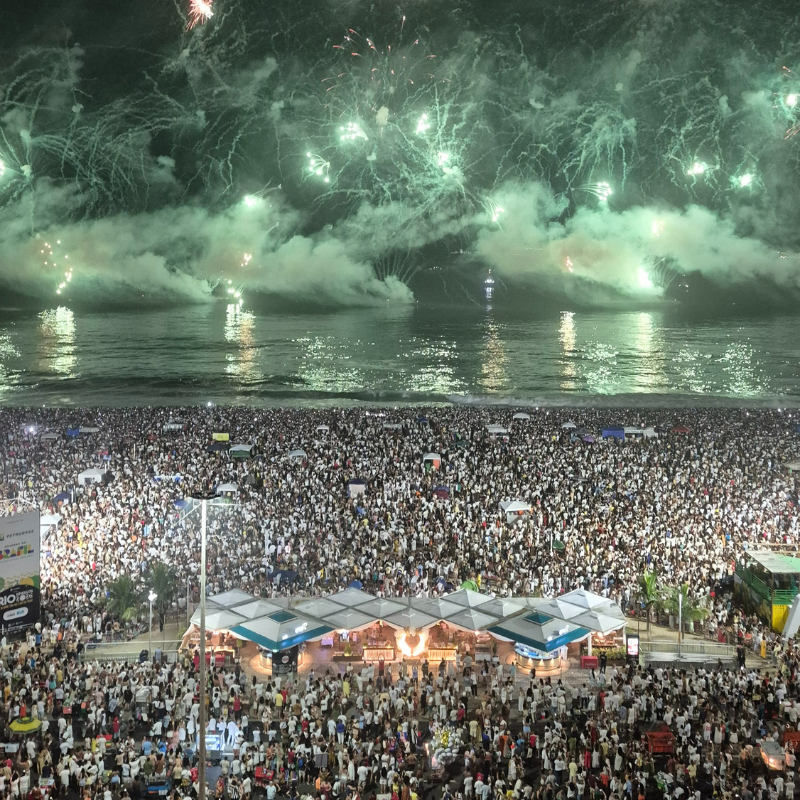

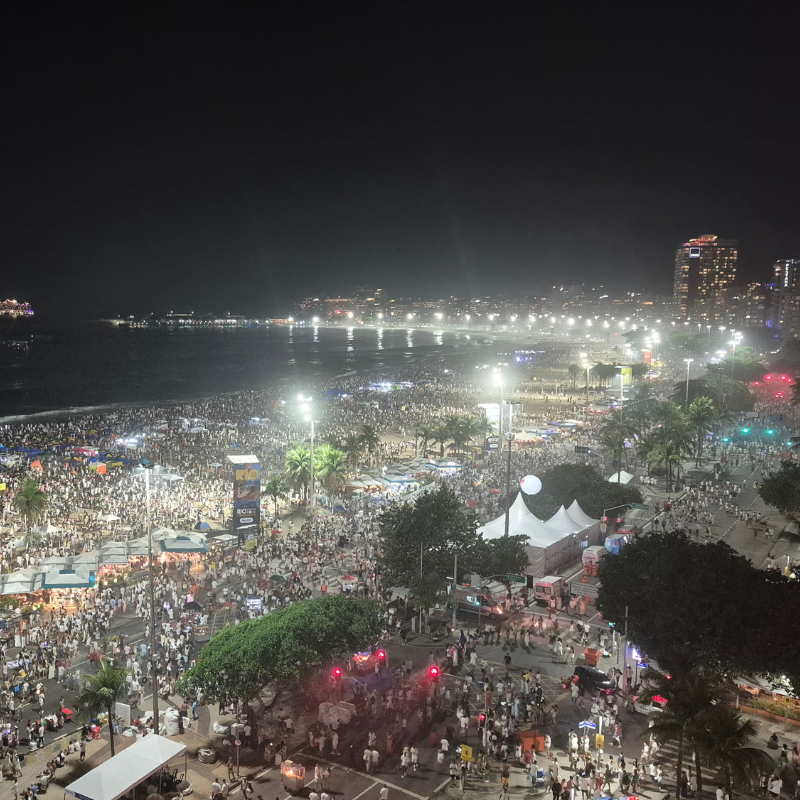
I've celebrated New Year's Eve in Copacabana, Rio de Janeiro, more times than I can count, and I still think everyone should experience it at least once.
Every December 31st, Copacabana, Rio’s most famous beach, becomes the stage for the largest New Year's Eve celebration in the world with millions of people, fireworks, music, an energy you won't find anywhere else.
But here's what I always tell friends visiting for the first time: there's a real difference between loving this night and just surviving it. The gap between the two usually comes down to one thing: planning. And if after reading this you decide Copacabana isn't quite your scene, I've also listed the best New Year's Eve parties outside Copacabana with boats, rooftops, and private parties across the city.
This guide covers everything you need to be on the right side of that gap. If you're building out the rest of your trip too, my guide to Rio de Janeiro in December covers the weather, the floating Christmas trees, and everything else worth planning around. And if your trip starts before the 31st, here's how Christmas is celebrated in Rio, from the floating trees to what's open on the day.
This post contains affiliate links. If you purchase through them, I may earn a small commission at no extra cost to you.
New Year’s Eve in Copacabana: Hotels quick pick
Here's a selected list of beachfront hotels, ideal if you want front-row views of the fireworks:
Hilton Copacabana ⭐⭐⭐⭐⭐
In a quieter stretch at the start of the beach but still close enough to walk to the action.
Othon Palace Copacabana ⭐⭐⭐⭐
Toward the Ipanema end of the beach, with panoramic views of the fireworks.
Grand Mercure Rio Copacabana ⭐⭐⭐⭐
Also close to the Ipanema end, with a rooftop terrace and pool.
Astoria Palace ⭐⭐⭐⭐
Right in the heart of the beach, steps from Copacabana Palace and the main stage.
New Year’s Eve in Copacabana: What to expect
Copacabana's New Year's Eve celebration is completely free and open to everyone with no tickets, no fenced areas, no VIP zones on the sand. Just one of the largest gatherings of people on the planet.
On a typical year, between 1 and 2 million people fill the beach and the promenade. The crowd stretches for nearly 6 kilometers along the waterfront, from Leme all the way to Arpoador, creating a sea of white that's visible from the hills above the city.
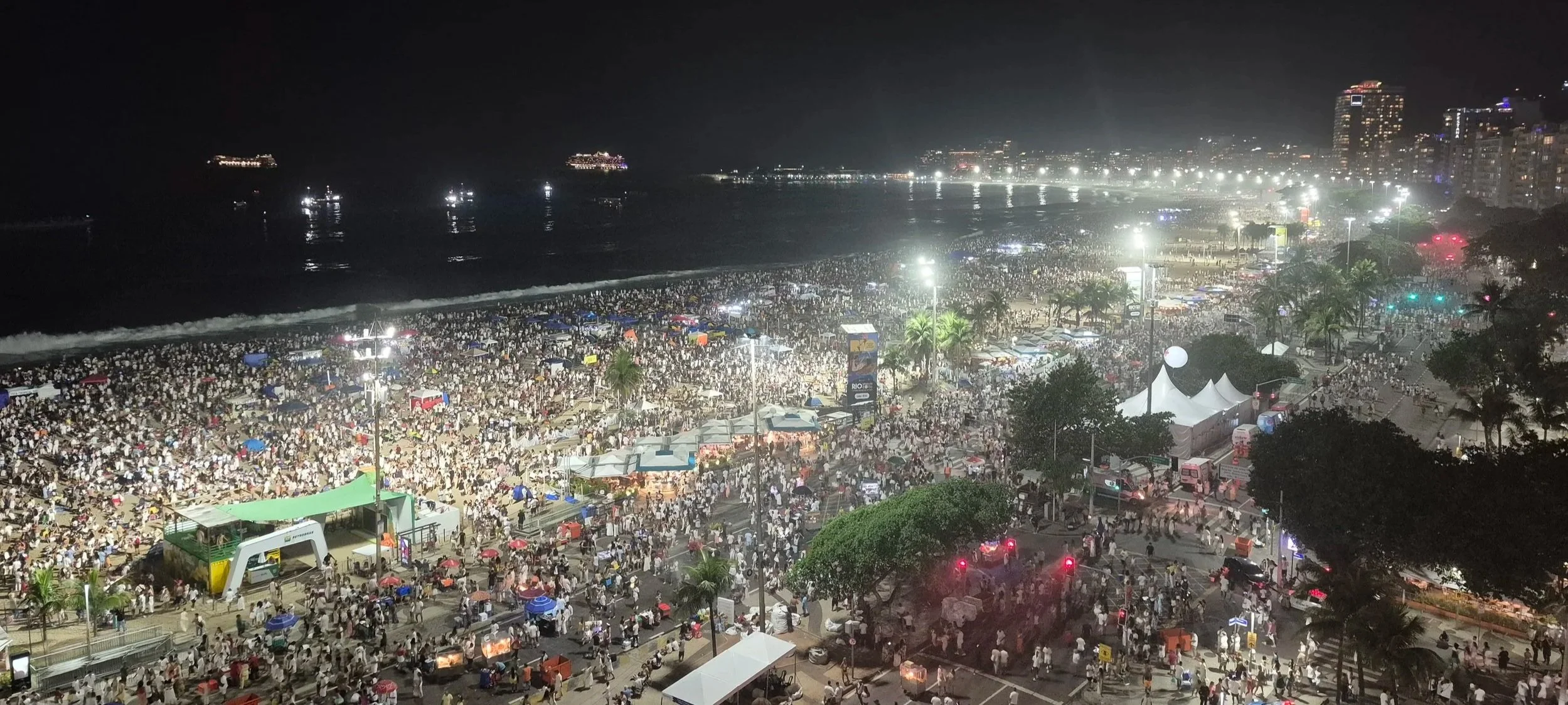
Copacabana Beach packed with over a million people dressed in white on New Year's Eve, Rio de Janeiro
At midnight, fireworks are launched simultaneously from multiple barges positioned along the coast, lighting up the entire stretch of beach at once. The display typically lasts 15 to 20 minutes and is designed to be visible from any point on the beach.
Throughout the evening, large concert stages host free live performances, with Brazilian artists drawing massive crowds in the hours leading up to midnight. Street vendors set up along the entire beachfront selling cold drinks, caipirinhas, coconut water, and snacks.
And almost everyone is dressed in white, one of Rio's most iconic New Year's Eve traditions, symbolizing peace and renewal for the year ahead.
One thing most guides don't mention: the beach fills up dramatically around 11:30pm, when residents from the surrounding buildings come down to watch the fireworks. Until then, and outside the concert stage areas, moving around the beach is surprisingly comfortable.
If you arrive early and position yourself away from the stages, you can spend hours on the sand without feeling overwhelmed, and still have a front-row view of the midnight sky.
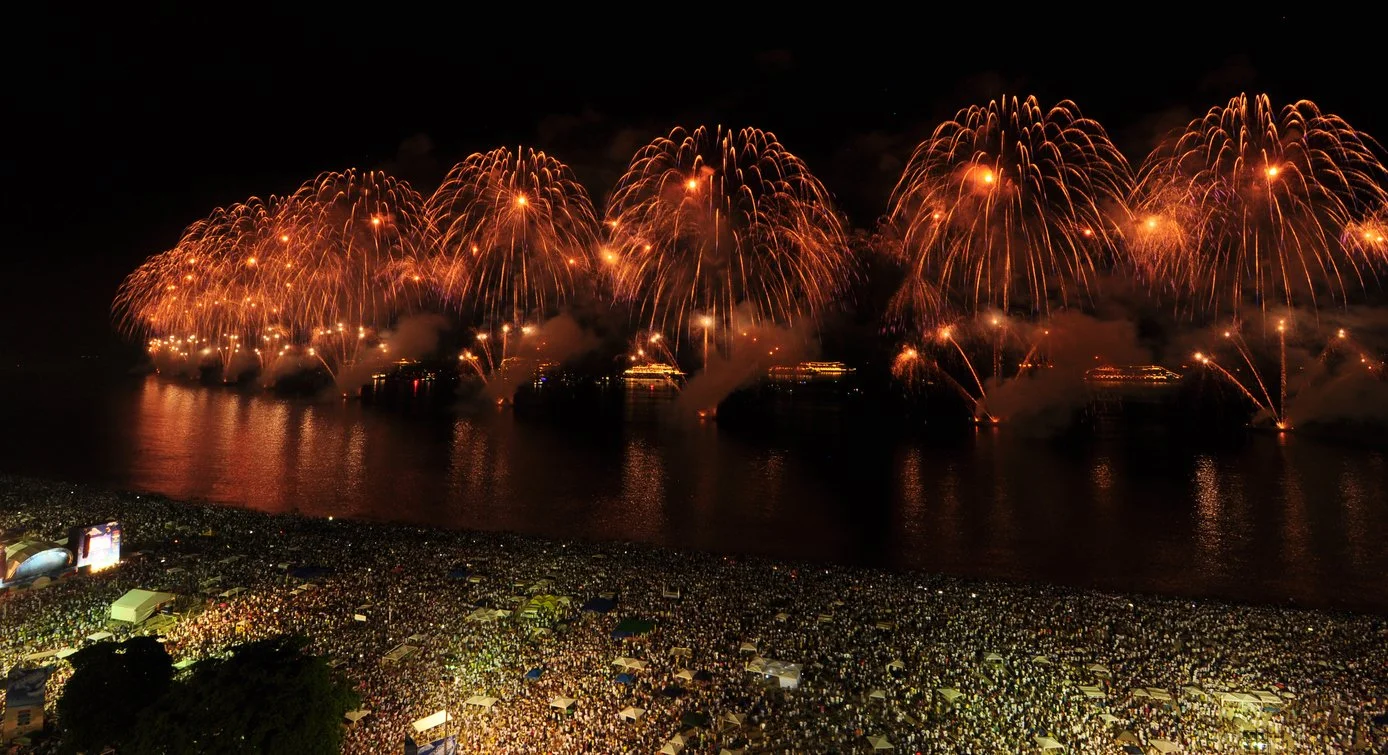
Millions gather on Copacabana Beach to watch the New Year's Eve fireworks, Rio de Janeiro. Photo: wehnt
My best advice for New Year's Eve in Copacabana: stay right there.
If there's one choice that truly changes your New Year's Eve experience in Rio, it's this: stay in Copacabana, even if only for the night of December 31st.
On New Year's Eve, Copacabana doesn't just host the party. It becomes the party. As evening approaches, streets are progressively closed, access by car becomes limited, and moving in or out of the neighborhood turns complicated.
Want to compare Copacabana with other neighborhoods anyway? My guide to where to stay in Rio de Janeiro for New Year's Eve compares the city's best alternatives and recommends hotels for every budget and travel style.
In a rush? Browse hotels in Copacabana on the map below — beachfront spots for NYE sell out fast.
How to get to Copacabana on New Year's Eve
If you're staying in Copacabana, you walk. That's the entire point of the location tip earlier in this guide.
If you're coming from another neighborhood, the metro is the only reliable option. Avenida Atlântica is closed to vehicles from the morning of December 31st, and as the evening progresses, the surrounding streets follow, making car access to the area increasingly impossible.
The metro runs on a special New Year's Eve schedule with dedicated tickets for the late-night hours, available in advance through the official metro app. Buying ahead is essential because these tickets sell out and control crowd flow into the neighborhood.
Getting back is where most people make mistakes. The metro continues operating after midnight but queues can be long. If you're not walking back to a nearby hotel, waiting 30 to 45 minutes before attempting to leave significantly reduces the stress of the return journey.
For a full breakdown of Rio's transport options, see our complete guide to getting around Rio.
Safety tips for New Year’s Eve in Copacabana
Copacabana is heavily policed on New Year's Eve with security checkpoints across the neighborhood, bag inspections before beach access, and a strict prohibition on glass bottles and sharp objects. Only a limited number of streets provide direct entry to the sand, so arriving with a clear route in mind saves time and frustration.
Despite the strong security presence, basic precautions still apply. Bring only essentials and keep your bag in front of your body. Agree on a clear meeting point with your group before entering the crowd — mobile signal can become unreliable at peak times. Accept drinks only from vendors you see opening the container.
And if an area feels too dense, move sideways rather than pushing forward, there is always more space somewhere else along the beach, and knowing when to reposition is part of enjoying the night.
Concerts and stages for New year’s eve: how to position yourself
Copacabana's New Year's Eve includes free live concerts throughout the evening, with the main stage set up in front of the Copacabana Palace hotel.
The performances feature well-known Brazilian artists and the production quality is genuinely impressive. But the main stage area is also where the largest concentration of people gathers and arriving late means navigating a very dense crowd to get anywhere near it.
If the concerts are important to you, arrive early and claim your spot before 7pm. If the fireworks and the atmosphere matter more than the music, positioning yourself further along the beach gives you more space, easier movement, and an equally spectacular view of the fireworks.
New Year's Eve traditions in Rio: celebrating like a Carioca
New Year’s Eve in Rio is filled with small rituals meant to attract good energy for the year ahead. You don’t need to follow them all, but knowing their meaning adds depth to the moment.
Wearing white is the most visible tradition. White symbolizes peace, renewal, and protection, and on New Year's Eve it's the dominant color on Copacabana Beach and across the city. If you want to blend in and feel part of the celebration, wear white.
Jumping seven waves at midnight is one of the most beloved rituals. Many people walk into the sea and jump seven waves, making a wish with each one. Before entering the water, check the beach safety flags, red flag means conditions are unsafe for swimming and the ritual should be skipped.
Offering flowers to the sea is one of the most moving things you'll witness on the beach. White flowers are set adrift as an offering to Yemanjá, the Afro-Brazilian deity of the ocean, motherhood, and protection. It's a gesture of gratitude for the year that passed and a request for protection in the one ahead. Watching hundreds of people do this at midnight is something you won't forget.
Eating grapes at midnight and making a wish with each one is another widespread tradition, borrowed from Portuguese and Spanish culture and now fully adopted as part of Rio's New Year's ritual.
Is New Year's Eve in Copacabana worth it?
Yes, but only if you go in knowing what it actually is.
New Year's Eve in Copacabana is not a concert you attend or a party you buy a ticket to. It's a collective moment shared by millions of people from every corner of the world, on one of the most iconic stretches of beach on the planet.
The fireworks, the white crowd, the waves at midnight, the flowers, there's nothing quite like it.
If you're looking for comfort, a controlled environment, and a guaranteed view, a beachfront hotel with a NYE package is the right choice. If you want the collective energy, the beach is where you belong.
Either way, don't miss it.
🛬 Plan your trip to Rio de Janeiro
Heading to Rio de Janeiro for New Year's Eve? These guides will help you plan the rest of your trip.
✈️ How to find flights to Rio de Janeiro
Find out the best routes and how to get there.
🗺️ How many days do you need?
Discover my recommendation and suggested itineraries for Rio de Janeiro.
👕 What to wear in Rio de Janeiro
Includes what to wear for the all-white New Year's Eve tradition.
FAQ - New Year’s Eve in Copacabana, Rio de Janeiro
Do I need tickets for New Year's Eve in Copacabana?
No. The Copacabana Beach celebration is completely free, with no tickets, fenced areas, or VIP zones on the sand — anyone can join. The only exception is if you want a guaranteed spot with more comfort, like a beachfront hotel package or private event, which is worth booking early.
Is New Year's Eve in Copacabana safe?
Yes, with heavy security: checkpoints, bag inspections, and a ban on glass and sharp objects. Still, with 1-2 million people on the sand, basic precautions matter more than usual — here's exactly what I tell friends before they go.
What should I wear to New Year's Eve in Copacabana?
White. It's Rio's most iconic New Year's Eve tradition, symbolizing peace and renewal, and almost everyone on the beach follows it. There's more to the local traditions than just the color, though — from jumping seven waves to offering flowers to the sea.
Where's the best place to watch the NYE fireworks in Copacabana?
Anywhere along the beach works, since the display is designed to be visible from end to end. But where you stand changes your night more than most people realize — especially if you want space without giving up a good view.
How do I get to Copacabana on New Year's Eve?
The metro is the only reliable option if you're not staying in the neighborhood, since streets close to cars starting the morning of December 31st. Getting there is the easy part — it's the trip back that trips most people up.

Written by Karina
Born and raised in Rio de Janeiro, Karina spent over a decade working in the tourism industry, with experience in some of the world's leading travel destinations. She created Going to Rio to bring that same standard of practical, traveler-first guidance to visitors exploring Rio de Janeiro. Learn more about Karina


Beachfront hotels in Copacabana can cost up to $900 a night. I stayed at the cheapest one with ocean view for $109, and I'm sharing exactly what it's like.