

Best time to visit Rio de Janeiro: A local's guide to weather, crowds and what to do in every season
When is the best time to visit Rio de Janeiro? Honestly, it's not a hard question to answer. Rio is a city that lives outdoors, and the weather makes that possible: it's warm all year round, and most days are good beach days. But there are real differences between the seasons, and they rarely get talked about.
I have a favorite time of year to enjoy the city, and it's probably not the one you'd guess. It isn't summer. I love winter in Rio de Janeiro, those months between June and August when it's warm enough for the beach, but without the heat wearing you down.
That said, I know the most famous image of Rio is summer: Carnival, packed beaches and a city that barely sleeps. And it's an amazing time too, if that's what you're looking for. So here's a season-by-season guide from someone who lives here all year, to help you find the Rio that fits your trip.

Winter in Rio often brings crystal-clear water, like here at Arpoador.
Best time to visit Rio de Janeiro: Quick guide
Here’s a quick guide if you are short on time:
☀️ Best for summer and party energy: December–March
Daytime temperatures often pass 30°C (86°F), and short afternoon storms are common. The city peaks twice: New Year's Eve, when more than two million people fill Copacabana, and Carnival, usually in February but sometimes in March (February 5–10 in 2027). See Rio de Janeiro in December, January and February for more details.
🌴 Best for quieter beaches and comfortable weather: June–August
My favorite time of year and June and August are my best-kept secret. Days sit in the mid-20s°C (mid-to-high 70s°F), with blue skies and lower humidity. The beaches are calmer, and locals still go every sunny weekend. Just skip the July school holidays if you want it really quiet. See Rio de Janeiro in June, July and August.
🥾 Best for hiking and outdoor activities: May – September
Less heat and humidity mean clearer views from trails like Pedra Bonita and Dois Irmãos, and you can comfortably hike past 10 a.m. See Winter in Rio for the best trails and viewpoints by month.
🐋 Best for whale watching: June – September
Humpback whales pass along the coast on their migration, and sightings peak in July. Boat tours give the best chance, but they're sometimes spotted from shore. Here's where and how to see whales in Rio.
💰 Best for budget travelers: April–May and September–November
Hotel prices are at their lowest outside summer, except during big events like the free concert on Copacabana Beach in May and Rock in Rio in September, in the years it's held. Book early if your dates overlap those events. The shoulder months offer great value, with warm days and thinner crowds, though rain is more likely, so keep a few flexible days. See Rio de Janeiro in September, October and November for more details.
Seasons in Rio de Janeiro
Rio is in the Southern Hemisphere, so the seasons are reversed compared to North America and Europe. Summer runs from December to March, and winter from June to September, though for me, June to August is when Rio feels its best.
The differences between seasons are less dramatic than in colder places. It's warm all year, but humidity, rain and crowds change a lot, and so does the rhythm of the city. For more details on rainfall and why Rio’s weather can change quickly see my full guide to Rio de Janeiro's weather.
Summer in Rio (December–March)
Summer is the hottest and most humid time of the year. Daytime temperatures often pass 30°C (86°F), and heat waves can push them close to 40°C (104°F). It's also the rainiest season, with short, intense afternoon storms that usually clear as fast as they arrive.
Locals adapt by planning the day around the heat. Beach time happens early in the morning or late in the afternoon, and midday is for long lunches, fresh juice or a break in the shade before heading back out.
What to expect
The city is crowded and full of energy. Sunset gatherings along the waterfront, outdoor concerts and spontaneous street parties set the mood, and from late December, everything builds toward New Year's Eve and Carnival.
Major summer events
Summer music festivals like Universo Spanta and Noites Cariocas
For the full picture of each month, see Rio in December, January and February.




Autumn in Rio (March–May)
Autumn in Rio looks nothing like it does in the Northern Hemisphere. There are no changing leaves. The real shift is in the air. March still brings plenty of rain, but in the following months temperatures start to drop and humidity eases, bringing bluer skies and some of the most vibrant sunrises and sunsets of the year.
What to expect
After Carnival, Rio slows down. The summer crowds leave, the beaches feel spacious again, and it’s warm enough for beach days and long swims. It's a great time to experience the city at a local pace.
The exceptions are the holidays. Easter and the long weekends around national holidays bring a wave of Brazilian travelers, and hotels and beaches fill up fast. In May, the free concert on Copacabana Beach draws one of the biggest crowds of the year.
Major autumn events
In May, the free concert on Copacabana Beach draws one of the biggest crowds of the year.
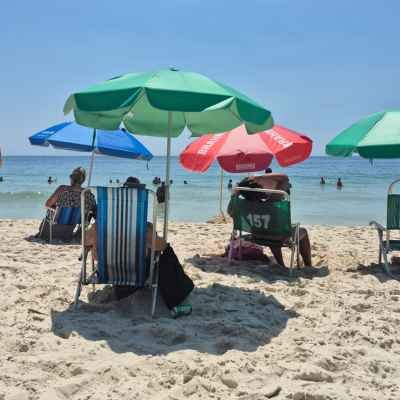

Winter in Rio (June–August)
This is my favorite time of year in Rio, and if you're picturing a Northern Hemisphere winter, forget it. A tropical winter means daytime temperatures in the mid-20s°C (mid-to-high 70s°F), blue skies and the lowest humidity of the year. Nights get cooler, especially by the water, but a light jacket is all you'll need.
The ocean water gets colder too, but with less rain washing into the sea, it turns clearer. On the best days, the beaches look so turquoise that locals call them "Caribe de Janeiro." On sunny weekends, Cariocas still fill the sand.
What to expect
Winter is when Rio feels most livable. It's the best season for hiking, cycling along the coast and catching the views from the city's viewpoints, without the summer heat getting in the way.
The one exception to the calm is July, when school holidays bring Brazilian families to the city and prices go up. If you want winter at its best, June and August are the sweet spot.
For the full picture of each month, see Rio de Janeiro in June, July and August.
Winter highlights
Whale watching season (June to August): Humpback whales migrate along the coast, and boat tours give you a good chance of spotting them.
Festas Juninas (June–July): Brazil's June festivals celebrate Saint Anthony, Saint John and Saint Peter with a countryside theme. Expect bunting, bonfires, dancing, and traditional treats like quentão, a hot spiced drink made with cachaça.




Spring in Rio de Janeiro (September–November)
Spring is when Rio starts warming back up for summer. Temperatures climb, the days get longer, and the city slowly picks up its pace. It can also be rainy, so the weather is less predictable than in winter, and it's worth keeping a few flexible days in your plans.
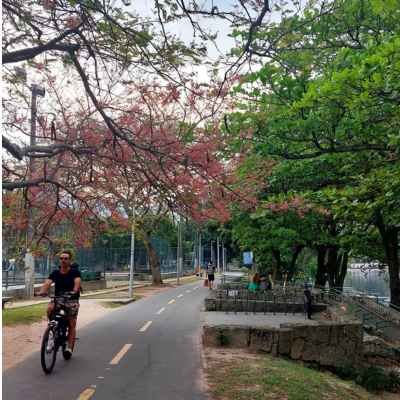
The real highlight is the color. Ipês and jacarandás bloom across the city, painting streets and parks in yellow, pink and purple.
What to expect
Spring is shoulder season: warm days, thinner crowds and prices still well below summer. November especially feels like summer at off-season rates.
For the full picture of each month, see Rio de Janeiro in September, October and November.
Spring highlights
Rock in Rio: One of the biggest music festivals in the world, held every two years in September.
NFL game at Maracanã: The first edition happened in 2026 with more games confirmed for the upcoming seasons.
Rio Pride: Rio's Pride Parade takes over Copacabana in November, with music trucks and a festive crowd along the beachfront.

So, what’s the best time to visit Rio de Janeiro?
There's no wrong time to visit Rio, only different versions of the city. Summer is Rio at its loudest, with Carnival, packed beaches and nights that never seem to end. Winter is my personal favorite, with clear skies, calmer beaches and those "Caribbean de Janeiro" days. And autumn and spring sit in between, with fewer crowds and better prices for anyone willing to work around a little rain.
The best time to visit is the one that matches the trip you have in mind. Once you've picked your season, my month-by-month guides will help you plan the details. And if you already know your dates, Rio de Janeiro in 2027 lists every event happening throughout the year.

Written by Karina
Born and raised in Rio de Janeiro, Karina spent over a decade working in the tourism industry, with experience in some of the world's leading travel destinations. She created Going to Rio to bring that same standard of practical, traveler-first guidance to visitors exploring Rio de Janeiro. Learn more about Karina



Known as one of the most expensive places to stay in the city, Ipanema also has affordable options. Here's my list of the best hotels in Ipanema, by category.